100 amp vs 200 amp: a homeowner’s guide to future-proofing
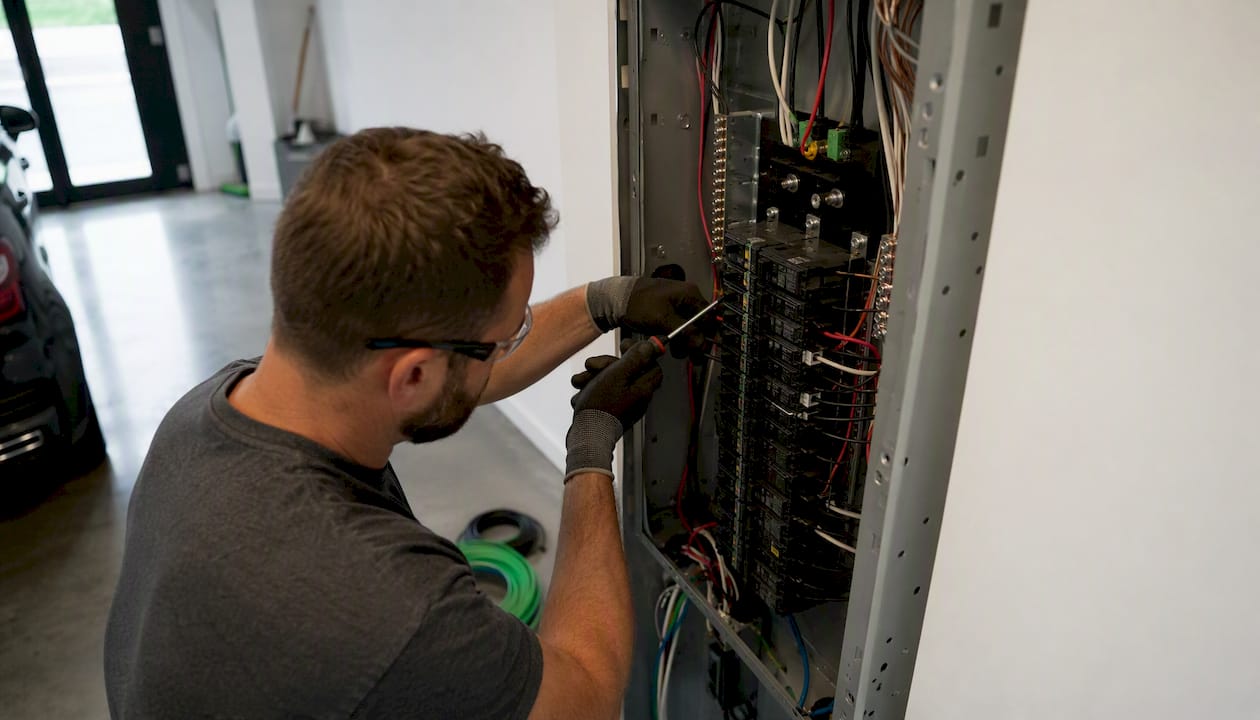
For most modern Canadian homes, 200 amp service is the right choice — especially if you own or plan to own an EV, are considering a heat pump, or want your home to hold its resale value over the next decade. A 100 amp service can still work for smaller, gas-heated homes with modest electrical loads, but it leaves very little room to grow.
Before you decide, here is what matters most:
- Get a load calculation done by an ESA-licensed electrician. Square footage alone does not determine your service size.
- Check your current panel. If you have fewer than 20 breaker spaces and no room to add circuits, you are already at the edge.
- Factor in your five-year plans. An EV charger, heat pump, or electric range can each push a 100 amp service past its limit.
- Confirm permit requirements. In Ontario, a service upgrade requires an ESA permit and inspection — no exceptions.
Key takeaways
For most Ontario homeowners planning to add an EV charger or heat pump, 200 amp service is the practical and future-proof choice — confirmed by a formal load calculation, not by square footage alone.
| Point | Details |
|---|---|
| Capacity difference | 100A provides ~24 kW; 200A provides ~48 kW — double the headroom for modern loads. |
| When 100A still works | Smaller gas-heated homes with no EV or heat pump plans often calculate within 100A capacity. |
| EV charger impact | A 32A Level 2 charger draws ~7,600W continuously, consuming roughly a third of a 100A service. |
| Load management option | EVEMS smart chargers can enable Level 2 charging on 100A service when no other large loads are planned. |
| Evchargerinstallationtoronto | Provides ESA-licensed 200A upgrades, EVEMS installs, and permit handling across the Greater Toronto Area. |
Table of Contents
- What is the real difference between 100 amp and 200 amp service?
- When is 100 amp service still adequate?
- When does your home need 200 amp service?
- How is the correct service size actually determined?
- Why do EV chargers and heat pumps push homes toward 200 amp?
- Are there alternatives to a full 200 amp upgrade?
- What does a 100A to 200A upgrade cost in Ontario?
- What are the warning signs your service is undersized?
- What does the upgrade process look like, and what permits are required in Ontario?
- What should you ask an electrician before hiring them?
- A real example: EV charger install and panel decision in Toronto
- Why future-proofing your electrical service matters more than ever
- Evchargerinstallationtoronto handles the upgrade so you don’t have to figure it out alone
- Sources
What is the real difference between 100 amp and 200 amp service?
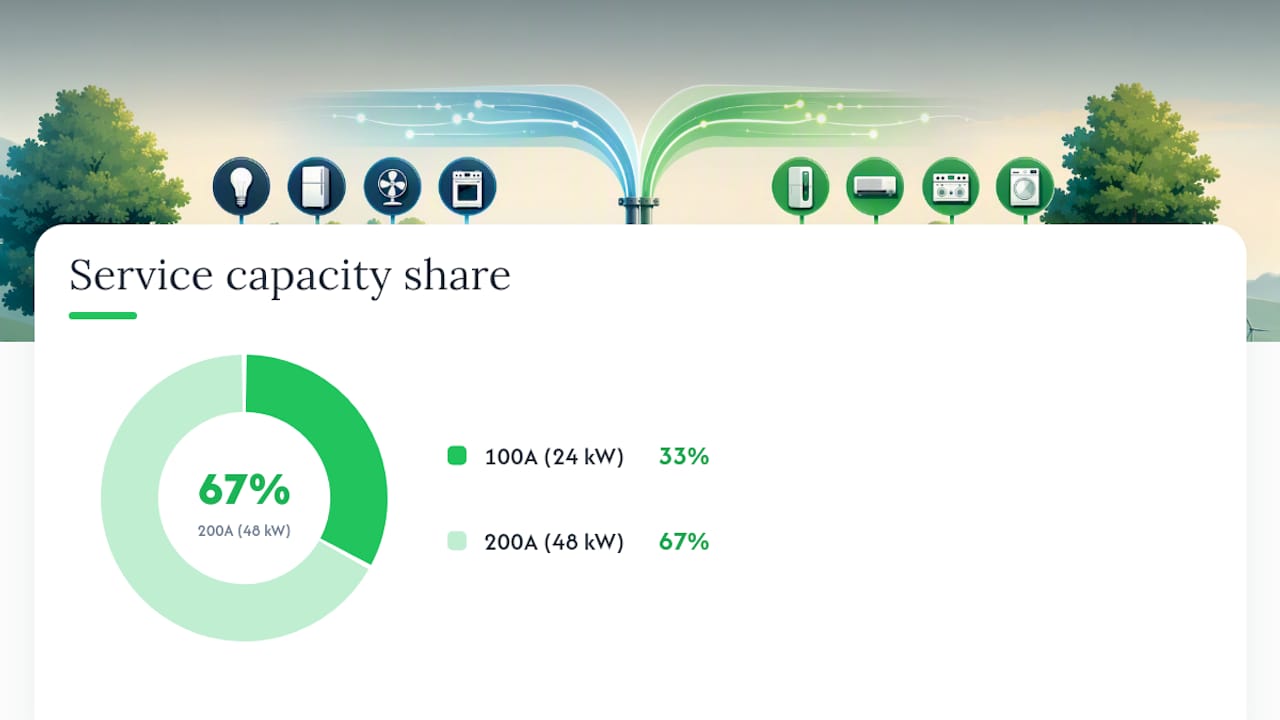
The numbers refer to the maximum current your electrical service can deliver continuously. According to a 100A vs 200A service comparison, a 100 amp service provides roughly 24,000 watts (24 kW) of usable capacity, while a 200 amp service delivers approximately 48,000 watts (48 kW). That is double the headroom for appliances, circuits, and future additions.
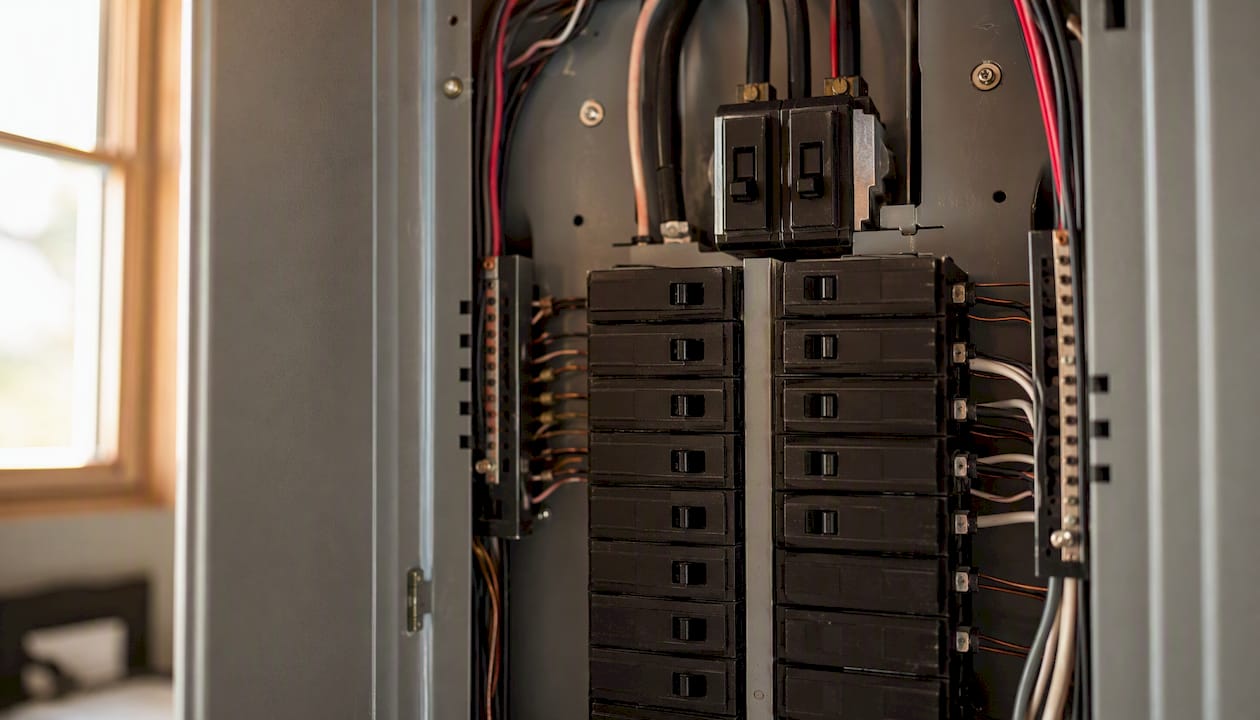
In practical terms, the difference shows up in two ways: raw capacity and physical space. A 100 amp panel typically has 20–30 breaker spaces. A 200 amp panel usually offers 40 or more, giving you room to add circuits without tandem breakers or workarounds.
| Feature | 100 amp service | 200 amp service |
|---|---|---|
| Capacity | ~24 kW | ~48 kW |
| Typical breaker spaces | 20–30 | 40+ |
| Typical main breaker | 100A | 200A |
| Suitable for EV Level 2 charger | Marginal / needs load calc | Yes, with room to spare |
| Suitable for heat pump | Often not, without load mgmt | Yes |
| New construction standard | Rarely | Yes |
Think of it this way: your panel is the gateway. Everything in your home draws power through it simultaneously. A 100 amp gateway works fine when the total demand stays modest. Add a Level 2 charger, a heat pump, and an electric dryer, and you are pushing that gateway hard.
What the service actually includes:
- The main breaker (rated at 100A or 200A)
- The meter base, which must match the service rating
- The service conductors running from the utility’s point of attachment to your panel
- The grounding system
Upgrading from 100A to 200A means replacing all of these, not just swapping the panel.
When is 100 amp service still adequate?
A 100 amp service is not automatically outdated. For the right home profile, it handles daily life without issue.
Homes where 100A commonly remains sufficient:
- Older detached homes under 1,800 sq ft with gas heating, gas cooking, and gas hot water
- Cottages or secondary structures with limited year-round use
- Homes with no plans for EV charging, heat pumps, or electric ranges
- Rental units or condos where the building handles major mechanical loads separately
A concrete example: a 1,400 sq ft semi-detached home in Hamilton with a gas furnace, gas stove, one central air conditioner, and standard appliances (fridge, washer, dryer, dishwasher) will often calculate well within 100 amp capacity. A formal load calculation in that scenario frequently confirms the service is adequate.
Pro Tip: Ask your electrician to show you the load calculation worksheet, not just the conclusion. If the calculated demand comes in under 80 amps, you have real headroom. If it lands between 80 and 95 amps, you are close enough that any addition will force a decision.
The key phrase is “no plans to electrify.” The moment you add an EV or switch from gas to electric heating, the math changes quickly.
When does your home need 200 amp service?
Several additions push a home firmly into 200 amp territory. These are not edge cases — they are increasingly common in Ontario.
High-draw additions that typically require 200A:
- Level 2 EV charger: A 32-amp, 240V charger draws roughly 7,600 watts continuously. On a 100 amp service already carrying a moderate household load, that single addition can consume close to a third of your total capacity.
- Air-source heat pump: A mid-size heat pump system draws 15–30 amps at 240V depending on the model and outdoor temperature. Combined with existing loads, this often tips a 100 amp service past its safe operating range.
- Electric range or induction cooktop: These draw 40–50 amps at 240V at peak, though demand factors reduce the calculated load.
- Hot tub or pool heater: A standard hot tub requires a dedicated 50–60 amp, 240V circuit.
- Workshop with heavy tools: A table saw, air compressor, and welder running in a garage can draw 30–60 amps combined.
- Whole-home battery backup: Systems like a home energy storage unit require a dedicated circuit and add to the total calculated load.
From a resale standpoint, Ontario-focused guidance from builders notes that 200A is now the standard for new residential construction, and buyers increasingly expect it. A home listed with a 100 amp panel can raise questions during a home inspection, particularly if the buyer intends to charge an EV or install a heat pump.
How is the correct service size actually determined?
A load calculation is the only reliable way to size your service. Square footage is a rough proxy at best. The formal method used by ESA-licensed electricians follows the Canadian Electrical Code methodology, which accounts for connected load, demand factors, and simultaneous-use assumptions.
Here is how a simplified calculation works:
- List all major loads — heating/cooling, water heater, dryer, range, and any dedicated circuits.
- Apply demand factors — not every appliance runs at full draw simultaneously. The CEC allows reductions for certain loads (e.g., ranges are calculated at a fraction of their nameplate rating).
- Add EV charger and HVAC loads at full continuous draw — these are not discounted.
- Total the calculated demand — if the result exceeds roughly 80% of your service rating under continuous load, an upgrade is warranted.
Mini worked example:
- Gas furnace fan: 800W
- Central A/C (3-ton): 3,500W
- Electric dryer: 5,000W (demand-factored)
- Electric range: 8,000W (demand-factored)
- General lighting and outlets: 3,000W
- Level 2 EV charger: 7,680W (continuous, no demand factor)
Calculated total: ~28,000W, or approximately 117 amps at 240V. That exceeds 100 amp service capacity and confirms a 200 amp upgrade is needed.
Per ESA technical guidance on load calculations and service upgrades, permitting and utility coordination are required steps — and they are commonly the time-limiting factors in any upgrade project.
Pro Tip: Request a written load worksheet from your electrician before signing anything. A reputable ESA-licensed electrician will produce one as a standard part of the assessment. If they quote you a service size without showing their math, ask why.
Why do EV chargers and heat pumps push homes toward 200 amp?
These two loads share a critical characteristic: they run continuously, often for hours at a time, and they cannot be demand-factored the same way a range or dryer can.
Typical continuous draws:
- Level 2 EV charger (32A, 240V): approximately 7,600 watts
- Air-source heat pump (mid-size): 3,500–7,200 watts depending on conditions
- Combined (EV + heat pump running simultaneously): 11,000–14,800 watts
On a 100 amp service with a calculated household base load of 15,000–18,000 watts, adding both an EV charger and a heat pump can push total demand to 26,000–32,000 watts — well past the 24 kW ceiling. According to EV charging and upgrade guidance, a 7,600W Level 2 charger alone consumes roughly a third of a 100 amp service’s capacity, and electricians frequently cite it as the single trigger for a 200 amp upgrade.
When load management can help: A smart EVEMS (Electric Vehicle Energy Management System) or dynamic charger controller can throttle the EV charger’s draw in real time based on what the rest of the house is consuming. This can allow Level 2 charging on a 100 amp service without exceeding the panel’s rating. It is a practical stopgap — but it does not add circuits, and it does not solve the problem if you later add a heat pump or other large load.
For homeowners who want to charge an EV now and electrify heating later, a smart load-management installation can buy time. For those planning both, a 200 amp upgrade is the cleaner long-term answer.
Are there alternatives to a full 200 amp upgrade?
Yes, and in some situations they make real financial sense. A full service upgrade is not always the only path forward.
Smart load management (EVEMS / dynamic charging):
- Monitors total household consumption in real time
- Throttles the EV charger’s output when other loads are high
- Allows Level 2 charging on a 100 amp service without exceeding the panel rating
- Works well for homes where EV charging is the only major new load
- Does not solve capacity issues if you later add a heat pump or electric heating
Subpanel addition:
- Adds breaker spaces without changing the main service rating
- Useful when you have run out of physical space in the panel but have remaining electrical capacity
- Does not increase total service capacity — the main breaker still limits total draw
- A practical solution for a workshop or garage addition where the existing service has headroom
Staged approach:
- Install EVEMS now, plan the full upgrade in 12–24 months
- Useful when budget is a constraint or when a home sale is planned within a few years
- Requires a second contractor visit and permit for the eventual upgrade
The honest trade-off: Load management and subpanels solve specific problems. They are not substitutes for a service upgrade when your calculated demand genuinely exceeds your service rating. A licensed electrician who runs the numbers will tell you which path actually fits your situation — not just the one that costs less today.
What does a 100A to 200A upgrade cost in Ontario?
Published contractor estimates show a wide cost range — roughly $1,500 to $8,500 depending on scope, location, and whether utility-side work is required. In the Greater Toronto Area, most straightforward panel swaps with permit and inspection fall in the $3,000–$5,500 range.
What drives the cost up:
- Meter base replacement (required when the existing base is rated for 100A only)
- Service conductor upgrade from the utility attachment point to the panel
- Meter relocation (if the current position does not meet clearance requirements)
- Utility coordination fees (Hydro One and Toronto Hydro charge separately for their portion of the work)
- Older homes with knob-and-tube or aluminum wiring that requires remediation before the upgrade
What is typically included in a contractor quote:
- New 200A panel with breakers
- ESA permit and inspection fees
- Labour for panel swap and grounding upgrade
- Load calculation and written documentation
Timeline breakdown:
- Site visit and load calculation: same day or next day
- ESA permit application: 1–3 business days
- Utility coordination (if required): 1–4 weeks (this is often the longest step)
- Installation day: 4–8 hours, including a planned outage
- ESA inspection: typically within a few days of installation
Hydro One’s service upgrade process confirms that utility coordination and meter work are required steps, and that the utility charges separately for its portion. Budget for this when comparing quotes.
What are the warning signs your service is undersized?
Some signs are operational. Others are safety emergencies. Know the difference.
Operational signs (schedule an assessment):
- Breakers trip regularly, especially when you run multiple appliances at once
- Lights dim or flicker when the A/C, dryer, or other large loads start up
- You have no spare breaker spaces and cannot add a circuit without a tandem breaker
- Your panel is a Federal Pacific, Zinsco, or other recalled brand (a separate but related concern)
Safety red flags (stop using affected circuits and call an ESA-licensed electrician today):
- Burning smell near the panel or outlets
- The panel cover or breakers feel warm to the touch
- You hear buzzing, crackling, or arcing sounds from the panel
- Visible scorch marks or discolouration on breakers or wiring
Operational signs suggest your service is undersized. Safety red flags suggest your panel may be actively dangerous. According to guidance on service indicators and upgrade signs, warm panels and burning smells are among the clearest indicators that a panel needs immediate professional evaluation, not a scheduled appointment.
Do not ignore a burning smell from your electrical panel. Turn off the main breaker if you can do so safely, and call a licensed electrician immediately.
What does the upgrade process look like, and what permits are required in Ontario?
A 100A to 200A service upgrade in Ontario follows a defined sequence. Here is what to expect:
- Licensed electrician conducts a site assessment and load calculation. This determines whether 200A is genuinely needed and identifies any code deficiencies to address.
- ESA notification and permit application. In Ontario, all service upgrades require an ESA permit. The electrician files this on your behalf.
- Utility coordination. If the meter base, service lateral, or point of attachment needs work, your electrician contacts Hydro One or Toronto Hydro to schedule the utility portion. This step often sets the project timeline.
- Installation day. The utility disconnects power at the meter. The electrician replaces the panel, upgrades the meter base if needed, installs new service conductors, and updates the grounding system. Most installations take 4–8 hours.
- ESA inspection. An ESA inspector visits to verify the work meets the Ontario Electrical Safety Code. The electrician coordinates this.
- Utility reconnection. Once the inspection passes, the utility restores power.
Ontario permit checklist:
- ESA notification filed before work begins
- Permit number posted at the work site
- Inspection booked and passed before the panel is energised
- Certificate of Inspection issued by ESA upon approval
For a detailed look at the electrical panel upgrade process in the Greater Toronto Area, including typical timelines and what to expect on installation day, Evchargerinstallationtoronto’s service page covers the steps clearly.
What should you ask an electrician before hiring them?
Hiring the wrong electrician for a service upgrade creates real risk. Here is what to ask before you sign anything.
Questions to ask:
- Are you ESA-licensed in Ontario? Can I see your licence number?
- Will you handle the ESA permit and inspection, or is that my responsibility?
- Can you provide a written load calculation worksheet with your quote?
- What is included in the quote — panel, meter base, conductors, permit fees, labour?
- How long will my power be off on installation day?
- Do you coordinate with the utility, or do I need to contact them separately?
- What warranty do you offer on the work?
Red flags to watch for:
- Offers to do the work without a permit (“it’s just a panel swap”)
- Quotes a service size without running a load calculation
- Cannot provide an ESA licence number on request
- Gives a vague timeline with no explanation of utility coordination
- Pressures you to upgrade when your load calculation does not support it
A reasonable on-site evaluation should include a visual inspection of the existing panel, a review of your major appliances and planned additions, and a written load calculation. If an electrician quotes you over the phone without visiting the site, treat that number as a rough estimate only.
A real example: EV charger install and panel decision in Toronto
A homeowner in North York contacted Evchargerinstallationtoronto after purchasing a plug-in hybrid. Their home was a 1960s-era detached house with a 100 amp panel, gas heating, and a central A/C unit. They wanted a Level 2 charger installed in the garage.
Home profile:
- 1,650 sq ft detached, gas furnace, gas hot water, central A/C
- Existing panel: 100A, 24 spaces, 4 spaces remaining
- No plans for heat pump or electric range in the near term
Load calculation outcome:
- Base household load calculated at approximately 14,500 watts
- Level 2 charger (32A, 240V): 7,680 watts continuous
- Total calculated demand: approximately 22,180 watts (~92 amps at 240V)
Options considered:
- Full 200 amp upgrade: approximately $4,200 including permit and meter base
- EVEMS smart load management: approximately $1,400 installed, allowing Level 2 charging within the existing 100 amp service by throttling charger output when household demand is high
Final choice: The homeowner chose the EVEMS solution, given no immediate plans to add a heat pump or other large loads. The installation was completed in a single day, with an ESA permit handled by Evchargerinstallationtoronto.
What the homeowner said they wished they’d known: “I assumed I’d need a full panel upgrade the moment I bought an EV. The load calculation showed I had more room than I thought — and the smart charger gave me a practical option I didn’t know existed.”
The lesson: a load calculation first, then a decision. Not the other way around.
Why future-proofing your electrical service matters more than ever
The conventional wisdom used to be: upgrade only when you have to. That logic made sense when EVs were rare and heat pumps were uncommon. It does not hold in Ontario in 2026.
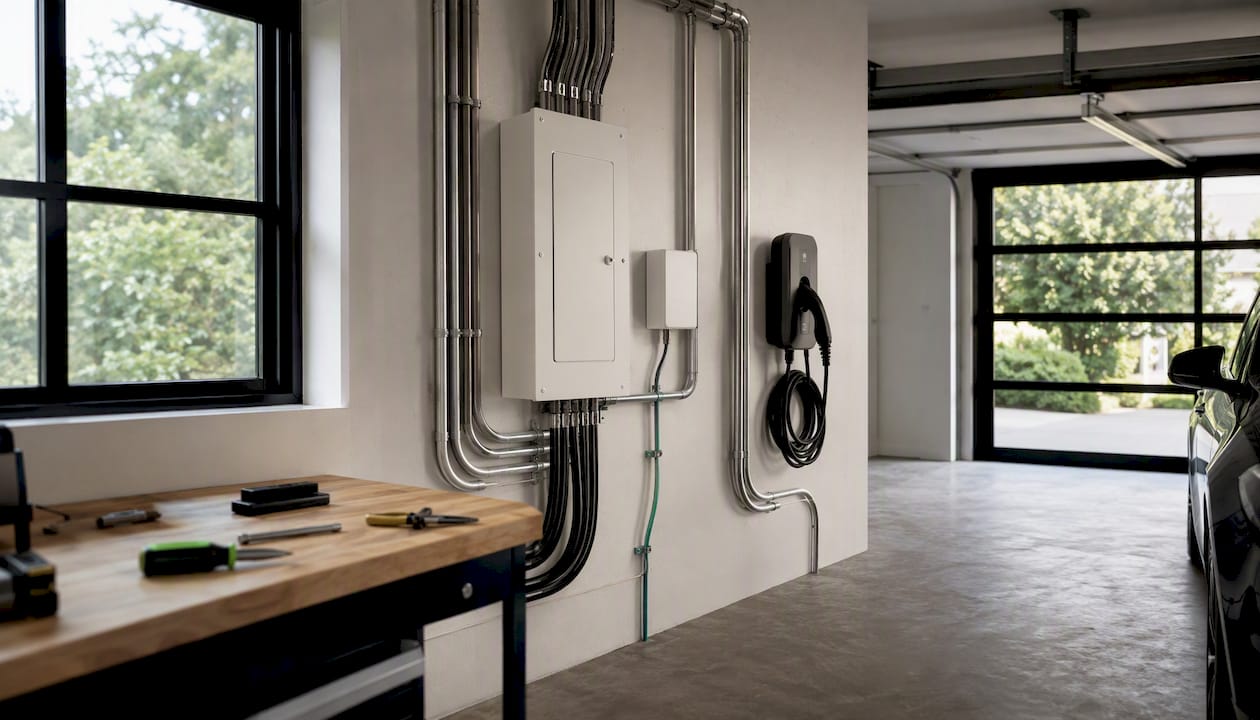
Canada’s electrification trajectory is real. Federal and provincial incentives are accelerating EV adoption. Programs like the Canada Greener Homes Grant have made cold-climate heat pumps financially accessible. Whole-home battery systems are entering the mainstream. Each of these technologies lands directly on your electrical panel.
The cost of upgrading during a renovation or new construction is a fraction of what it costs as a standalone project later. Ontario industry guidance consistently describes 200A as the future-proof default precisely because the incremental cost at the right moment is modest, while the disruption of a retrofit upgrade is not. A homeowner who installs 200A service today avoids a second round of permits, utility coordination, and planned outages when they add their next large load.
The argument for staying on 100A is essentially an argument for deferring a decision. That is sometimes the right call — particularly when a load calculation confirms genuine headroom. But “I’ll deal with it later” has a cost, and in Ontario’s electrification environment, later tends to arrive faster than expected.
Evchargerinstallationtoronto handles the upgrade so you don’t have to figure it out alone
Deciding between 100 amp and 200 amp service is straightforward when you have the right numbers in front of you. Getting those numbers requires a licensed professional, a formal load calculation, and a clear understanding of what Ontario’s permitting process actually involves.
Evchargerinstallationtoronto’s team of ESA-licensed electricians covers the full scope: 200A panel upgrades, Level 2 EV charger installations, smart EVEMS load management, permit handling, and rebate support. Pricing for EV charger installations starts from $1,800, with same-week booking available across the Greater Toronto Area. Permits and inspections are included at no extra charge, and the team manages utility coordination on your behalf.
If you are weighing a panel upgrade against a load-management solution, use the free cost estimate calculator to get a fast price range for your specific situation. Or book a site assessment directly — an ESA-licensed electrician will run your load calculation, walk you through the options, and give you a written quote with no pressure to commit.
Sources
- ESA technical bulletin — load calculations and service upgrades
- 100A vs 200A Electrical Service comparison
- 100 Amp vs 200 Amp Electrical Service
- Service upgrade information from utility provider
Recommended
- 200 amp panel upgrade in Toronto: 2026 guide | EV Install Pro Toronto
- 200 Amp Panel Upgrade Markham | ESA-Licensed | EV Install Pro | EV Install Pro Toronto
- 200 Amp Panel Upgrade Richmond Hill | ESA-Licensed | EV Install Pro | EV Install Pro Toronto
- 200 Amp Panel Upgrade Ajax | ESA-Licensed | EV Install Pro | EV Install Pro Toronto
Get Your Free Installation Quote
Free assessment · ESA permit included · Same-week availability across the GTA