Do you need a dedicated circuit for an EV charger?
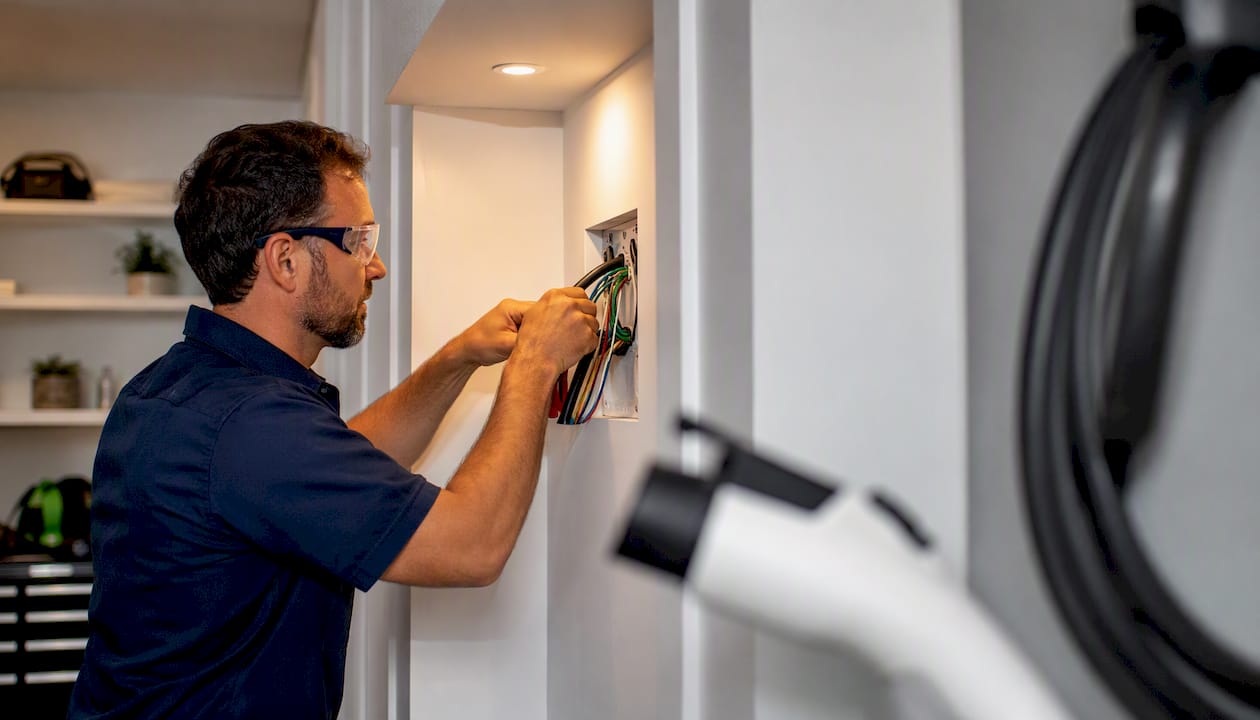
Yes, a Level 2 EV charger requires its own dedicated 240 V branch circuit, sized to code. Level 1 charging on a standard 120 V outlet is often acceptable, but a dedicated branch circuit is strongly recommended and may be required by your charger’s manufacturer.
Three authorities back this up:
- NEC Article 625 requires EV charging outlets to be supplied by an individual branch circuit with no other outlets or loads.
- Technical Safety BC publishes dedicated-circuit requirements and permit expectations for EV charger installations in British Columbia.
- The Electrical Safety Authority (ESA) in Ontario requires a permit for permanent EV charger installations and expects work to be performed by an ESA-licensed electrician.
Key takeaways
A Level 2 EV charger always requires a dedicated 240 V branch circuit sized at 125% of the charger’s continuous current; Level 1 charging often does not, but a dedicated branch circuit is strongly recommended.
| Point | Details |
|---|---|
| Level 2 always needs a dedicated circuit | A 240 V branch circuit sized to code is mandatory; no shared loads are permitted. |
| 125% continuous-load rule | Multiply charger rated current by 1.25 to get the minimum breaker size (e.g., 40 A charger needs a 50 A breaker). |
| Permits are required in Canada | Ontario ESA and Technical Safety BC both require permits for permanent EV charger installations. |
| Check your panel first | Confirm service amperage and spare double-pole slots before booking an electrician. |
| Evchargerinstallationtoronto | ESA-licensed installs in the GTA from $1,800, with permits, inspections, and rebate support included. |
Table of Contents
- What a dedicated circuit means for EV charging
- Does your EV charger need a dedicated circuit?
- What circuit specs does your Level 2 charger actually need?
- Permits, inspections and Canadian code requirements
- Does your panel have room for a new EV circuit?
- What if you cannot add a dedicated circuit right now?
- Typical costs and timeline for a residential install in Canada
- How to hire a licensed electrician for your EV charger install
- What installers actually see in the field
- Evchargerinstallationtoronto handles the whole job for GTA homeowners
- Sources
What a dedicated circuit means for EV charging
A dedicated branch circuit is a circuit that runs directly from your electrical panel to a single outlet or device, with nothing else connected to it. For EV charging, that means no shared loads, no other receptacles, and no appliances on the same breaker.
Why does that matter? EV charging is classified as a continuous load, meaning the draw runs at or near maximum for three or more hours at a time. Sharing that load with other devices creates two real risks:
- Nuisance tripping: The breaker trips repeatedly because the combined load exceeds its rating.
- Overheating: Sustained high current on a shared circuit can overheat wiring that was not sized for the combined demand.
The continuous-load rule also has a direct impact on how your breaker and wire must be sized. Under NEC Article 625, conductors and overcurrent protection must be rated at not less than 125% of the charger’s continuous current draw. A 32 A charger is not simply protected by a 32 A breaker; it needs a 40 A breaker and wire rated accordingly.
Does your EV charger need a dedicated circuit?
The short answer depends on which level of charging you are installing.
- Level 2 (240 V): Always requires a dedicated branch circuit. No exceptions. The Alternative Fuels Data Center confirms that Level 2 installations require a 240 V dedicated circuit and that a licensed electrician should verify your home’s electrical capacity before work begins.
- Level 1 (120 V): Often uses an existing standard outlet, but a dedicated 15 A or 20 A branch circuit is the safer choice. If your charger’s manufacturer instructions specify an individual branch circuit, that instruction is binding under code.
- Manufacturer instructions override general allowances. If the installation guide says “individual branch circuit,” follow it. NEC Section 110.3(B) requires that listed equipment be installed per its instructions, so a manufacturer’s dedicated-circuit requirement carries the same weight as the code itself.
How to tell if an outlet is already dedicated: Go to your electrical panel and locate the breaker for that outlet. If only that outlet or receptacle is on that breaker, with nothing else, it is a dedicated circuit. If the breaker also controls lights, other outlets, or any appliance, it is a shared circuit.
Pro Tip: Before calling an electrician, pull out your charger’s installation guide and note the maximum continuous current rating. That single number drives every sizing decision: breaker, wire gauge, and whether your panel has room.
What circuit specs does your Level 2 charger actually need?
The 125% continuous-load rule is the starting point for every sizing decision. Multiply your charger’s maximum continuous current by 1.25 to get the minimum breaker size, then select the appropriate wire gauge for that breaker.
Electric Vehicle Geek’s NEC sizing guide provides practical worked examples that show how misunderstanding this rule leads to non-compliant installs. The table below reflects those examples alongside common wire gauges.
A few additional points worth knowing:
- Adjustable chargers: Many Level 2 units let you set the maximum current in software. Lowering the setting reduces the required breaker size, which can help when panel capacity is tight.
- Disconnect requirement: Installations rated above 60 A require a lockable disconnect separate from the breaker.
- Hard-wired vs. receptacle: Some chargers connect directly (hard-wired); others use a NEMA 14-50 receptacle. Both options require the same dedicated circuit sizing.
Permits, inspections and Canadian code requirements
Most provinces require a permit for any permanent EV charger installation or panel modification. Skipping the permit is not a grey area; it can void your home insurance and create liability if something goes wrong.
Technical Safety BC and Ontario’s ESA are two of the most active provincial authorities publishing specific guidance on dedicated-circuit requirements. In Ontario, the ESA permit process applies to all new branch circuits, and only ESA-licensed electricians can perform the work and file the permit.
Before submitting a permit application, gather the following:
- Proof that your electrician holds a valid provincial licence (ESA in Ontario, Technical Safety BC in B.C., or the equivalent in your province).
- The charger manufacturer’s installation guide, including the specified circuit rating.
- A simple site plan showing where the panel is, the proposed circuit route, and the charger location.
- The proposed breaker size and wire gauge.
- Any applicable rebate forms, since some programmes require a permit number before processing.
Provincial adoption of the Canadian Electrical Code (CEC) and local amendments varies. Always confirm requirements with your local Authority Having Jurisdiction (AHJ) before starting work. What applies in Toronto may differ from what applies in Calgary or Victoria.
Does your panel have room for a new EV circuit?
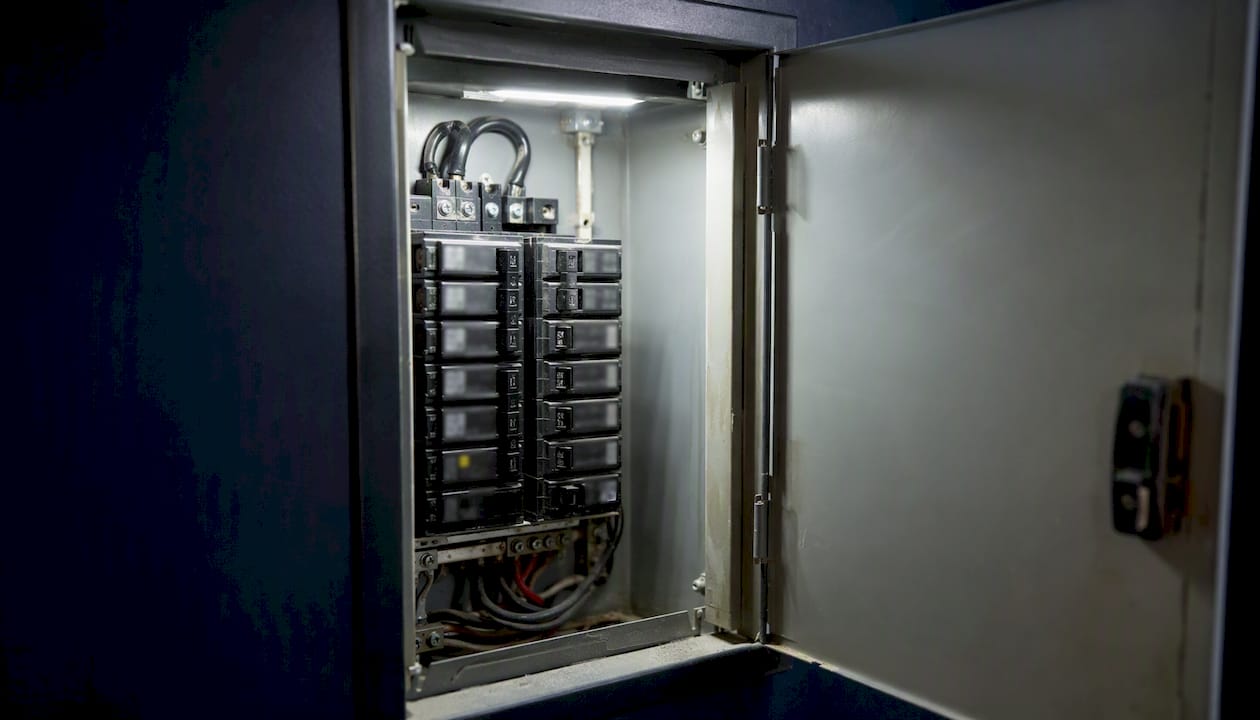
Before any wiring work begins, check three things at your electrical panel:
- Service amperage: Look for the main breaker rating. A 100 A service may not have enough headroom for a 40–50 A EV circuit alongside a full household load. The EPA recommends that homes with 200 A service and available breaker slots will often have the capacity for Level 2 charging.
- Spare double-pole breaker slots: A 240 V circuit needs two adjacent slots. Count the open spaces in your panel.
- Overall load: Add up your major loads (HVAC, electric range, water heater, dryer) and compare to your service rating. If you are already close to capacity, a new 40–50 A circuit will push you over.
When the panel is full or the service is too small, you have three options:
- Tandem or slim breakers: Some panels accept tandem breakers that fit two circuits in one slot, freeing up space. Not all panels support this; check the panel’s label.
- Add a subpanel: Running a subpanel to the garage is often the most cost-effective solution when the main panel is full but the service amperage is adequate.
- Upgrade to 200 A service: If your home still has 60 A or 100 A service, or if you are adding multiple high-draw appliances, a full service upgrade is likely the right long-term move. Signs that point to an upgrade: frequent tripping, an older fuse panel, or a household load that already sits above 80% of service capacity.
What if you cannot add a dedicated circuit right now?
A full panel upgrade is not always immediately possible, especially in condos or older homes. There are code-conscious alternatives.
- EVEMS / smart load management: An Energy Management System (EV-specific controllers are sometimes called EVEMS or DCC-style controllers) monitors your total household load and automatically reduces EV charging current when other large loads are active. This lets you charge safely on a shared or capacity-limited panel without tripping breakers or exceeding service limits. EVEMS installation is a practical option for GTA homeowners who want to avoid an immediate panel upgrade.
- Managed charging via the vehicle or charger app: Many EVs and Level 2 chargers allow you to schedule charging during off-peak hours when household load is lower. This is not a substitute for proper circuit sizing, but it reduces the risk of overloading a marginal panel.
- Level 1 on a dedicated 15 A or 20 A branch circuit: If your daily driving is under 60–80 km, overnight Level 1 charging on a properly dedicated circuit may cover your needs without any panel work. Use the manufacturer’s portable EVSE as supplied; do not use an extension cord.
Pro Tip: If you are doing any electrical work near the garage or parking area, future-proof the installation now. Have your electrician pull a larger conduit than you currently need, leave an extra breaker slot, and pre-wire for a second charger. Adding a second EV later costs a fraction of the price when the conduit is already in place.
Typical costs and timeline for a residential install in Canada
A standard Level 2 dedicated circuit installation in the Greater Toronto Area typically includes labour, a double-pole breaker, wire, conduit, and the permit fee. For a detailed local breakdown, the EV charger installation cost guide for Toronto covers current pricing and common add-ons.
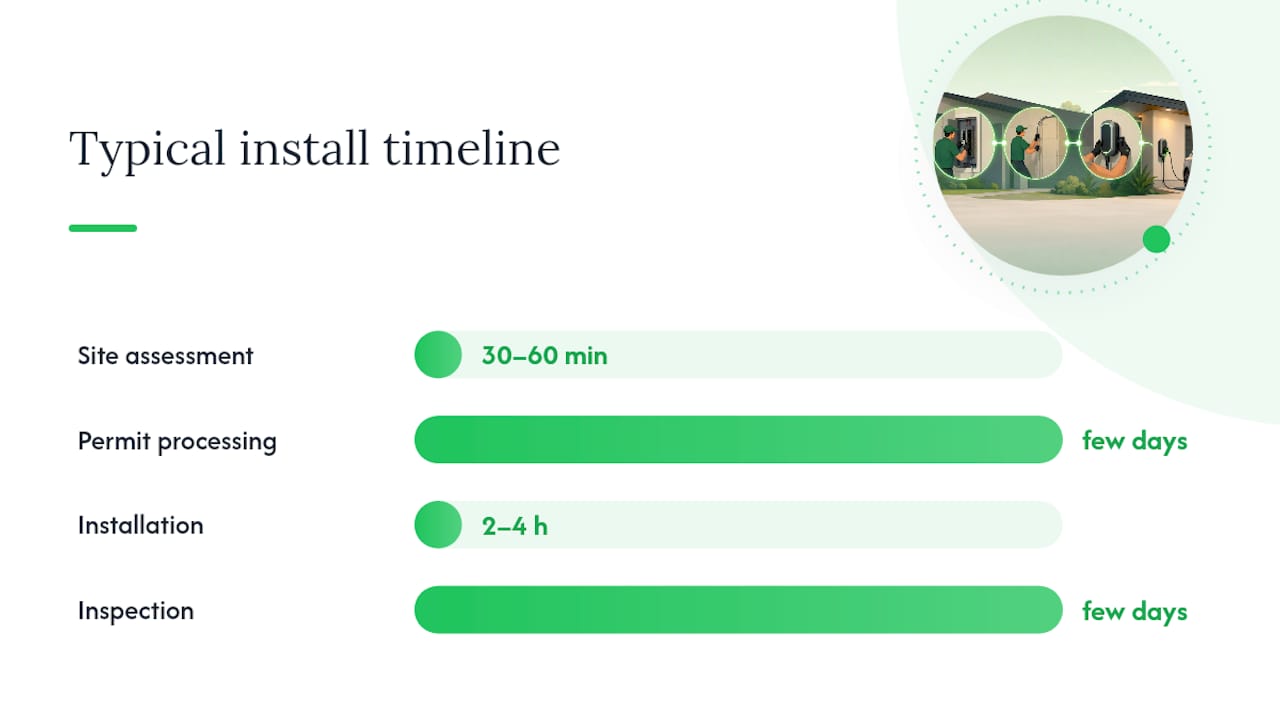
What to expect at each stage:
- Site assessment: A licensed electrician visits to check panel capacity, measure the circuit run, and confirm permit requirements. This usually takes 30–60 minutes.
- Permit application: In Ontario, the ESA permit is filed before work begins. Processing typically takes a few business days, though same-week approvals are common for straightforward residential jobs.
- Installation day: This Old House confirms that a typical project, once permits are in place, can be completed within a day. Most straightforward garage installs take two to four hours.
- Inspection: The ESA or local authority inspects the completed work, usually within a few days of the installation.
On rebates: Natural Resources Canada (NRCan) and provincial programmes offer incentives for EV purchases and home charging equipment. Some municipalities add their own credits on top. Ontario rebate options change periodically, so confirm current eligibility before purchasing equipment. Many licensed installers handle the rebate paperwork as part of the service.
How to hire a licensed electrician for your EV charger install
Choosing the right electrician is as important as choosing the right charger. Here is what to ask and what to watch for.
Questions to ask before hiring:
- Are you ESA-licensed (Ontario) or licensed by the relevant provincial authority?
- How many EV charger installations have you completed?
- Will you obtain the permit and arrange the inspection?
- Do you assist with rebate applications and paperwork?
- What is included in your written quote: circuit, conduit, breaker, permit fee, and charger mounting?
Documentation to request:
- A copy of the electrician’s provincial licence number.
- A written, itemised quote covering all materials and permit costs.
- Proof of liability insurance.
- A warranty on labour and materials.
Red flags to avoid:
- Quoting a price without a site visit.
- Declining to pull a permit or suggesting the permit “is not necessary.”
- Vague answers about breaker size or wire gauge.
- No written quote or itemised breakdown.
A licensed electrician who has done EV installs before will ask about your charger’s rated current before quoting. If they do not ask, that is a signal worth noting.
What installers actually see in the field
Most homeowners who call about an EV charger installation assume the job is straightforward: run a wire, add a breaker, done. What the field reveals is more nuanced. Panels that look adequate on paper often have hidden load issues, outdated wiring, or no spare slots. Homeowners who skipped the permit step on a previous renovation sometimes discover that the panel work cannot be inspected without correcting earlier deficiencies first.
Following code and manufacturer guidance is not bureaucratic caution. It is the difference between a charger that works reliably for ten years and one that trips weekly or, worse, causes a fire. The homeowners who invest in a properly sized, permitted, dedicated circuit from the start rarely call back with problems. The ones who cut corners almost always do.
Evchargerinstallationtoronto handles the whole job for GTA homeowners
Getting a dedicated circuit installed correctly means coordinating the site assessment, permit, wiring, inspection, and rebate paperwork, all while making sure the breaker and wire are sized to code. Evchargerinstallationtoronto does all of that under one roof, with ESA-licensed electricians who have completed hundreds of residential installs across the Greater Toronto Area.
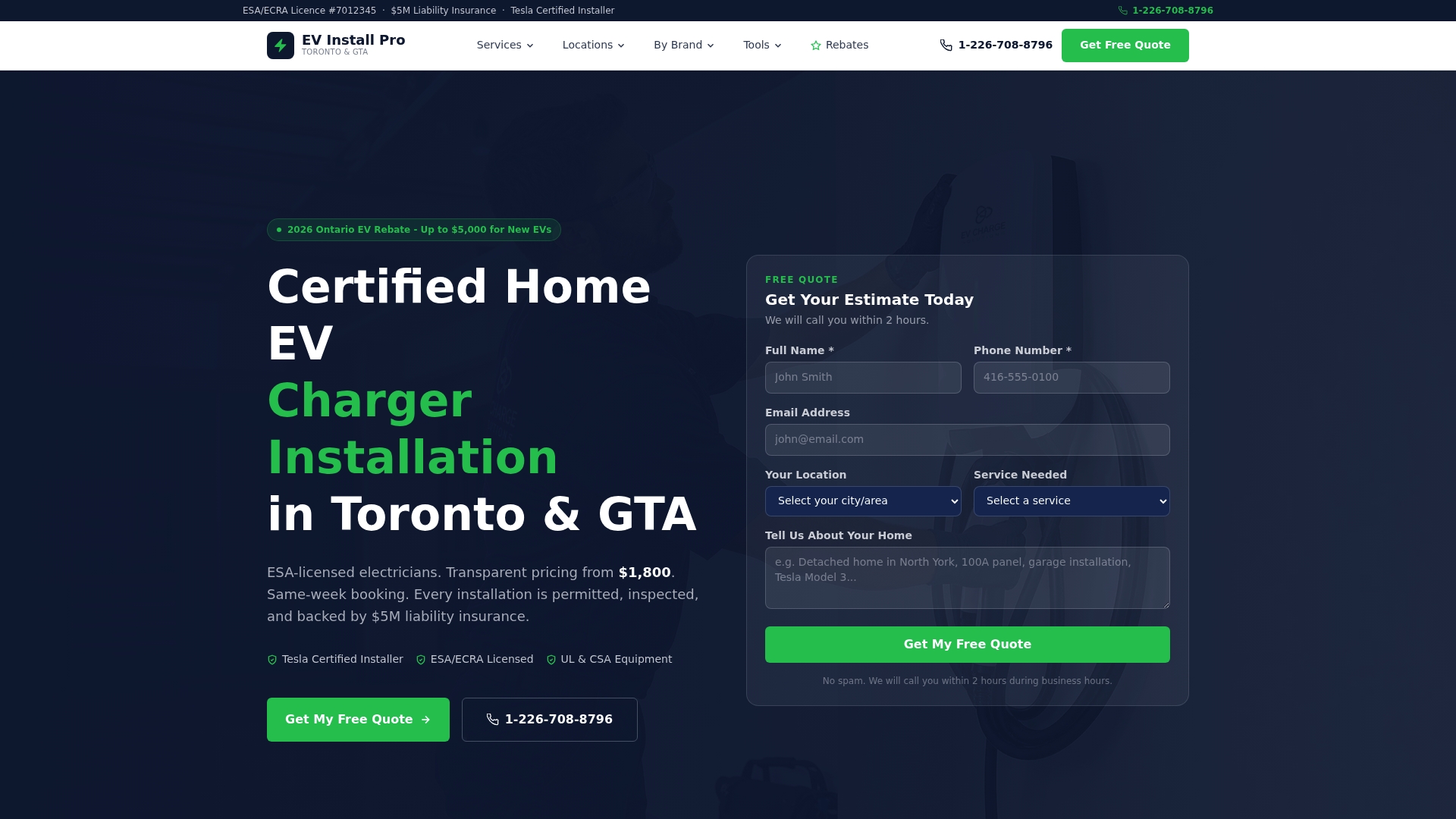
Pricing starts from $1,800, permits and inspections are included at no extra charge, and same-week booking is available. The team also handles rebate applications worth up to $5,000 for eligible homeowners, so you do not have to track down forms or deadlines on your own. Evchargerinstallationtoronto carries a 4.9 customer rating, and most installations are completed within a few hours on the day of the appointment.
Get a free instant estimate to see what a dedicated circuit install costs for your home, or request a quote to book a site visit.
Sources
These are the primary technical and regulatory references used throughout this guide.
- Charging at home | Alternative Fuels Data Center
- EV charging systems - ECMWeb
- How to install an EV charger | This Old House
- Dedicated circuit requirements for EV chargers - Technical Safety BC blog
- Getting started with home EV charging | US EPA
Recommended
- EVEMS Installation Toronto | Smart Load Management | Skip the Panel Upgrade | EV Install Pro Toronto
- Find EV Chargers Near Me in Toronto & the GTA | Live Map | EV Install Pro Toronto
- Do I Need a Panel Upgrade for an EV Charger in Ontario? (2026 Guide) | EV Install Pro Toronto
- Do I Need a Panel Upgrade for an EV Charger? (Toronto & GTA Guide 2026) | EV Install Pro Toronto
Get Your Free Installation Quote
Free assessment · ESA permit included · Same-week availability across the GTA