EV charger cable management: best options for home and pros
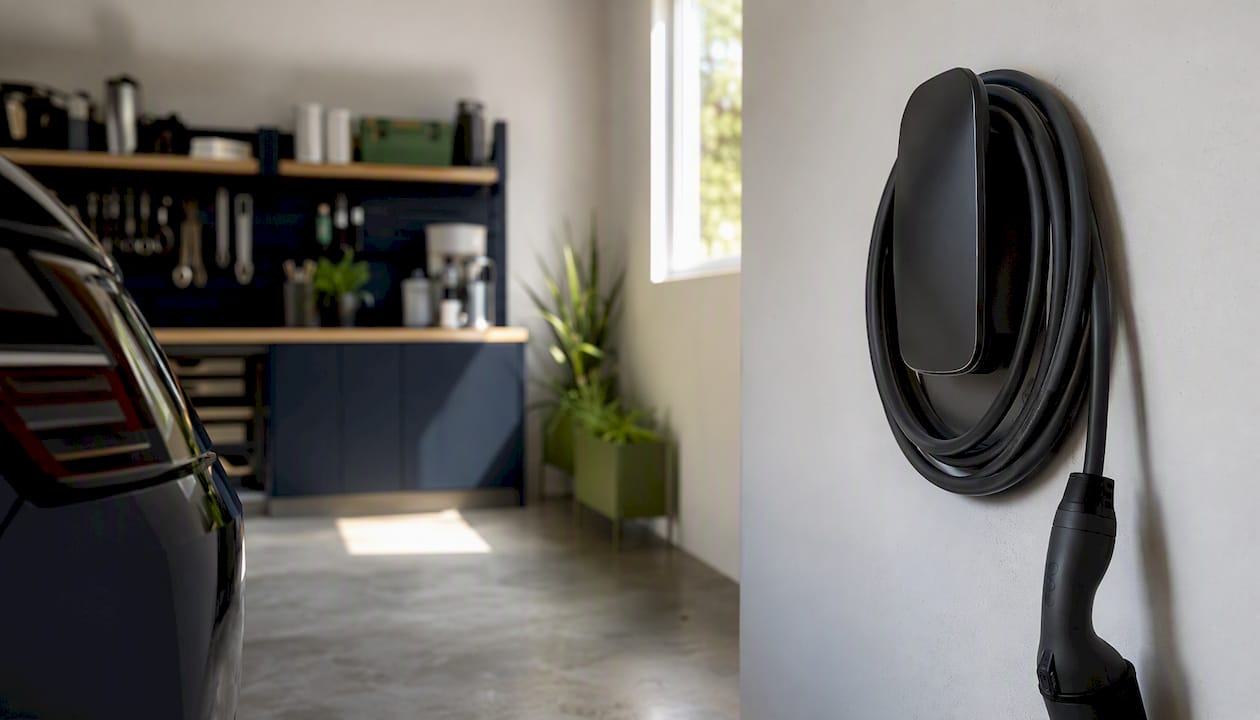
The best cable-management solution for most home EV owners is a wall-mounted connector holster paired with wide-loop cable storage. It costs little, prevents tight bends at the strain relief, and keeps the connector off the garage floor. Homeowners with high-traffic garages or limited wall space should look at retractable reels or overhead arms instead. Outdoor and shared-parking installations typically call for a pedestal system with built-in routing and weather protection.
Here’s the quick breakdown by situation:
- Single-car garage: Holster plus wide-loop wall storage. Simple, cheap, effective.
- Two-car garage or tight bay: Retractable reel or an overhead swivel arm to keep the floor clear, typically offering cable reach in the range commonly recommended by vendors.
- Outdoor driveway or exposed parking: Pedestal-mounted system built for outdoor conditions.
- Commercial or shared parking: Automated retractors or overhead arms, since they don’t rely on drivers coiling cable properly.
- High-traffic household garage: Overhead arm with a strain-relief-friendly mount height.
Electrical code guidance under NFPA-70 and technical compatibility standards like IEC 61851 both factor into how a permanent EVSE installation should be planned. For homeowners who want the routing handled correctly the first time, a licensed installer such as Evchargerinstallationtoronto builds cable management into the install rather than treating it as an afterthought.
Key Takeaways
The right EV charger cable management solution matches your parking pattern and traffic level, with a holster suiting most single-car garages and retractors or arms suiting higher-use spaces.
| Point | Details |
|---|---|
| Start with a holster | Wall holster plus wide-loop storage prevents tight bends and works for most single-car garages. |
| Upgrade for high traffic | Retractable reels and overhead arms keep floors clear in busy or shared garages. |
| Match connector and diameter | Confirm J1772, NACS, or CCS compatibility and cable thickness before buying any holder. |
| Outdoor needs weather-rated gear | Pedestal systems and weather-resistant holsters protect connectors from rain, snow, and salt. |
| Professional install covers it all | Evchargerinstallationtoronto builds cable routing, permits, and rebate support into installs starting from $1,800. |
Table of Contents
- What are the best EV charger cable management options?
- How do you choose the right cable management setup?
- How do you install and position an EV charger cable holder?
- How do you keep EV charging cables safe and long-lasting?
- Where can you buy cable management hardware and what does it cost?
- Get your cable management built into a professional install
- Frequently asked questions
- Sources
What are the best EV charger cable management options?
Six main categories cover almost every residential and commercial use case: wall holsters with wide-loop storage, J-hooks, retractable reels, overhead or ceiling-suspended systems, swivel/extendable arms, and pedestal systems. Each solves a different problem, and picking the wrong one usually means either wasted money or a cable that wears out early.
A holster and wide-loop setup is the baseline most vendor guides recommend for a reason: it’s inexpensive, requires no moving parts, and prevents the tight coiling that accelerates cable wear near the strain relief. J-hooks work similarly but offer less structure. Retractable reels solve the floor-clutter problem automatically, pulling the cable back into a housing after each charge. Overhead systems route the cable above the vehicle, which works well when the charging port location isn’t consistent. Swivel arms extend and fold, giving flexible reach without a full ceiling installation. Pedestal systems are the go-to for outdoor or shared parking, since they combine mounting, routing, and weather protection in one freestanding unit.
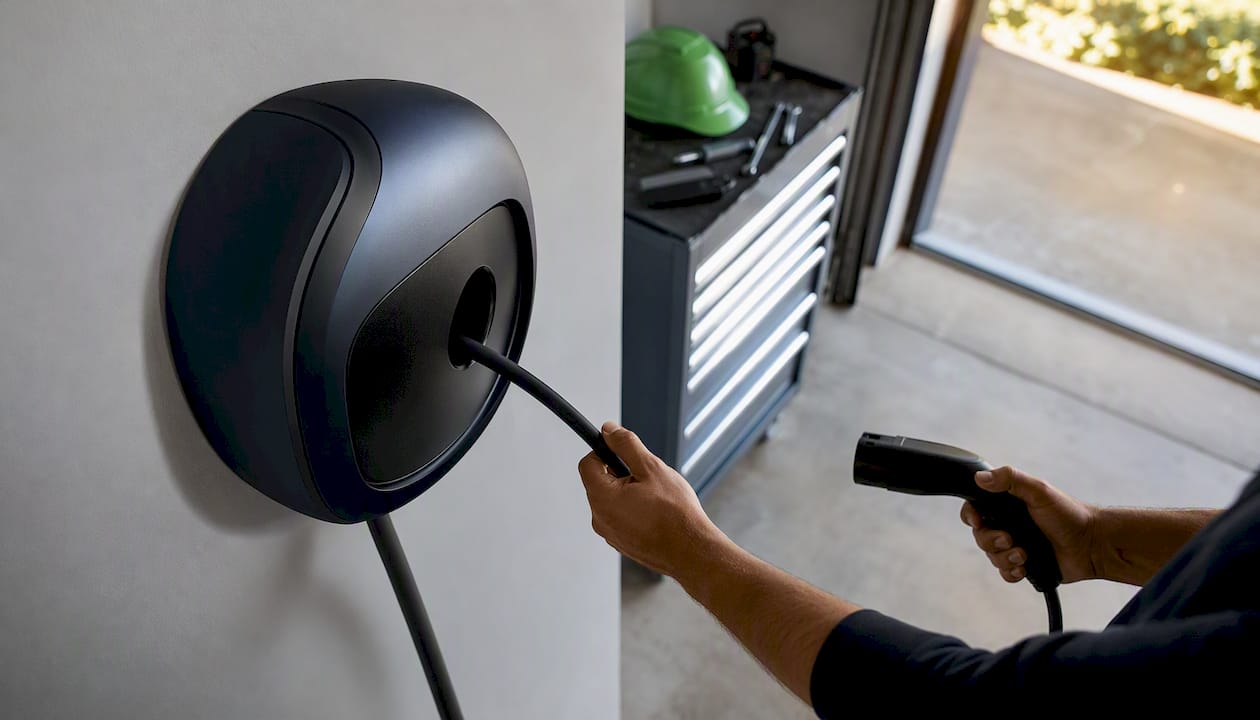
| Solution type | Best for | Mount type | Reach | Ease of install | Price band |
|---|---|---|---|---|---|
| EV Install Pro (integrated service) | Homeowners wanting a turnkey, code-compliant install | Wall/panel, built into installation | Site-specific | Licensed electrician | From $1,800 |
| ReTrak / WattSun pedestal | Outdoor or shared-parking installs | Pedestal | Site-specific | Electrician recommended | Mid to higher range |
| Emporia wall-mounted retractor | High-traffic garages/carports | Wall | 8.9–9.8 ft pull | DIY or electrician | Mid range |
| EV Hover extendable arm | Garages with variable port location | Wall arm | adjustable reach extending beyond average cable length | DIY-friendly | Mid range |
| DEWALT / consumer retractors | Budget-conscious retail buyers | Wall | Varies by model | DIY | Lower to mid range |
| Spigen cable holster | Standard home or outdoor setups | Wall | N/A (static holster) | DIY | Lower range |
| Generic J1772/CCS wall holder | Fixed parking position, minimal traffic | Wall | N/A (static holster) | DIY | Lower range |
Compatibility matters more than most buyers expect. A holster sized for a J1772 connector won’t necessarily fit an NACS or CCS nozzle properly, and vendor guides consistently flag connector type and weather resistance as the two details buyers skip past. Cable diameter varies too. A Level 2 cable is thicker than most Level 1 cords, and a holster built for the wrong diameter leaves the cable pinched or loose.
Pros and cons by class:
- Holster + wide-loop: cheap and simple, but requires the driver to coil the cable correctly every time.
- Retractable reel: keeps floors clear automatically, though pull strength typically tops out around 9 to 11 lbs, so heavier cables need the right model.
- Overhead arm: good reach and load capacity sufficient for common home charging cables, but needs solid ceiling or wall framing to mount securely.
- Pedestal: weatherproof and freestanding, but higher upfront cost and usually needs professional anchoring.
Where to buy in Canada: Evchargerinstallationtoronto handles the full installation including cable routing, ReTrak pedestal systems are available through ev-chargers.ca, and retractors, holsters, and J-hooks show up widely on Amazon.ca listings.
Pro Tip: Measure your cable’s actual diameter before ordering any holster or J-hook. A quarter-inch difference is enough to make a “universal” holder useless.
How do you choose the right cable management setup?
Start with your site, not the product catalogue. The right solution depends on how your garage or driveway is laid out and how often the cable gets used, not on which option looks the newest.
Run through this checklist before buying anything:
- Cable length and typical reach — measure the distance from your charger to your usual parking spot, plus a few feet of slack.
- Parking position consistency — if you park in the same spot every time, a static holster works fine; if not, an arm or overhead system adapts better.
- Wall and ceiling availability — confirm there’s solid framing where you want to mount hardware.
- Weather exposure — outdoor and unheated garage installs need weather-rated materials, full stop.
- Shared-use rules — condo and multi-unit parking often requires automated retractors so cables don’t sit as trip hazards between users.
- Budget — holsters start under $50, while pedestal systems and professional installs run considerably higher.
Once you know your constraints, the decision gets simpler. Pick a holster and wide-loop setup if you park in the same spot every day and don’t mind coiling cable by hand. Move to a retractor or overhead arm if the garage sees heavy daily use, kids or pets are around, or floor clutter is a real tripping risk. Choose a pedestal system for any outdoor or shared-parking install where weather and public access are factors.
When talking to a vendor or installer, ask direct questions:
- What’s the IP or weather rating for outdoor use?
- What connector types and cable diameters does this fit?
- What’s the load rating, and does it match my cable’s actual weight?
- What warranty is included, and for how long?
- Is there a CSA, UL, or ETL equivalent safety certification?
Red flags to walk away from: no stated weather rating on outdoor hardware, no listed load or weight spec, vague or missing mounting instructions, and a warranty period the seller can’t confirm in writing. The NEC has historically flagged cables over roughly 25 feet as needing dedicated management hardware, so if your run is long, treat that as a planning trigger rather than an afterthought.
How do you install and position an EV charger cable holder?
Connector holster height and avoiding tight bends near the strain relief matter more than any other installation detail. Get those two things right and most other choices become minor.
- Measure the site. Note the distance from the charger to your parking position and where the vehicle’s charging port sits.
- Choose the mount location. Position the holster or arm so the cable hangs at roughly hip to chest height, letting it drop naturally without dragging.
- Route the cable. Plan a path with wide, gentle curves. Tight coils are the leading cause of premature cable wear, particularly near the strain relief where the cable meets the connector.
- Secure strain relief points. Anchor the cable at intervals so its own weight doesn’t pull on the connector housing.
- Test the reach. Plug in and check that the connector reaches your parking spot without stretching or scraping the bumper or ground.
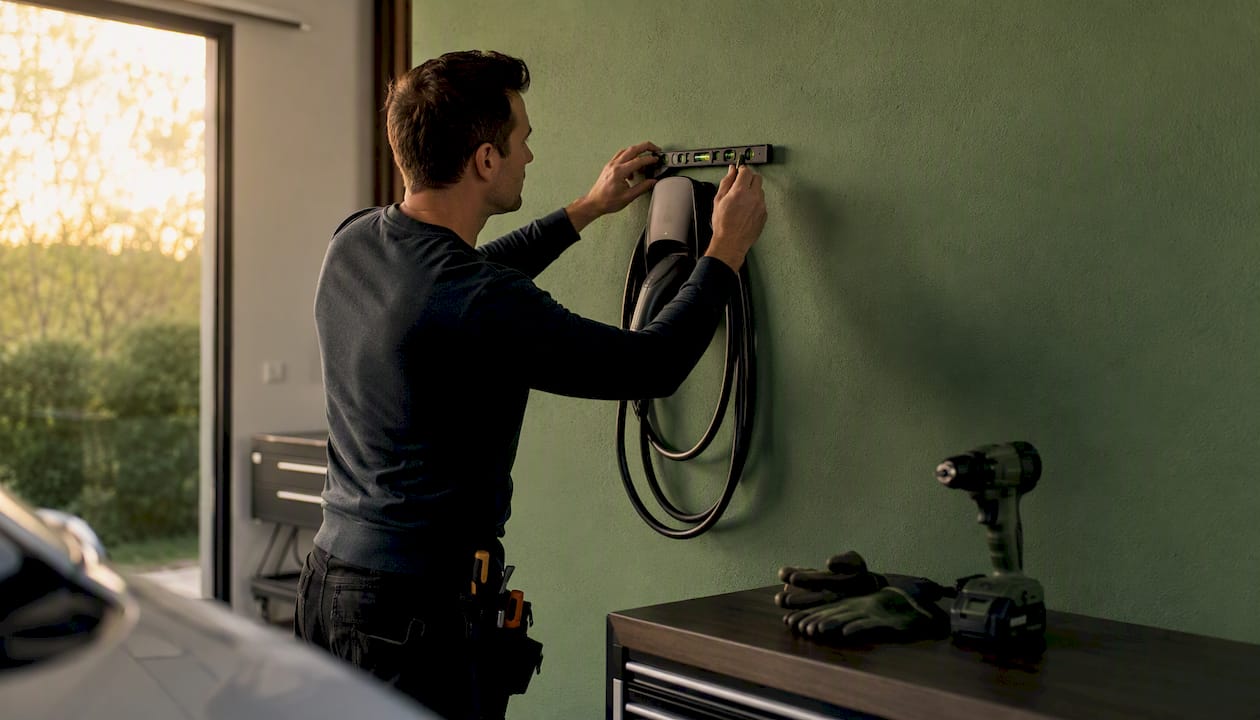
Mount height should let the connector hang freely without touching pavement, and reach should cover your full parking range with a bit of slack, not the bare minimum. DIY installation works fine for holsters, J-hooks, and most retail retractors. Overhead arms, pedestals, and anything tied into panel capacity or new circuits should go to a licensed electrician, both for safety and because permits often require it.
Pro Tip: Installers commonly mount holsters slightly lower than instinct suggests. A connector hung too high stresses the cable every time it’s unplugged downward.
How do you keep EV charging cables safe and long-lasting?
Inspect the connector and strain relief regularly, and keep the cable off any walking path. Those two habits catch most problems before they become expensive ones.
Run through this inspection list periodically:
- Visual check for cracks, fraying, or exposed wire along the cable jacket.
- Wear at the strain relief, where most damage starts.
- Pin corrosion inside the connector, especially after damp weather.
- IP seal integrity on outdoor holsters and pedestals, checking for gaps or cracked gaskets.
Winter brings its own risks. Dry the connector before storing it in a holster, since trapped moisture can freeze and damage the pins. Position outdoor holsters where road salt spray won’t reach them directly, and avoid letting the cable freeze into a tight coil overnight, since frozen plastic and rubber crack more easily under stress.
A simple schedule works well: a quick weekly glance for obvious damage, a more thorough monthly check of the strain relief and connector pins, and an annual inspection by an electrician if your setup includes a pedestal or hardwired hardware. Any exposed wire, cracked housing, or connector that feels loose in the holster is a sign to call a professional rather than keep using it.
Pro Tip: If your holster ices over in winter, resist the urge to yank the connector free. Warm it gently first. Forcing a frozen connector is a common way people crack the housing.
Where can you buy cable management hardware and what does it cost?
Prices vary widely by category, so budgeting against the wrong number is easy to do. Holsters and J-hooks generally run under $50 to about $80. Retractable reels land in the $100 to $250 range depending on brand and pull length. Overhead and swivel arms run similar territory, often $150 to $300. Pedestal systems cost more, reflecting their outdoor-rated construction and installation complexity. A full professional installation with integrated cable routing through Evchargerinstallationtoronto starts from $1,800, which includes the electrical work, not just the hardware.
Shopping options in Canada include:
- Amazon.ca for holsters, J-hooks, DEWALT-style retractors, and MECMO holders.
- ev-chargers.ca for ReTrak pedestal systems.
- Evchargerinstallationtoronto for a complete installation with cable management built in from the start.
Before buying from any general retailer, confirm the connector type and cable diameter match your setup. A mismatched holster is a wasted purchase.
What do licensed installers check during a cable management install?
Installers run a specific checklist before any hardware goes up: load calculation against panel capacity, route planning to avoid interference, permit requirements, mounting substrate strength, and weatherproofing for exposed hardware. Adding cable-management hardware during a charger install typically adds minimal time to the job when planned upfront.
Getting the mounting hardware and routing right the first time avoids callbacks. A charger installed without proper cable planning almost always needs a fix within the first year, whether that’s a cracked holster, a sagging cable, or a strain-relief failure.
What do installers actually recommend to homeowners?
Most licensed installers recommend a holster and wide-loop setup for typical single-family garages, upgrading only when daily use or space constraints justify it.
- Cost vs convenience: an inexpensive holster works fine if you’re willing to coil the cable properly every time.
- Convenience vs durability: retractors reduce user error but cost more upfront and add a moving part that can eventually wear out.
- Durability vs install complexity: pedestals and overhead arms last longer under heavy use but usually need professional mounting.
Get your cable management built into a professional install
A holster from a hardware store solves half the problem. It protects the connector, but it doesn’t address panel capacity, code compliance, or the mounting location an electrician would actually recommend for your specific garage. Evchargerinstallationtoronto builds cable routing into the charger installation itself, so you’re not retrofitting a holster after the fact or guessing at mounting height.
Every install comes from an ESA-licensed electrician, with permit handling and inspections managed at no extra charge. Pricing starts from $1,800, and most homes have a completed install within a few hours on the same week you book. If your home is due for a panel check or you’re not sure whether your current setup can support added hardware without an upgrade, an EVEMS smart load management installation can sometimes skip that step entirely. Homeowners buying a new EV may also qualify for rebates worth up to $5,000, which Evchargerinstallationtoronto handles as part of the process.
Ready to see what your install would cost with cable management included? Run the numbers through the free installation cost calculator and get a same-week booking option.
Frequently asked questions
What is the cheapest way to manage an EV charger cable? A wall-mounted holster with wide-loop storage is the least expensive option, typically under $50, and works well for most single-car garages with consistent parking positions.
Do retractable EV cable reels work with all charger types? Not always. Check the reel’s pull length and pull strength against your specific cable, since most retractors handle 8.9 to 9.8 feet of pull and 9 to 11 lbs of resistance, which may not suit thicker Level 2 cables.
Do I need a licensed electrician to install cable management hardware? Simple holsters and J-hooks can be DIY. Overhead arms, pedestals, and anything involving new mounting into structural framing or panel work should go to a licensed electrician to stay code-compliant.
How do I stop my EV charging cable from getting damaged? Avoid tight coils, especially near the strain relief, and route the cable in wide loops. Inspect it monthly for cracks or wear, and store the connector in a holster rather than leaving it on the ground.
Are outdoor EV charger holsters weatherproof? Not all of them. Look for a stated IP rating and weather-resistant materials before buying, since a holster without that rating won’t hold up well through winter freeze and salt exposure.
Sources
- Nfpa
- Indoor Wall-Mounted EV Charger Cable Retractor – Emporia Energy
Recommended
- EV Charger Installation in a Toronto Condo or Apartment: The Complete 2025 Guide | EV Install Pro Toronto
- EVEMS Installation Toronto | Smart Load Management | Skip the Panel Upgrade | EV Install Pro Toronto
- EV Charger Guides & Blog | EV Install Pro Toronto | EV Install Pro Toronto
- Outdoor EV charger enclosure: Toronto homeowner’s guide | EV Install Pro Toronto
Get Your Free Installation Quote
Free assessment · ESA permit included · Same-week availability across the GTA