Outdoor EV charger enclosure: Toronto homeowner’s guide
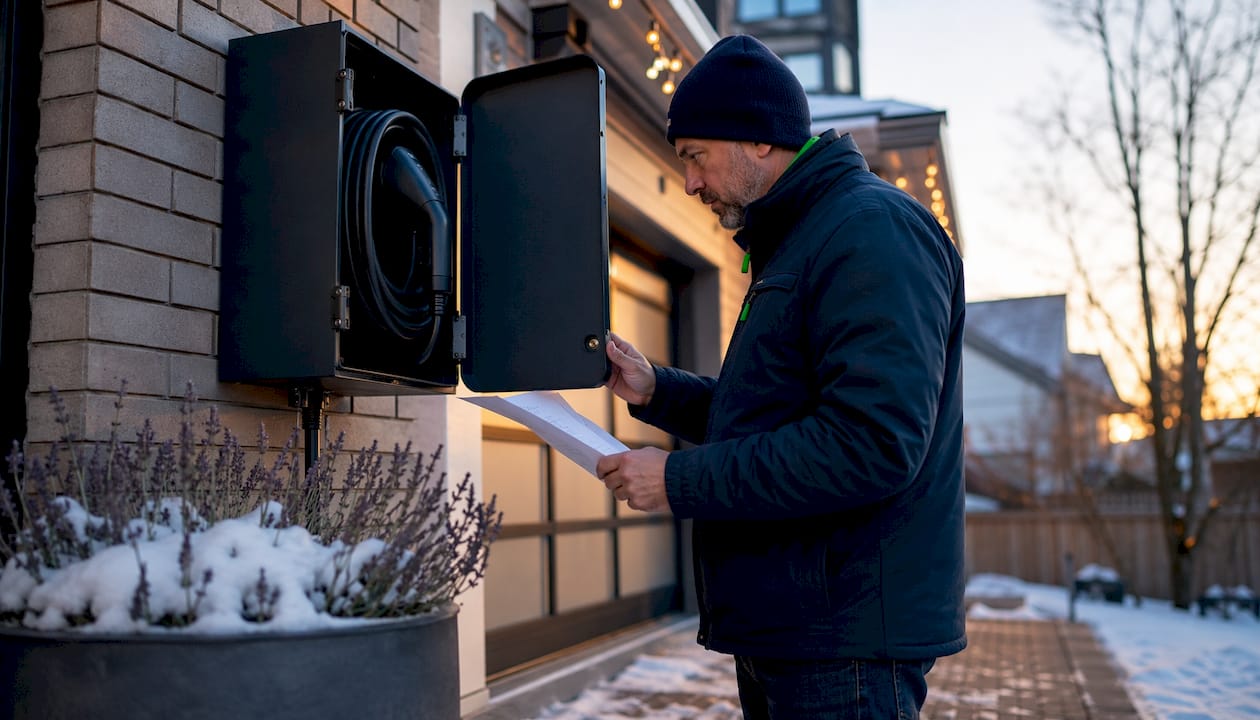
For most Toronto-area homes, a heavy-gauge powder-coated steel or aluminium enclosure rated IP65 or better is the right call. If your driveway is near a salted road or you’re within a few kilometres of Lake Ontario, step up to a 316L stainless cabinet. Here’s the quick breakdown by scenario:
- Detached home, wall-mount on brick or siding: IP65 powder-coated steel enclosure with sufficient gauge for durability and a keyed or padlocked hasp.
- Condo or townhouse with limited permit scope: Confirm your condo installation rights first; a compact wall-mount box with side cable entry is usually the cleanest fit.
- Driveway pedestal install: A free-standing pile enclosure (like the E-abel style) with a concrete anchor base and multi-point lock.
- High-salt or coastal-edge sites (Scarborough Bluffs, Etobicoke waterfront): 316L stainless with an 80-micron UV-resistant powder coat on any painted surfaces.
- Commercial or fleet: Engineered NEMA 4X fabricated cabinet with continuous seam welds and precision gasket channels.
Any outdoor enclosure install in Ontario requires an ESA permit and work by an ESA-licensed electrician, so consider hiring a carport installation service to ensure proper site preparation and long-lasting installation quality. An outdoor-rated charger alone (such as a CSA-certified IP66 unit) may not need a separate housing, but the wiring and mounting still require licensed work.
Table of Contents
- Which outdoor EV charger enclosure options are available to Toronto buyers?
- How do you choose the right enclosure for your charger?
- What does it cost to buy and install an outdoor EV charger enclosure in Canada?
- Which materials and IP ratings actually hold up in Canadian winters?
- Will your specific charger actually fit the enclosure?
- How do you keep your enclosure and charger in good shape through winter?
- Key takeaways
- Why a correctly specified enclosure saves you money and a service call
- EV Install Pro handles the enclosure, the permit, and the rebate for you
- Useful sources and what to verify before you buy
Which outdoor EV charger enclosure options are available to Toronto buyers?
| Option | Material & Corrosion Resistance | IP / NEMA Rating | Security | Mounting | Google Reviews |
|---|---|---|---|---|---|
| EV Install Pro — supply & install | Installer-specified; matched to site conditions | IP65+ / NEMA 4 minimum | Installer-selected lock | Wall or pedestal | — |
| ShincoFab custom enclosure | 316L stainless or heavy-gauge aluminium | NEMA 4X / IP66 | Concealed hinges, multi-point | Wall or custom | — |
| E-abel pile enclosure | High-grade steel / stainless options | IP-rated (model-dependent) | Keyed, electronic, fingerprint | Pedestal / floor | — |
| Bearings Canada — outdoor enclosure | Powder-coated steel (confirm with seller) | Confirm with seller | Lockable hasp | Wall-mount | — |
| Consumer marketplace covers (Amazon) | Thin galvanised alloy steel (~1 mm) | IP65 (claimed) | Basic combination lock | Wall-mount | — |
EV Install Pro is the only option here that handles the full scope: enclosure supply, licensed installation, ESA permit, and Ontario rebate applications. The installer selects the enclosure to match your specific site, which removes the guesswork on material grade and cable routing.
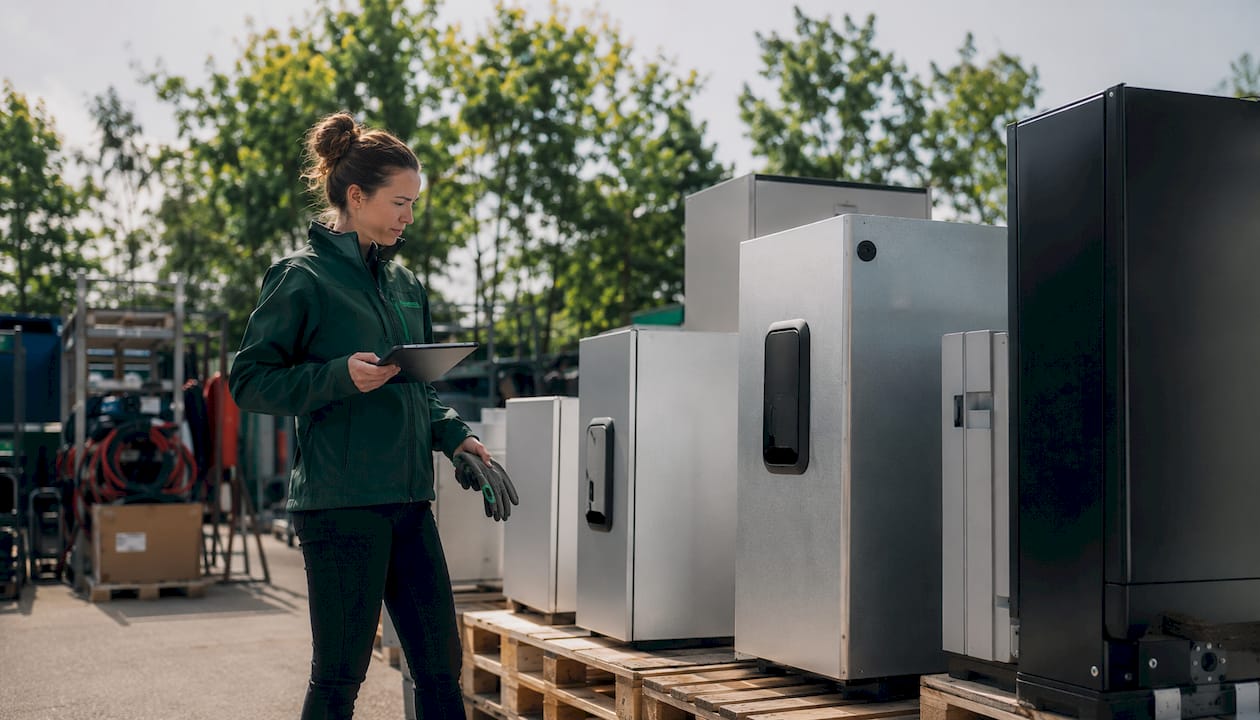
ShincoFab is the right call when you need an engineered cabinet for a demanding environment. Their NEMA 4X fabrication uses precision gasket channels and continuous seam welds — the kind of construction detail that prevents water ingress over a decade of freeze-thaw cycles.
E-abel suits driveway pedestal installs or commercial parking where a free-standing enclosure is required. The fingerprint and electronic lock options are worth noting for unattended or shared charging situations.
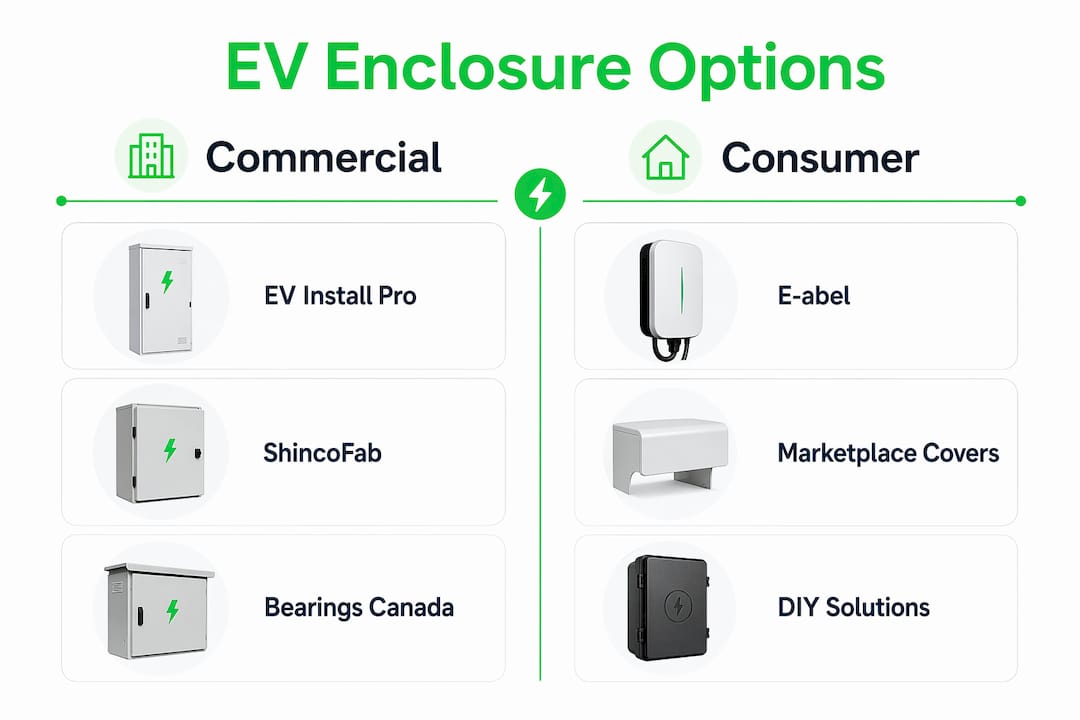
Bearings Canada appears in local Canadian product searches and is worth checking for Toronto availability, but confirm IP rating, gauge, and warranty directly with the seller before purchasing.
Consumer marketplace covers have their place under a sheltered eave with low exposure, but a 30-day warranty and thin gauge steel, around 1 mm thickness are honest signals of their intended lifespan.
Pro Tip: Require a product datasheet, not just a listing page. Engineers specify enclosures by material grade, gasket channel design, and test evidence — not marketing claims. If a seller can’t produce a spec sheet, treat the IP rating as unverified.
How do you choose the right enclosure for your charger?
Work through this checklist before you buy or approve a quote:
- Measure your charger body — record height, width, and depth, then add at least 50 mm clearance on all sides for airflow and connector swing.
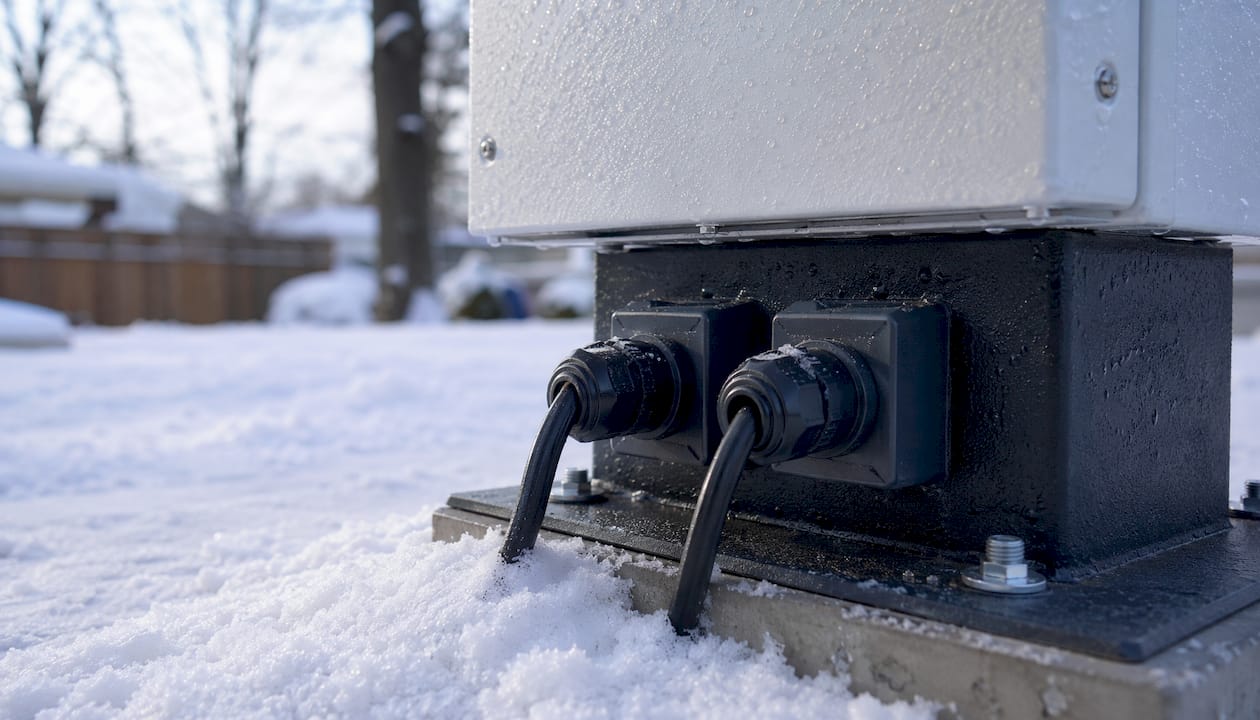
- Confirm cable entry orientation — side entry is preferred; top entry is acceptable with a drip loop; bottom entry requires sealed conduit fittings and raised gland boxes to prevent moisture wicking.
- Check the IP or NEMA rating — IP65 / NEMA 4 is the minimum for an exposed exterior wall. IP66 / NEMA 4X for sites with pressure washing, heavy rain, or salt exposure.
- Verify material grade and finish — ask for the steel gauge or alloy spec in writing, not just “stainless” or “galvanised.”
- Confirm security features — keyed hasp, padlock lug, or multi-point lock depending on your exposure to theft risk.
- Check warranty scope — a 30-day warranty signals a consumer-grade product; look for at least one year on fabricated enclosures.
Red flags to avoid:
- Thin mild steel (under 1.5 mm) with a thin powder coat in a salted-road environment.
- Bottom cable entry with no mention of sealed glands or conduit fittings.
- IP claims with no datasheet or test reference to back them.
- No stated material grade (just “metal” or “alloy steel”).
Ask any seller: “What ASTM salt-spray test hours does this enclosure meet?” and “What is the gasket material and channel design?” If they can’t answer, keep looking.
What does it cost to buy and install an outdoor EV charger enclosure in Canada?
Costs vary by site complexity, enclosure type, and whether you’re supplying the box yourself or having an installer handle it end to end.
- Stock consumer enclosure (self-supplied): $50–$200 CAD for the box alone; installation labour is separate and still requires a licensed electrician.
- Mid-range fabricated enclosure: $300–$800 CAD depending on gauge, finish, and lock hardware.
- Custom engineered cabinet (316L stainless, NEMA 4X): $800–$2,500+ CAD; typically a project-level quote from a fabricator like ShincoFab.
- Turnkey supply-and-install (enclosure + charger + permit): Evchargerinstallationtoronto’s Level 2 installations start from $800, which includes the ESA permit and inspection at no extra charge.
In Ontario, every EV charger installation requires an ESA permit. Pulling that permit yourself and hiring a non-licensed electrician is not a legal option. The permit process adds time but protects you if you ever sell the home or make an insurance claim.
Rebates can meaningfully reduce your net cost. Ontario and federal programmes have offered up to $5,000 toward EV charging equipment and installation. Check current eligibility before you commit to a budget. The typical installation timeline from booking to completed inspection runs one to two weeks when permits are handled by the installer.
Hiring an installer who supplies the enclosure almost always costs less in the long run. You avoid a second truck roll if the self-sourced box turns out to be the wrong size, and the installer’s warranty covers the whole system, not just the labour.
Which materials and IP ratings actually hold up in Canadian winters?
Canadian winters combine road salt, freeze-thaw cycling, and sustained sub-zero temperatures. That combination is harder on enclosures than simple rain exposure.
| Material | Best For | Weakness |
|---|---|---|
| 316L stainless steel | Coastal, salted-road, and industrial sites | Higher cost; heavier |
| aluminium | Lightweight wall-mounts; moderate exposure | Softer; dents more easily |
| Powder-coated mild steel (1.5 mm+) | Sheltered suburban driveways | Rust at scratches if coating is thin |
| Galvanised mild steel (thin gauge) | Short-term or sheltered use only | Pitting within 12 months on salted sites |
Standard mild steel can succumb to salt-air corrosion within 12 months on exposed sites. For any location where road salt spray reaches the enclosure, 316L stainless with an 80-micron minimum UV-resistant powder coat on painted surfaces is the correct specification.
For most Toronto suburban driveways, a heavy-gauge powder-coated steel enclosure rated IP65 / NEMA 4 is sufficient. Demand a sufficiently thick wall and a durable powder-coat finish. Insufficient powder-coat thickness can lead to rust appearing at scratches during early winters.
Pro Tip: Avoid bottom-entry cabling unless the base is engineered with sealed conduit fittings and raised gland boxes. Moisture wicking at an unsealed base entry is one of the most common causes of EVSE failure in Canadian climates.
Will your specific charger actually fit the enclosure?
Before ordering any box, take these measurements:
- Charger body dimensions: height, width, depth (check the manufacturer spec sheet, not the product photo).
- Mounting hole pattern: confirm the enclosure’s internal mounting rail or back plate matches or can be adapted.
- Connector and cable hook clearance: the connector handle needs room to hang without stressing the cable; add at least 100 mm below the charger body.
- Cable coil space: a 7–8 metre Level 2 cable coiled on a hook needs roughly 300 mm of vertical clearance inside or beside the enclosure.
- Cable entry location: confirm whether your conduit arrives from the top, side, or bottom, and that the enclosure has a knockout or gland fitting in that position.
Some Level 2 chargers are themselves rated for outdoor use without a separate housing. The DEWALT 48A Level 2 charger, for example, carries a CSA-certified IP66 rating and a NEMA 4X-type enclosure built in. If your charger already meets IP65 or better, you may only need a cable management cover rather than a full protective cabinet. Confirm with your electrician before purchasing a redundant enclosure.
How do you keep your enclosure and charger in good shape through winter?
A short seasonal routine prevents the most common failures:
- Before winter (October/November): Inspect door gaskets for cracks or compression set; replace if the seal no longer springs back. Lubricate hinges and lock cylinders with a silicone-based lubricant (not WD-40, which attracts dirt).
- Mid-winter check: Clear any ice buildup from the door seal and drain path. Do not chip ice with metal tools near the enclosure finish.
- After salt season (April): Rinse the enclosure exterior with fresh water to remove road salt. Check for paint chips or scratches and touch up with matching powder-coat paint to prevent rust.
- Cable care: In sustained cold below -20°C, EV cables stiffen and can crack at the connector boot. Coil cables loosely and avoid sharp bends when temperatures drop.
Pro Tip: For sites exposed to drifting snow or ice fog, a removable polycarbonate shield over the door face adds a layer of protection without trapping heat. Avoid fully enclosed secondary covers that block ventilation — heat buildup shortens charger electronics life.
Key takeaways
A correctly specified outdoor EV charger enclosure rated IP65 or better, made from heavy-gauge steel or 316L stainless, with sealed cable entries and a keyed lock, is the minimum standard for a reliable outdoor charging setup in Toronto’s climate.
| Point | Details |
|---|---|
| Minimum IP/NEMA rating | IP65 / NEMA 4 for exposed sites; IP66 / NEMA 4X for salted-road or coastal locations. |
| Material for salted roads | 316L stainless steel with an 80-micron UV-resistant powder coat on any painted surfaces. |
| Cable entry sealing | Side or top entry preferred; bottom entry only with sealed conduit fittings and raised gland boxes. |
| Security must-haves | Keyed hasp, padlock lug, or multi-point lock; concealed hinges for unattended or shared sites. |
| ESA permit required | Every outdoor charger install in Ontario needs an ESA permit; hire a licensed electrician. |
| Evchargerinstallationtoronto | Handles enclosure supply, licensed install, ESA permit, and rebate applications across the GTA. |
Why a correctly specified enclosure saves you money and a service call
The most expensive enclosure mistake isn’t buying the wrong box. It’s buying a cheap one, having it installed, and then paying for a second truck roll six months later when water ingress damages the EVSE.
The failure pattern is consistent: thin-gauge mild steel with a marginal powder coat, a bottom cable entry with no sealed gland, and a door gasket that compresses flat after one winter. By spring, there’s corrosion on the terminal block and a charger that faults on startup. The homeowner pays for a service visit, sometimes a replacement charger, and occasionally a new enclosure. The total cost easily exceeds what a properly specified cabinet would have cost upfront.
The fix is straightforward: insist that your installer specifies the enclosure in writing, including material grade, IP rating, gasket type, and cable entry method. If they can’t or won’t, that’s a signal worth taking seriously. A professional installation scope should include the enclosure spec, not just the charger model.
EV Install Pro handles the enclosure, the permit, and the rebate for you
Sourcing the right outdoor EV charger enclosure, confirming it fits your charger, pulling the ESA permit, and booking a licensed electrician are four separate tasks that Evchargerinstallationtoronto handles as one job. Their ESA-licensed electricians specify the enclosure to match your site conditions, handle all permit and inspection paperwork at no extra charge, and manage Ontario rebate applications worth up to $5,000. Same-week booking is available across the Greater Toronto Area, and installations are typically completed within a few hours. Use the free cost calculator to get a tailored estimate for your home. If you prefer to source the enclosure yourself, that’s a valid option — just confirm the spec with a licensed electrician before you buy.
This article is general information. Confirm current ESA permit requirements, rebate eligibility, and electrical code obligations with a licensed electrician or the Electrical Safety Authority for your specific situation.
Useful sources and what to verify before you buy
When reviewing any enclosure product page or datasheet, check for these specific items:
- IP or NEMA rating: confirm it appears on a datasheet or third-party test report, not just marketing copy.
- Material grade: “stainless steel” is not a specification; ask for 304 or 316L. “Galvanised” or “alloy steel” without a grade is a red flag.
- IK impact rating: relevant for pedestal installs in parking areas where vehicle contact is possible.
- CSA, UL, or ETL listing: required for the charger itself in Canada; relevant for the enclosure when it is sold as a combined unit.
- ASTM B117 salt-spray test hours: the standard test for corrosion resistance; ask fabricators for the hours their finish has been tested to.
- Gasket material and channel design: EPDM gaskets in a precision-machined channel outperform foam tape in freeze-thaw conditions.
- Warranty scope and duration: a 30-day warranty covers transit damage only; one year or more is the minimum for a permanent outdoor installation.
For Ontario permit guidance, the Electrical Safety Authority is the primary source. For rebate eligibility, check the Evchargerinstallationtoronto rebates page for current Ontario and federal programme details. For FLO’s guidance on outdoor installation, their published checklist covers mounting locations and protective measures worth reviewing before finalising your enclosure choice.
Recommended
- EV Charger Installation in a Toronto Condo or Apartment: The Complete 2025 Guide | EV Install Pro Toronto
- EV Charger Guides & Blog | EV Install Pro Toronto | EV Install Pro Toronto
- EV Charger Installation Process & Timeline in Toronto: What to Expect (2026) | EV Install Pro Toronto
- Home Ev Charger Installation in Toronto | Licensed ESA Electrician | EV Install Pro Toronto
Get Your Free Installation Quote
Free assessment · ESA permit included · Same-week availability across the GTA