Home insurance EV charger: what you need to check
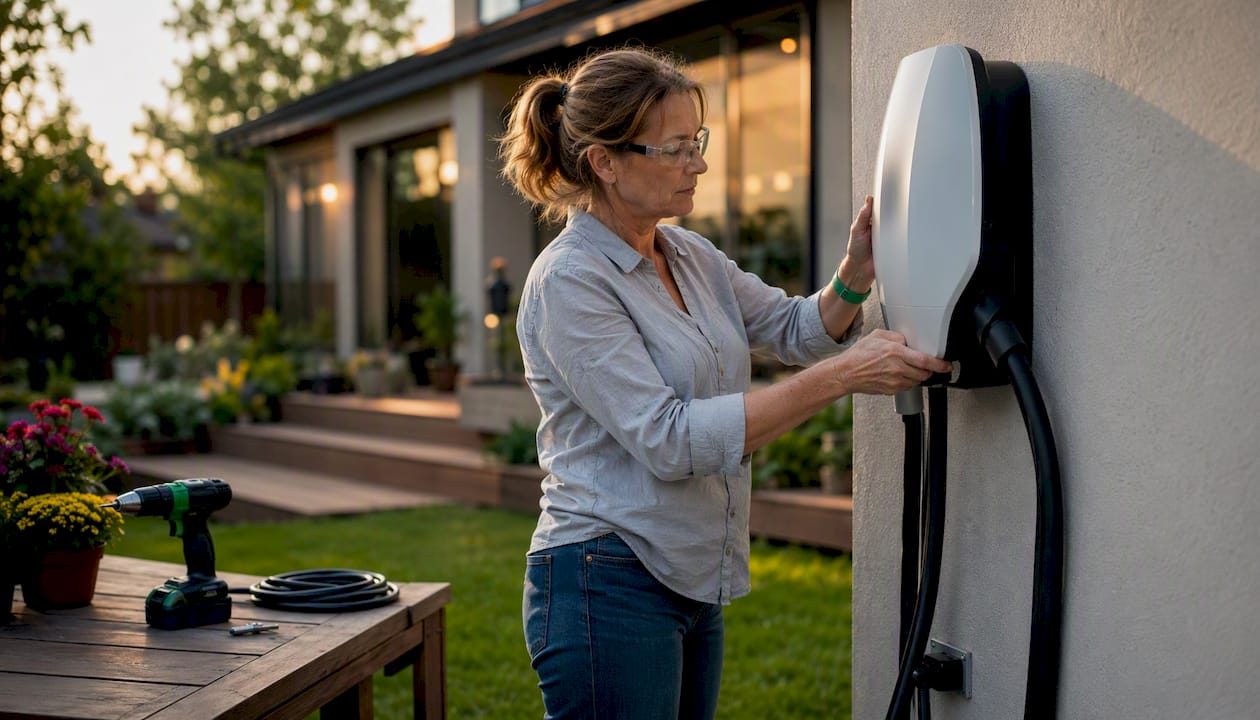
A permanently installed, hardwired Level 2 EV charger is typically covered under your home insurance policy as part of your dwelling. A portable Level 1 charger is a different story. TD Insurance classifies portable chargers as motor vehicle accessories, which means they often fall outside home coverage entirely and may need to be addressed through your auto policy instead.
Before you assume you’re covered, take these three steps:
- Confirm classification with both insurers. Call your home insurer and your auto insurer. Ask each one how they classify your specific charger type (hardwired Level 2 vs. portable Level 1) and where coverage sits.
- Retain all installation documentation. Your electrician’s licence number, the permit reference, the Electrical Safety Authority (ESA) inspection certificate, and the itemised invoice are the documents insurers ask for first when a claim is filed.
- Update your dwelling replacement cost. A hardwired charger and any associated panel upgrade add to your home’s electrical infrastructure value. If your policy limits haven’t been reviewed since installation, you may be under-insured.
EV Install Pro (operating as Evchargerinstallationtoronto) handles ESA permits and inspections as part of every installation in the Greater Toronto Area, which means you receive the documentation package insurers expect before you ever need to file a claim.
Table of Contents
- What does home insurance actually cover on an EV charger?
- How does liability coverage respond to charger-related injuries?
- When should you notify your insurer about a charger installation?
- Why licensed installation and permits protect your coverage
- When does home insurance pay versus auto insurance?
- How to file a claim and what gets claims denied
- What does installation cost and how does it affect your premiums?
- What EV Install Pro provides to satisfy insurer requirements
- Key takeaways
- The part most homeowners get wrong about EV charger insurance
- How Evchargerinstallationtoronto removes the insurance risk from your installation
- Useful sources for further reading
What does home insurance actually cover on an EV charger?
The coverage your home insurance policy provides for an EV charging setup depends almost entirely on how the equipment is attached to your home and how your insurer classifies it.
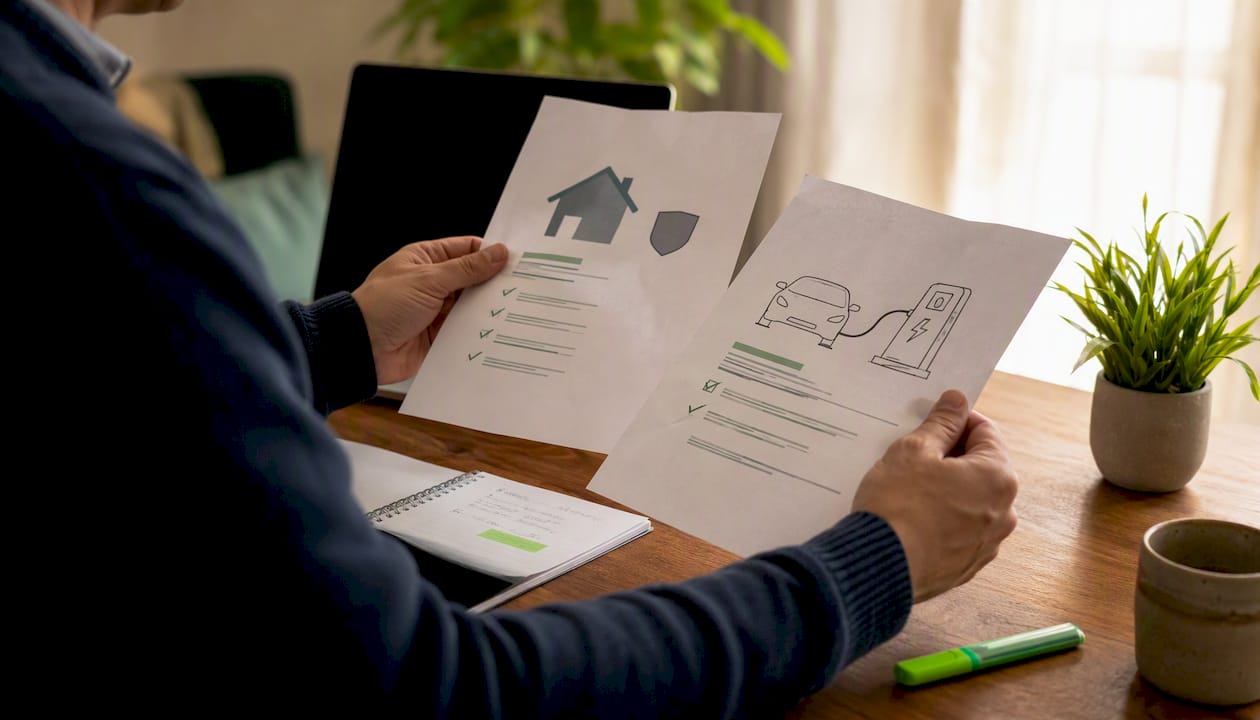
Hardwired Level 2 chargers are wall-mounted units wired directly into your electrical panel. Insurers generally treat these the same way they treat a furnace or a built-in appliance: as part of the dwelling. That means fire, storm damage, vandalism, and theft are typically covered perils under the dwelling section of a standard policy.
Tethered units (wall-mounted but with a fixed cable) usually fall into the same dwelling bucket, though it’s worth confirming with your insurer that the cable itself is included in the coverage wording.
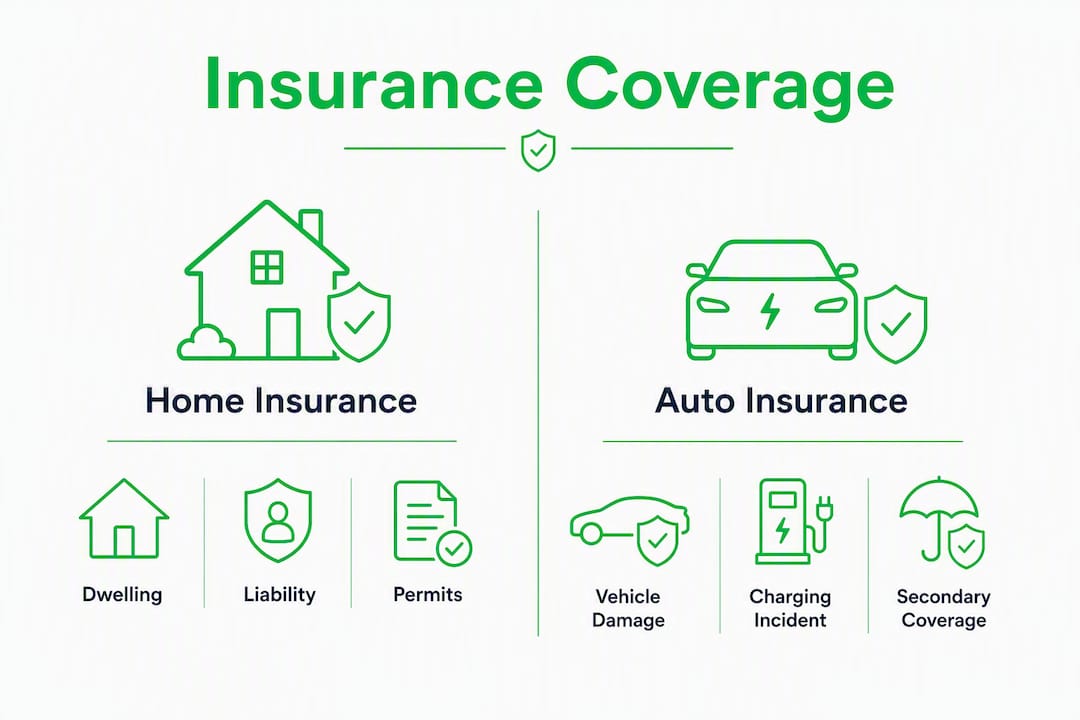
Portable Level 1 chargers are a different classification. Because you can unplug them and move them between locations, insurers commonly treat them as motor vehicle accessories rather than home fixtures. Home policies often exclude them, and auto policies may cover them only under specific conditions.
A few coverage distinctions worth knowing:
- Outdoor pedestal charger: If your charger sits on a freestanding post in your driveway, it may fall under the “other structures” section of your policy rather than the main dwelling section. Coverage limits for other structures are typically lower, so check your sub-limit.
- Garage wall mount: This almost always falls under the dwelling section, which carries your full replacement cost limit.
- Wear and tear: No home policy covers gradual deterioration. If a connector corrodes over time, that’s a maintenance issue, not an insurable loss.
- Faulty workmanship: Damage caused by poor installation is typically excluded. This is one reason why licensed installation matters so much.
Many policy wordings still don’t explicitly name EV chargers or cables, which creates ambiguity. Industry guidance from the ABI notes that insurers are encouraged to update their wordings to specify whether chargers and cables are included or excluded. Until your policy does that clearly, ask your broker for written confirmation. Some insurers now offer an EVSE (electric vehicle supply equipment) endorsement or rider that removes the ambiguity entirely. Liberty Mutual’s guidance recommends asking specifically about EV endorsements that cover home charging equipment, mobile charging assistance, and battery protections.
How does liability coverage respond to charger-related injuries?
Personal liability coverage on a standard home policy responds when someone is injured on your property or when your property causes damage to a neighbour’s. An EV charger creates a few specific exposure points.
The most common scenario is a trip-and-fall over a charging cable. If a visitor trips on a cable running across your driveway and is injured, your home liability coverage is the policy that responds, not your auto insurance. ABI guidance draws the line clearly: if the incident arises from the use of a vehicle on a road, motor liability applies; if it arises from occupier or owner responsibilities on your property, home liability applies.
A second scenario is an electrical fire that spreads to a neighbour’s fence or garage. Again, your home liability section would typically be the primary coverage, provided the fire originated from the charger installation rather than from the vehicle itself.
Liability limits on standard Canadian home policies are usually $1 million or $2 million. For most homeowners, that’s adequate. However, if your charger is in a shared condo parking garage with frequent visitor access, your exposure is higher. In that situation, an umbrella or excess liability policy is worth discussing with your broker.
- Confirm your current liability limit covers the replacement cost of neighbouring structures in your area.
- For condo installations, check whether the condo corporation’s master policy provides any coverage for common-area incidents, and where your unit owner policy picks up.
- If you install a pedestal charger near a sidewalk or shared path, document your cable management setup with photos.
Pro Tip: Keep dated photos of your cable management setup, any protective covers or conduit runs, and physical safeguards like bollards or cord covers. If a liability claim is ever filed, this documentation shows you took reasonable precautions as a property owner.
When should you notify your insurer about a charger installation?
Notify your home insurer before or immediately after installation, not months later. The trigger for notification is any of the following:
- You are hardwiring a Level 2 charger to your electrical panel.
- You are upgrading your electrical panel (e.g., from 100A to 200A) to support the charger.
- You are installing a visible exterior pedestal or outdoor unit.
- You are installing in a condo parking space or shared garage.
- A permit has been issued and an ESA inspection is scheduled.
When you call, your insurer will typically ask for the equipment make, model, and serial number; the name and licence number of the installing electrician; the permit reference number; and confirmation that an ESA or provincial inspection was completed. State Farm’s guidance recommends notifying your insurer so that policy limits reflect the full replacement cost of the home, including new electrical upgrades.
Possible outcomes of that conversation:
- No policy change required: Your existing dwelling coverage already captures the charger and the insurer confirms it in writing.
- Endorsement added: The insurer adds an EVSE rider to clarify coverage scope and remove ambiguity from the policy wording.
- Replacement limit increase: If a panel upgrade was part of the installation, the insurer may ask you to raise your dwelling replacement cost limit.
- Deductible adjustment: Less common, but some insurers adjust deductibles for electrical equipment claims.
Questions to ask your insurer directly:
- Is my hardwired Level 2 charger covered under the dwelling section?
- Does my policy cover the charger cable and any associated conduit?
- Do I need an endorsement, or is coverage already explicit in the wording?
- Should I update my dwelling replacement cost limit after the panel upgrade?
- Which perils are covered and which are excluded for the charger specifically?
Why licensed installation and permits protect your coverage
Missing permits and unlicensed installations are among the most common reasons insurers deny claims tied to electrical faults. This isn’t a technicality. If a fire starts at your charger and the adjuster discovers the work was done without a permit or by an unlicensed person, the insurer has grounds to deny the claim entirely.
TD Insurance is direct on this point: when a fire or electrical failure occurs, insurers verify that the charger was installed by a licensed electrician and that permits and inspections were completed. In Ontario, that means an ESA permit and a passing inspection from the Electrical Safety Authority before the work is considered code-compliant.
A 200A panel upgrade alongside a charger installation raises the stakes further. The upgrade adds measurable value to your home’s electrical infrastructure, and insurers need to know about it to set accurate replacement cost limits.
Documents to collect from your installer and keep permanently:
- Itemised installation invoice with the electrician’s name and licence number
- Permit reference number and permit application copy
- ESA inspection certificate (or provincial equivalent outside Ontario)
- Photos of the completed installation, including panel connections and conduit runs
- Equipment make, model, and serial number
- Rebate application confirmation, if applicable
An ESA-licensed electrician will provide most of these automatically. If your installer can’t produce a licence number or permit reference, that’s a clear signal to find a different contractor.
When does home insurance pay versus auto insurance?
The general rule is straightforward: if the charger or your home’s wiring causes damage to the building or to third-party property on your lot, your home policy is usually primary. If the vehicle itself is damaged during charging because of a vehicle fault, your auto policy is more likely to respond.
A few specific scenarios:
- You back into your outdoor pedestal charger. Your auto policy’s collision coverage applies to the vehicle damage. The charger damage would be a home insurance claim under the dwelling or other structures section.
- A power surge damages both the charger and the vehicle’s onboard charging system. This is where both policies may be involved. The charger damage goes to your home insurer; the vehicle damage goes to your auto insurer under comprehensive coverage. Liberty Mutual notes that knowing which carrier to notify first speeds up claims handling considerably.
- A visitor trips over your charging cable. Home liability is primary. Auto insurance is not involved because the incident has nothing to do with the operation of a vehicle.
- An electrical fault in the charger causes a fire that spreads to your neighbour’s garage. Home liability and dwelling coverage are both potentially involved. Auto insurance is not.
When both policies are involved, the insurers coordinate to determine which is primary and which is secondary. Notify both carriers at the same time and let them sort out the coordination. Delaying notification to one insurer while waiting on the other can complicate your claim.
How to file a claim and what gets claims denied
When something goes wrong with your charger or a charger-caused loss occurs, the steps you take in the first few hours matter.
- Secure the scene. If there’s fire or electrical damage, don’t touch the equipment until it’s safe and the area has been cleared.
- Photograph everything. Take wide shots and close-ups of the damage, the panel, the conduit, and any affected areas of the home or property.
- Gather your documentation folder. Pull your installation invoice, permit reference, ESA certificate, and equipment serial numbers before you call.
- Notify your insurer. Call your home insurer first for property damage. If the vehicle is also damaged, call your auto insurer at the same time or immediately after.
- Request a claim number. Get it in writing and keep it with your file.
- Preserve the equipment. Don’t dispose of the damaged charger or wiring. The adjuster or an independent electrician may need to inspect it.
Common reasons claims are denied:
- DIY installation with no licensed electrician involved
- No permit was pulled or the permit was never inspected
- Wear and tear or gradual deterioration rather than a sudden covered peril
- Product defect (a manufacturer warranty issue, not an insurable loss)
- Failure to notify the insurer about the installation before the loss occurred
TD Insurance is clear that everyday charging costs are not claimable. You can only claim when the equipment itself is damaged by a covered peril. That distinction catches some homeowners off guard.
Pro Tip: Create a dedicated digital folder (Google Drive, iCloud, or a USB backup) labelled with your address and installation date. Store your invoice, permit, ESA certificate, serial numbers, and dated installation photos there. If you ever file a claim, you can share the entire folder with your adjuster in minutes rather than searching through paper files.
What does installation cost and how does it affect your premiums?
EV Install Pro’s Level 2 charger installations start at $1,800 in the Greater Toronto Area. The final cost depends on several factors: whether a panel upgrade is needed, the distance from the panel to the charger location, whether conduit needs to be run through finished walls or underground, and whether an EVEMS (Energy Management System) is required for a condo or multi-unit property.
A 200A panel upgrade, when needed, adds to both the installation cost and your home’s electrical infrastructure value. State Farm’s guidance notes that an EV charger combined with a panel upgrade can significantly add to the replacement value of a home’s electrical systems, and that homeowners should discuss updated replacement limits with their insurer.
On the premium side, adding a charger alone rarely causes a noticeable standalone premium increase. The real risk is being under-insured because your dwelling replacement cost limit hasn’t been updated to reflect the electrical upgrades. That gap only becomes visible when you file a claim.
Practical steps to manage your cost exposure:
- Ask your installer for an itemised invoice that separates the charger, the panel upgrade, conduit, and labour.
- Share that invoice with your insurer so they can assess whether your replacement cost limit needs adjustment.
- Ask your broker whether an EVSE endorsement adds any cost and whether it removes ambiguity from your policy wording.
- Check available Ontario rebates before finalising your budget. EV Install Pro manages rebate applications at no extra charge, which can offset a meaningful portion of the installation cost.
What EV Install Pro provides to satisfy insurer requirements
A compliant installation from Evchargerinstallationtoronto delivers the exact documentation package insurers ask for. Every job includes:
- ESA-licensed electrician credentials: — The licence number is on your invoice and available for insurer verification.
This documentation package materially reduces the friction in a claim investigation. An adjuster who receives a complete file with a licensed electrician’s credentials, a valid permit, an ESA certificate, and dated photos has everything needed to process the claim without delays.
Pro Tip: Ask your installer to provide documents in PDF format and save them to cloud storage the same day as your installation. Physical copies fade and get lost. A cloud-stored PDF with a clear filename (e.g., “ESA-Certificate-123-Main-St-2026”) is searchable and shareable in seconds.
Key takeaways
A permanently installed Level 2 charger is typically covered under your home insurance dwelling section, but coverage depends entirely on licensed installation, valid permits, and notifying your insurer.
| Point | Details |
|---|---|
| Charger classification matters | Hardwired Level 2 units fall under dwelling coverage; portable Level 1 chargers are often excluded from home policies. |
| Notify your insurer promptly | Tell your home insurer before or right after installation, especially if a panel upgrade is involved. |
| Permits prevent claim denials | Missing ESA permits or unlicensed work are the most common reasons insurers deny charger-related claims. |
| Update your replacement cost limit | A panel upgrade raises your home’s electrical infrastructure value; review dwelling limits with your insurer after any upgrade. |
| Evchargerinstallationtoronto delivers the full file | Every EV Install Pro installation includes ESA credentials, permits, inspection certificates, and photos, reducing claim friction from day one. |
The part most homeowners get wrong about EV charger insurance
Most homeowners who run into coverage problems didn’t skip insurance on purpose. They assumed a standard policy would handle everything automatically, installed the charger, and never told their insurer. That assumption is where the real risk sits.
The insurance industry is still catching up to EV adoption. Many policy wordings were written before home chargers were common, which means the language is genuinely ambiguous. That ambiguity cuts both ways: it can work in your favour if your insurer interprets a hardwired charger as part of the dwelling, or it can work against you if a claim adjuster reads the same wording differently after a loss.
The practical answer isn’t to wait for policy language to improve. It’s to get written confirmation from your insurer before you need it. Ask specifically whether your charger is covered, under which section, and whether an endorsement would make the coverage explicit. That five-minute conversation eliminates the ambiguity entirely.
The other thing installers see regularly is homeowners who chose informal or DIY installations to save money, then discovered their insurer won’t pay after an electrical fault. The savings on installation rarely cover the cost of a denied claim. Licensed work with full documentation is the only version of this that holds up under scrutiny.
Owning an EV doesn’t raise your home insurance premiums in any meaningful way on its own. The risk is unmanaged electrical work and a dwelling replacement cost limit that was set before the panel upgrade. Both are fixable before anything goes wrong.
How Evchargerinstallationtoronto removes the insurance risk from your installation
Getting a charger installed correctly the first time is the single most effective way to protect your coverage. Evchargerinstallationtoronto’s installations start at $1,800 and include everything insurers ask for: ESA-licensed electricians, permit handling, ESA inspection management, itemised invoices, and dated installation photos. You don’t need to chase paperwork after the fact because it’s built into every job.
Same-week booking is available across the Greater Toronto Area, and EV Install Pro manages rebate applications worth up to $5,000 for eligible new EV purchases at no extra charge. The 4.9 customer rating reflects a process that’s been refined to be fast, compliant, and fully documented.
Use the free installation cost calculator to get an immediate price estimate for your home, or visit evchargerinstallationtoronto.ca to book your assessment and get the documentation package your insurer expects.
Useful sources for further reading
These are the primary and authoritative sources referenced in this article. Use them to verify claims, review your insurer’s specific guidance, and understand provincial permit requirements.
Insurer guidance and FAQs:
- Does Home Insurance Cover an EV Charger? | TD Insurance — Canada-specific insurer FAQ covering charger classification, coverage scope, and documentation requirements.
- EV Home Charging & Homeowners Insurance: What to Know | State Farm — Covers Level 1 vs. Level 2 coverage distinctions, replacement cost considerations, and documentation guidance (U.S.-based; principles broadly applicable).
Industry and electrical safety guidance:
Installer and permit resources (Ontario):
- ESA Permit for EV Charger Installation Ontario | EV Install Pro — Explains Ontario ESA permit requirements and how EV Install Pro manages the permit and inspection process.
- Licensed Electrician for EV Charger Installation | EV Install Pro — Covers what qualifications to verify in an installer and why ESA licensing matters for insurance purposes.
Property condition and insurance costs:
- Why Property Cleaning Affects Insurance Costs | E&R Cleaning Solutions — Practical overview of how property condition and upgrades affect your home’s risk profile and underwriting.
Recommended
- Find EV Chargers Near Me in Toronto & the GTA | Live Map | EV Install Pro Toronto
- Home Ev Charger Installation in Leaside | Licensed ESA Electrician | EV Install Pro Toronto
- Home Ev Charger Installation in East York | Licensed ESA Electrician | EV Install Pro Toronto
- Home Ev Charger Installation in York | Licensed ESA Electrician | EV Install Pro Toronto
Get Your Free Installation Quote
Free assessment · ESA permit included · Same-week availability across the GTA