When 2.8¢/kWh Beats Solar: Make Solar EV Charging in Ontario Pay
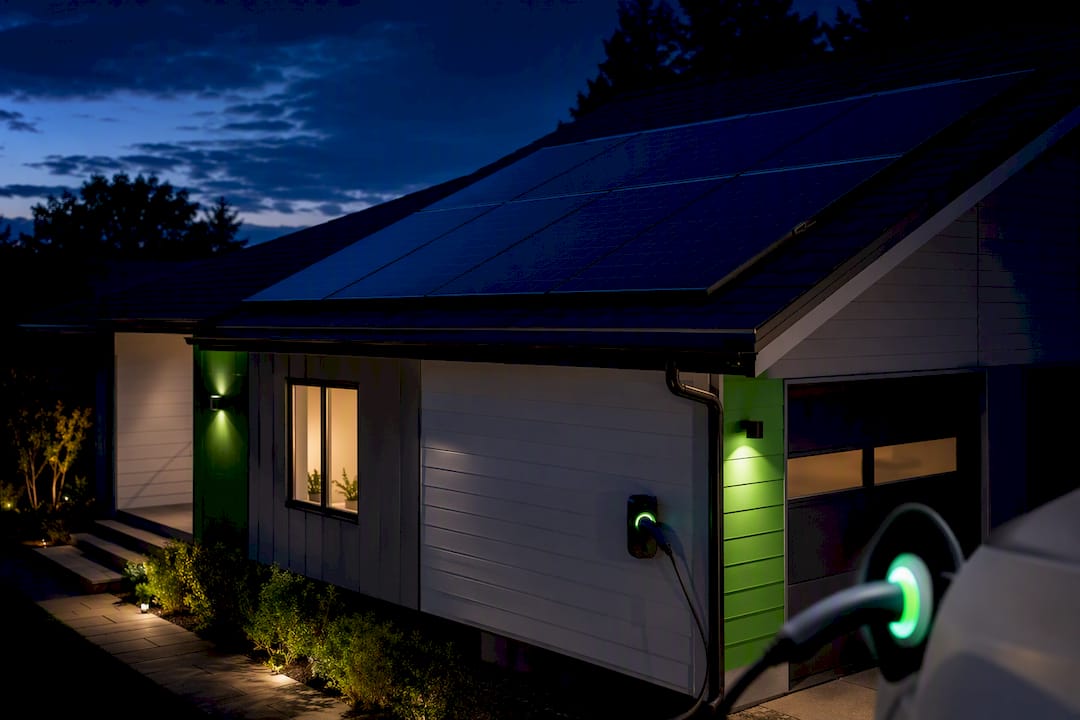
Yes, you can substantially offset EV charging with rooftop solar in Ontario, and for most homeowners the practical setup is grid-connected solar paired with a Level 2 smart charger, plus net metering or a home battery if you want true overnight independence. A substantial federal Clean Technology ITC and ZEVIP grants can offset commercial and MURB projects, while Ontario’s Ultra-Low Overnight rate remains a strong low-cost alternative for pure grid charging. The right next step is a site assessment from an ESA-licensed installer.
TL;DR:
- A typical solar system for EV charging in Ontario ranges from 3 to 4 kW for EV-only needs and 8 to 12 kW for full household coverage, considering roof space and shading.
- Net metering allows exporting excess solar energy during the day to offset nighttime grid draw, making solar charging more effective and financially beneficial.
- Using a Level 2 charger with scheduled or solar-matching features optimizes solar utilization and reduces charging costs, especially when paired with load management.
- Installing a grid-connected system without a battery cannot provide backup power during outages unless a battery with an automatic transfer switch is added.
- A licensed Essex electrician’s assessment, proper permits, and a compliant install are essential to ensure safety, maximize incentives, and avoid costly rework.
Table of Contents
- What solar EV charging in Ontario can realistically deliver
- How do you size a solar system for EV charging?
- Which EV charger works best with a solar setup?
- What does solar EV charging cost, and how fast does it pay off?
- What should you expect from an ESA-licensed installation?
- How should commercial properties approach solar and EV charging?
- Why choose an ESA-licensed installer for the job?
- Can solar EV charging keep working during a power outage?
- How do you maintain a combined solar and EV charging system?
- An honest read on solar EV charging economics in Ontario
- Get a solar-ready EV charger installation done right
- Sources
What solar EV charging in Ontario can realistically deliver
Solar EV charging in Ontario works best when you treat it as a long-term cost and emissions play, not a way to charge for free every night. The value is real: lower lifetime transport energy costs, cleaner electrons behind your commute, and, if you add battery storage, a home that keeps charging your car even when the grid goes down.
Here’s the part most solar pitches skip. Most EV charging in Ontario happens overnight, while solar panels only produce during daylight. Without net metering or a battery, your panels are feeding the grid at 2 PM while your car pulls grid power at 11 PM. That is not a flaw in the system. It is simply how solar and typical driving schedules line up.
What you actually get from a well-designed system:
- Lower blended energy cost over the life of the panels, especially once you factor in incentives
- Reduced emissions per kilometre driven, layered on top of an already comparatively clean Ontario grid
- Backup charging capability during outages if you pair panels with storage
- A hedge against future electricity price increases, since your solar production cost is fixed once installed
If your goal is genuinely “solar-charged” driving rather than just offsetting your annual bill, net metering or a battery is not optional. It’s the mechanism that makes the claim true.
How do you size a solar system for EV charging?
Sizing starts with your driving, not your roof. Work backward from how much energy your EV actually consumes in a year, then match that to what Ontario sun can produce.
- Estimate annual EV energy use. Multiply your yearly kilometres by your vehicle’s consumption rate (most EVs sit around 18 to 22 kWh per 100 km). A driver doing 20,000 km a year at 20 kWh/100 km needs roughly 4,000 kWh annually just for the car.
- Map that to Ontario solar production. A well-sited panel in Ontario typically generates somewhere in the range of 1,100 to 1,300 kWh per installed kW annually, depending on roof orientation and shading.
- Choose a system size and decide on storage. Divide your annual EV kWh need by your expected production per kW to land on a starting system size, then round up for winter shortfalls and system losses.
In practice, Ontario-focused calculators put EV-only offsets at roughly 3 to 4 kW of solar, while covering both a household’s regular consumption and EV charging typically lands in the 8 to 12 kW range. Roof space, shading from neighbouring trees, and your electrical panel’s capacity all factor into which end of that range you land on.
Net metering credits your daytime solar export against nighttime grid draw, which is cheaper upfront than batteries but ties your savings to your utility’s net metering terms. Batteries let you store daytime solar and use it that night, which costs more but gets you closer to genuine energy independence and outage protection.
Pro Tip: Before assuming you need a bigger system, ask your installer to run the numbers with and without a battery. Sometimes a slightly oversized panel array plus net metering beats a battery on payback, especially if your utility’s net metering rates are favourable.
Which EV charger works best with a solar setup?
The charger you choose matters almost as much as the panels themselves. Level 1 charging, using a standard 120-volt household outlet, adds roughly 3 to 8 kilometres of range per hour. That is fine for a plug-in hybrid or someone with a short commute, but it is painfully slow for daily EV use and it does very little to help you time your charging around solar production.
Level 2 charging at 240 volts is the practical standard for most Ontario homes, delivering a full charge overnight in a fraction of the time. It is also what makes solar-matching genuinely useful, because you can schedule it or automate it around your production window.
Look for these features when comparing chargers:
- Scheduled charging that lets you set specific hours, useful for aligning with Ultra-Low Overnight rates or solar export windows
- Solar-matching or excess-export charging, which throttles charger output to consume only the solar power your panels are currently producing
- Power-limited or load-managed charging, which caps charger draw to avoid tripping your main panel or triggering an expensive panel upgrade
Vehicle-to-grid and vehicle-to-home (V2G/V2H) technology, where your EV’s battery can power your house or feed the grid, is still mostly a pilot-stage technology in Ontario. Demonstration projects combining bidirectional charging with solar and storage are running in Cobourg, Markham, and Oxford Station, but mainstream residential V2G hardware and utility support are not yet widely available. Worth watching, not worth waiting for.
What does solar EV charging cost, and how fast does it pay off?
Costs vary by system size, roof complexity, and whether you’re adding a battery, but a few benchmarks help set expectations. A residential solar system sized to meaningfully offset EV charging, in the 3 to 4 kW EV-only range, typically runs several thousand dollars before incentives, while a larger 8 to 12 kW system covering the whole household plus a car costs proportionally more. Charger installation itself is a separate line item. Evchargerinstallationtoronto starts residential Level 2 installs at $1,800, which covers ESA-licensed electrical work, not the solar array.
The federal Clean Technology Investment Tax Credit sits at 30%, and it stacks with other programs rather than replacing them, which is the single biggest lever for shortening payback on a combined solar and EV project.
Layer incentives strategically:
- The 30% Clean Technology ITC applies broadly and can be combined with other programs
- ZEVIP grants target workplaces and multi-unit residential buildings rather than single-family homeowners
- Commercial owners can also access enhanced first-year capital cost allowance treatment under Class 43.1/43.2 rules, which accelerates depreciation on the equipment
Two quick scenarios show how the math shifts. Scenario A: a homeowner skips solar entirely and charges overnight on Ontario’s Ultra-Low Overnight plan at 2.8¢/kWh. That is genuinely cheap energy, and for many households it beats solar on pure payback speed, especially if their roof is poorly oriented or shaded. Scenario B: a homeowner adds solar with net metering, sees higher upfront cost, but locks in a fixed energy cost, gains outage resilience, and benefits from the ITC incentive, which shortens the payback window considerably compared to paying full retail solar pricing.
What should you expect from an ESA-licensed installation?
A compliant installation in Ontario follows a predictable sequence, and knowing it in advance helps you spot a shortcut before it costs you.
- Site assessment. A licensed electrician evaluates your electrical panel capacity, service size, and charger or solar placement options.
- Permit application. The installer files the necessary electrical permit, which the Electrical Safety Authority requires for any home EV charger or panel work in Ontario.
- Certified installation. The work itself, charger mounting, wiring, and any panel modifications, is completed by ESA-licensed electricians.
- Inspection and commissioning. The ESA inspects the completed work before it is signed off as compliant and safe to operate.
A 200-amp panel upgrade becomes necessary when your existing service, often 100 amps in older homes, cannot handle the added load of a Level 2 charger alongside your existing appliances. In many cases, though, an EVEMS or load-management system lets you avoid that upgrade entirely by intelligently sharing available capacity between your charger and the rest of the house.
Timelines typically run from a same-week site visit to a completed installation within hours once permits clear. Ask any installer directly about permit handling, whether rebate paperwork is included, and what warranty covers the electrical work versus the charger hardware itself.
Pro Tip: Always ask whether panel upgrade costs are quoted separately from the charger install. A vague all-in number often hides whether you actually need the upgrade or whether load management could have saved you the expense.
How should commercial properties approach solar and EV charging?
Commercial EV charging economics run on a different lever than residential: demand charges. Utilities bill commercial customers based partly on their highest 15-minute power draw in a billing period, and multiple EV chargers running simultaneously can spike that draw dramatically. Daytime solar production paired with an energy management system smooths that peak, which often matters more to the bottom line than the energy savings themselves.
Commercial owners have more incentive tools available than homeowners do:
- The 30% Clean Technology ITC applies to commercial solar and storage equipment
- Enhanced Class 43.1/43.2 capital cost allowance can put a large share of project costs into first-year depreciation
- ZEVIP grants specifically target workplace charging infrastructure
Combined projects that stack these programs and address demand charges commonly see payback is commonly seen in a few years range. For procurement, work with an integrated engineering, procurement, and construction partner who can run a proper energy study before committing to system size, and evaluate whether a microgrid or backup configuration makes sense for your property’s outage risk.
Why choose an ESA-licensed installer for the job?
Every installation Evchargerinstallationtoronto completes is handled by ESA-licensed electricians, which means the electrical work meets Ontario’s legal safety standards from day one, not after a failed inspection forces a redo. Pricing starts transparently at $1,800, permits and inspections are managed at no extra charge, and rebate paperwork worth up to $5,000 is handled on your behalf. Most jobs book the same week and finish within hours, backed by a 4.9 customer rating.
Can solar EV charging keep working during a power outage?
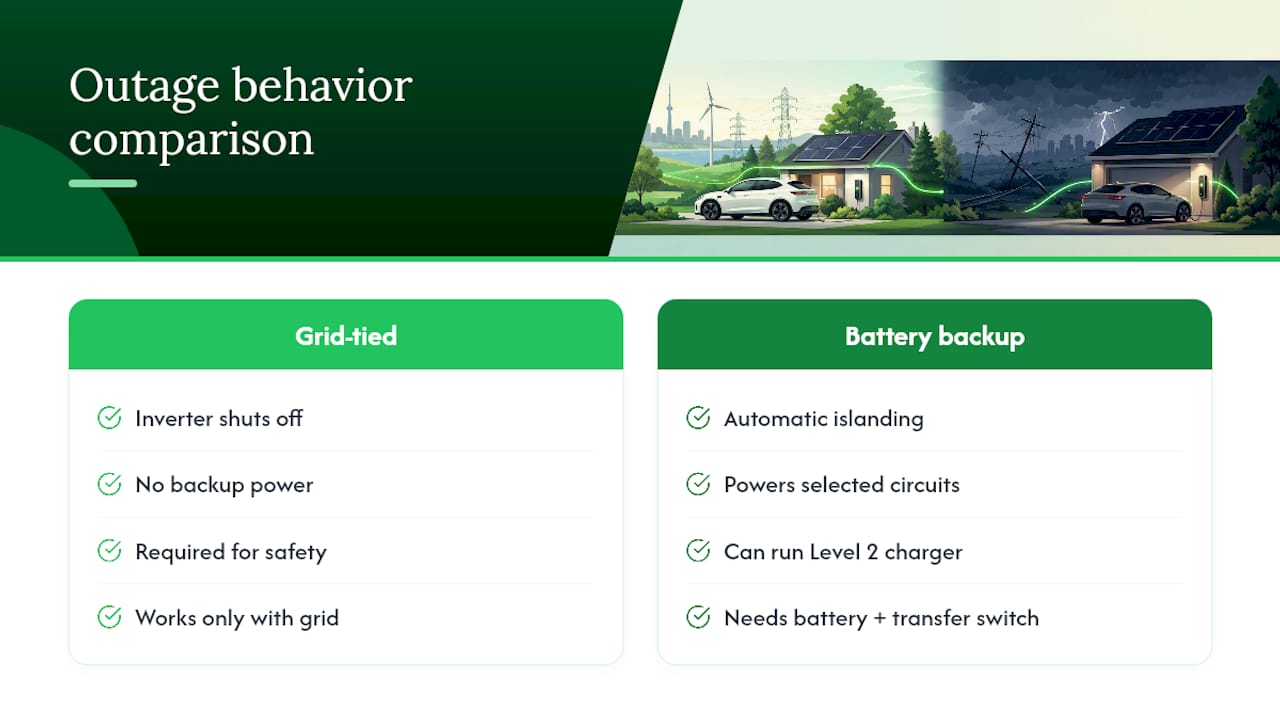
A grid-connected solar system without a battery shuts off automatically during an outage. That surprises a lot of homeowners who assume rooftop panels mean automatic backup power, but it is a safety requirement: your inverter has to stop feeding power into the grid so utility crews aren’t at risk while repairing lines.
To actually charge your EV, or run anything in your home, during an outage, you need a battery-backed solar system with what’s called an automatic transfer switch or a hybrid inverter designed for backup use. When the grid drops, the system islands your home from the grid and lets stored battery power run selected circuits, potentially including a Level 2 charger if it is wired into the backup panel.
Full off-grid EV charging, meaning no grid connection at all, is technically possible but rarely practical for most Ontario properties. It requires substantially oversized solar and battery capacity to cover winter production shortfalls, since Ontario sees far less daylight and weaker solar output from November through February than in summer months. Most homeowners are better served by a grid-tied system with battery backup sized for outage bridging, rather than true off-grid independence.
If backup power during outages matters to you, whether for medical equipment, a home office, or simply peace of mind, tell your installer up front. Battery sizing and transfer switch wiring need to be planned into the system design from the start, not added afterward.
How do you maintain a combined solar and EV charging system?
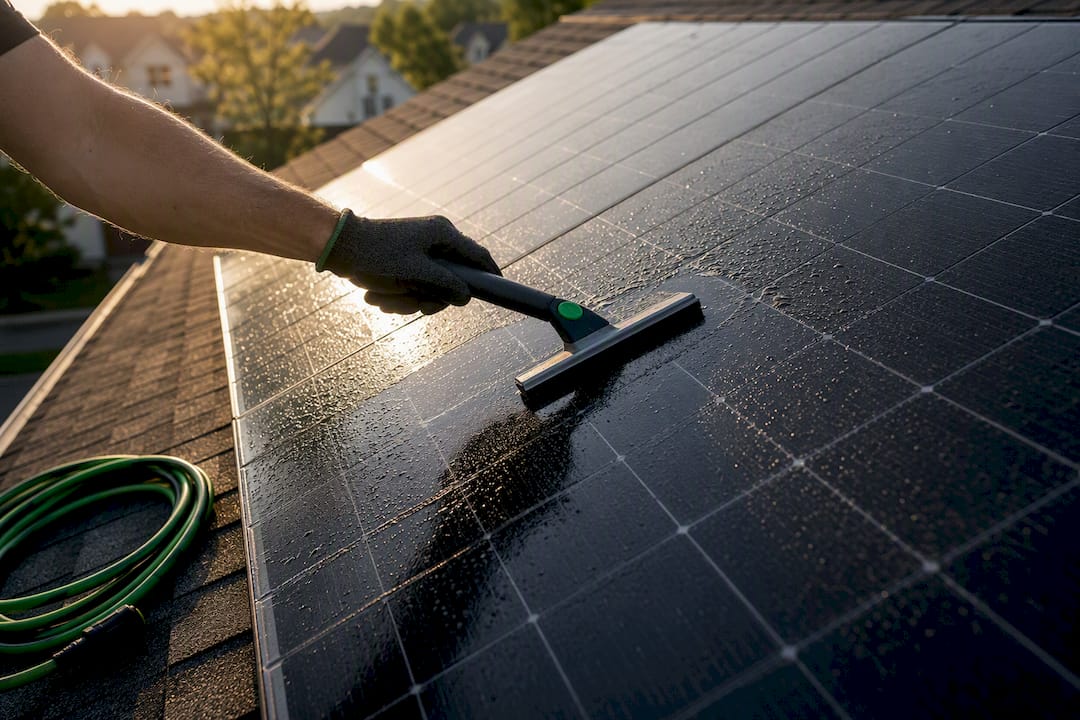
Solar panels themselves need very little maintenance. An occasional rinse to clear dust, pollen, or bird droppings, and a visual check after major storms for physical damage, covers most of what a homeowner needs to do. Snow buildup in winter typically slides off on its own once panels warm slightly, though heavy accumulation can temporarily reduce output.
Your inverter is the component worth watching more closely. Most modern inverters include a monitoring app that flags production drops or fault codes, and catching a problem early, a failed string, a tripped breaker, a firmware issue, saves you weeks of lost production if you would otherwise only notice it on your utility bill months later.
For the EV charger side, periodically check that the charging cable and connector show no cracking, fraying, or discolouration, and confirm the unit’s firmware is current if it’s a smart charger with scheduling or solar-matching features. A charger that suddenly stops solar-matching correctly is often a software or communication issue between the charger and your home energy management system, not a hardware failure.
If you added a battery, expect a gradual capacity decline over its warrantied life, typically 10 years or more depending on the manufacturer, and keep documentation of your installation handy. When something does go wrong, an ESA-licensed electrician can diagnose whether the fault sits in the solar side, the charger, or the electrical panel connecting them, which matters for warranty claims.
An honest read on solar EV charging economics in Ontario
The conventional solar pitch skips over an inconvenient truth: for a lot of Ontario households, Ultra-Low Overnight pricing at a very low rate beats solar on pure payback speed, especially for anyone with a shaded roof, a north-facing exposure, or a shorter time horizon before moving. That is not an argument against solar. It’s an argument for being precise about what you’re actually buying.
Solar plus net metering or storage makes the most financial sense when you value fixed long-term energy costs, outage resilience, or you’re already replacing a roof and adding panels is incremental cost. It makes less sense as a standalone EV-charging hack if your only goal is the cheapest possible kilowatt-hour tonight.
Where the guidance should prioritize differently than most articles suggest: get your electrical foundation right first. A poorly sized panel, a charger without load management, or a rushed permit process will cost you more in rework than any solar sizing decision. Start with a licensed site assessment, then layer solar and storage decisions on top of an installation you know is compliant and safe.
— Hafiz
Get a solar-ready EV charger installation done right
Evchargerinstallationtoronto is the practical starting point for Ontario homeowners who want their EV charging setup ready for solar today, or ready to add it later without costly rework. Because every installation is handled by ESA-licensed electricians, your charger, panel, and any future solar tie-in meet Ontario’s electrical code from the first day, with permits and inspections managed at no extra charge and rebate paperwork handled on your behalf.
Whether you need a straightforward Level 2 charger, an EVEMS load management system to avoid a panel upgrade, or a full assessment before adding solar, the process starts the same way: a same-week site visit and a clear, upfront quote starting at $1,800. Run your numbers through the free installation cost calculator to see what your specific setup looks like, then book an assessment to get your charger, and your future solar plans, built on a compliant electrical foundation.
Sources
- Ontario launches new ultra-low overnight electricity price plan
- Electric vehicle charging – Charger installation
- EV + Solar Savings Calculator Ontario
Recommended
Get Your Free Installation Quote
Free assessment · ESA permit included · Same-week availability across the GTA