Best home EV chargers in Canada: 2026 Toronto guide
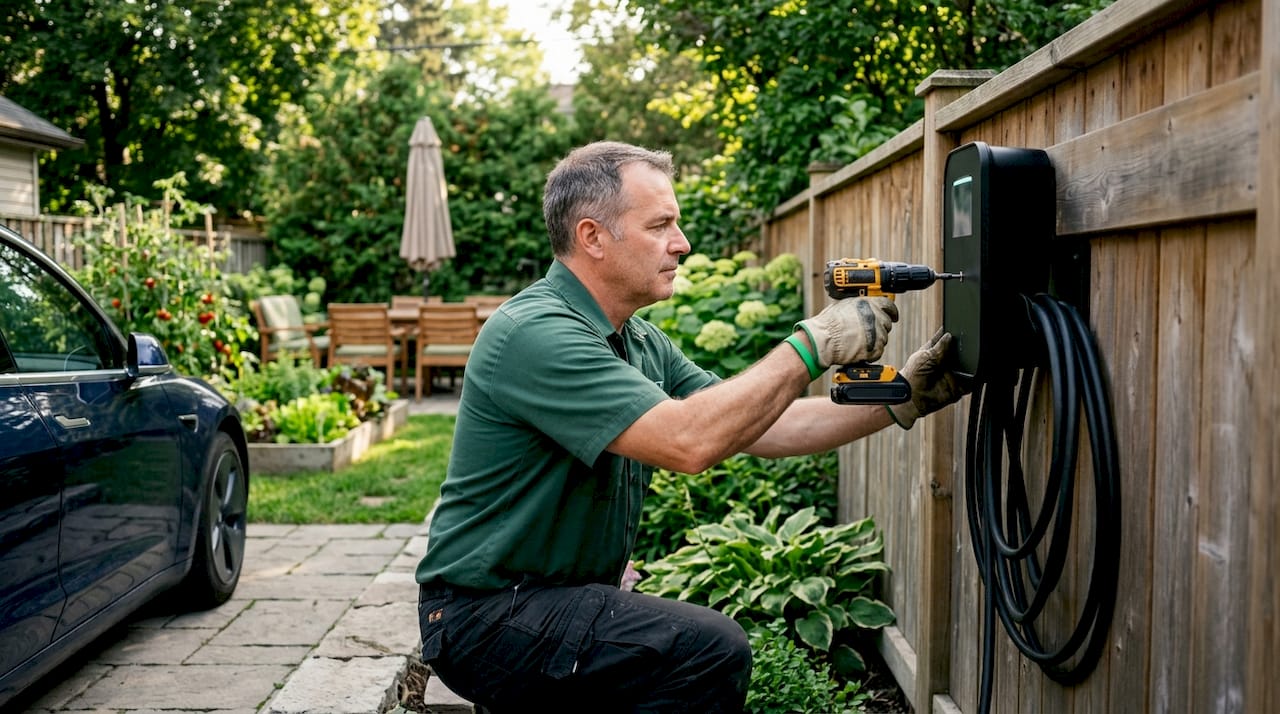
For most Toronto homeowners, the best home EV charger is a Level 2 unit rated at 32–48 amps, installed by an ESA-licensed electrician, with a NEMA 4X weatherproof enclosure built for Canadian winters. Here is a quick shortlist of what matters most before you buy:
- Level 2 charging (240V) is the practical standard for full EVs in Canada. Level 1 is too slow for most households, especially in winter when battery thermal management drains extra power.
- FLO operates one of the largest EV charging networks in North America and offers Canadian-made hardware with a Type 4X enclosure, 3–5 year warranties, and smart scheduling via the FLO app.
- ChargePoint provides adjustable 16–50A output, a mature app platform, and 24/7 support, making it a strong pick for homeowners who want flexibility.
- SWTCH suits property owners who want a fully managed, zero-capital installation with cloud-based monitoring and OCPP-certified hardware.
- ESA licensing is non-negotiable in Ontario. Every installation requires an ESA permit, and only a licensed electrician can legally pull one.
- Rebates in Ontario are currently limited at the provincial level. Check your local utility for available incentives before purchasing.
Which home EV charger providers serve Toronto?
Toronto homeowners have access to several verified EV charging providers, each with a distinct focus. The table below covers the key dimensions for a direct comparison.
| Provider | Rating | Charger Level | Installation | Smart Features | Best For |
|---|---|---|---|---|---|
| Flo Charging Station (Queen St W) | 3.9★ (7) | Level 2 | Hardwired | FLO app, scheduling, remote lock | Privacy-conscious homeowners |
| FLO Charging Station (Carlton St) | 3.9★ (7) | Level 2 | Hardwired | FLO app, scheduling, remote lock | Smart home integration |
| Flo Charging Station (Yonge St) | 3.9★ (7) | Level 2 | Hardwired | FLO app, scheduling, remote lock | Proven residential models |
| SWTCH Charging Station | 3★ (3) | Level 2 to DC Fast | Hardwired, managed | Cloud platform, billing tools | Managed, zero-capital installs |
| EV Connect Charging Station | 2★ (2) | Level 2 | Hardwired | Mobile app, 24/7 support | Fleet and business properties |
| Flo Charging Station | 3.9★ (7) | Level 2 | Hardwired | FLO app | Residential customers |
| Jule Charging Station | — | DC Fast | Hardwired | Battery storage integration | Grid-resilient fast charging |
| ChargePoint Charging Station | — | Level 2 | Hardwired or plug-in | AI automation, unified app | Corporate and fleet operations |
FLO is the standout for residential use. The FLO Home X3, X6, and X8 models deliver 50–80 amps, carry a Type 4X enclosure rated for Canadian conditions, and are backed by 15 years of EV charging experience. The FLO Home X8 reaches 19.2 kW at 80 amps, which covers even the largest EV batteries overnight. All three models support daisy-chaining for two-vehicle households and connect via Wi-Fi and cellular LTE-M.
SWTCH takes a different approach entirely. Rather than selling hardware outright, SWTCH offers turnkey managed solutions with zero-capital installation and monthly payment plans. Their OCPP-certified platform handles load management, billing, and 24/7 monitoring through SWTCH Care. This model suits condo owners and landlords more than single-family homeowners, but it is worth knowing if you want no upfront cost.
ChargePoint brings the widest amperage range in the category, with the Home Flex adjustable from 16A to 50A via the app. That flexibility is genuinely useful if you are unsure of your panel’s spare capacity at the time of purchase. ChargePoint also integrates AI automation and fleet management features, which is why it dominates corporate real estate installations in Toronto.
Jule occupies a niche most homeowners will not need: DC fast chargers integrated with battery energy storage for grid resiliency. Jule serves utilities, dealerships, and hospitality properties rather than typical residential buyers.
EV Connect focuses primarily on business and fleet properties, with a management platform, financial incentive consulting, and a driver mobile app. For a standard home installation, EV Connect is not the natural first call.
How do you choose and install the right Level 2 charger at home?
Choosing the right charger comes down to four concrete factors: amperage, installation type, weatherproofing, and your electrical panel’s capacity.
Match amperage to your car’s onboard charger. Your EV’s onboard charger (OBC) sets the real ceiling on charging speed, regardless of what the EVSE is rated for. A 32A charger at 7.7 kW covers most vehicles with 7.2 kW OBCs, including base Nissan Leaf and Tesla Standard Range models. A 48A unit at 11.5 kW suits the Hyundai Ioniq 5, Kia EV6, and Chevrolet Bolt EV. Only the Ford F-150 Lightning and Tesla Long Range models with 19.2 kW OBCs benefit from a 50A or 80A charger. Buying higher than your car can use costs money without adding speed.
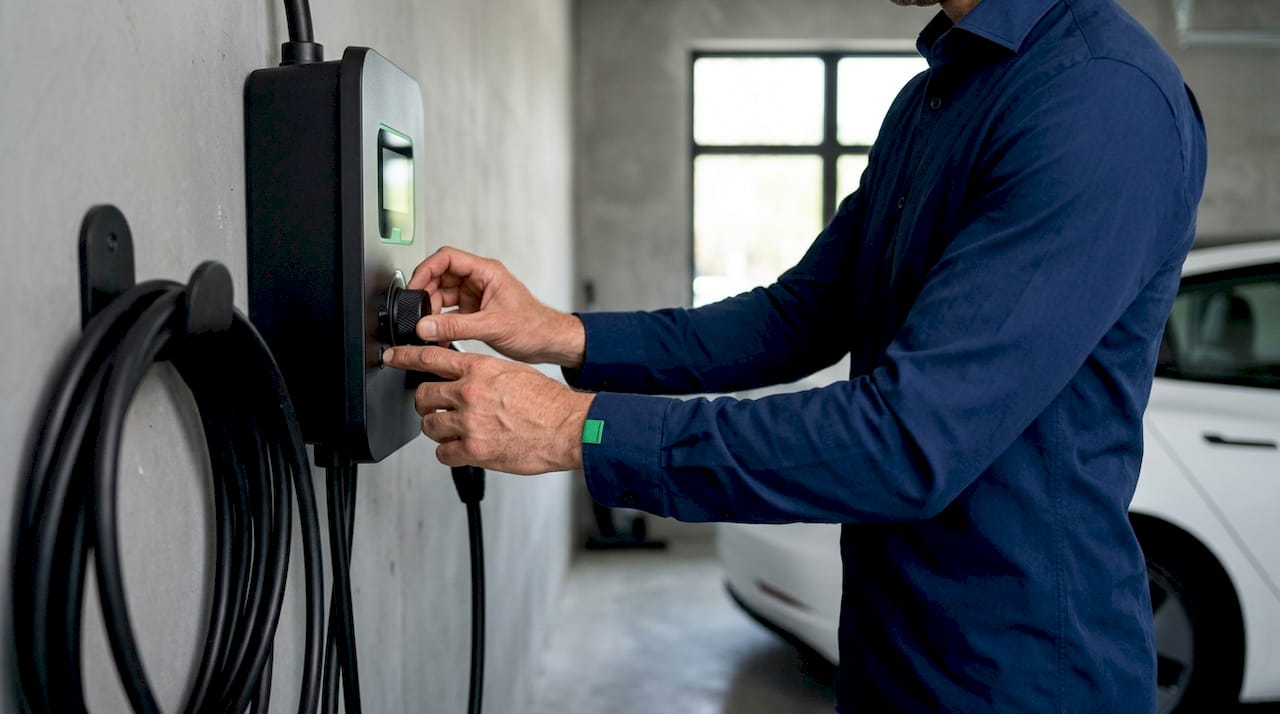
Hardwired vs plug-in. Hardwired installations are required for 48A and above, provide better weather sealing outdoors, and are the cleaner long-term solution. Plug-in units on a NEMA 14-50 outlet top out at 40A and suit renters or homeowners who may move. The NEMA 14-50 receptacle must be EV-rated quality; a standard dryer outlet is not always adequate.
Weatherproofing for Canadian winters. Canadian climates demand a NEMA 4 or 4X enclosure rated from -30°C to +50°C. NEMA 4X adds corrosion resistance, which matters near roads treated with salt. Cable flexibility at -30°C is also a real differentiator; check the spec sheet before buying a budget unit.
Panel capacity and ESA permits. An ESA-licensed electrician must perform a load calculation before installation. A 48A charger on a 60A circuit is a major continuous load, and many Toronto homes on 100A service cannot absorb it without changes. Two outcomes are common: a load management device (EVEMS) that shares power intelligently and avoids a panel upgrade, or a service upgrade to 200A. The EVEMS route often saves thousands compared to a full service upgrade.
Installation cost and timeline in Toronto. A complete Level 2 installation in Ontario, including hardware, electrical work, and ESA permits, typically runs CA$1,500–CA$2,800. The actual electrical work takes a few hours once the permit is in place. Most reputable installers can book within a week.
Rebates. Rebates at the provincial level in Ontario are currently limited. Quebec’s Roulez vert programme has offered purchase and installation rebates, but eligibility and amounts change frequently. Check your local utility and the Ontario rebates page before purchasing, since programmes move faster than any published guide.
Key selection criteria at a glance:
- Confirm your EV’s OBC rate before choosing charger amperage
- Choose NEMA 4X for any outdoor or garage installation in Canada
- Get a load calculation from an ESA-licensed electrician before buying hardware
- Consider an EVEMS device if your panel is at or near capacity
- Verify rebate eligibility before purchase, not after
Pro Tip: An adjustable smart charger, like the ChargePoint Home Flex or FLO Home X3, lets you set output to match your panel today and increase it later without replacing the hardware. This is the single best way to avoid buying a charger twice.
Home Level 2 charging costs roughly one-third the price of public DC fast charging over time, which means a well-chosen home charger pays for itself within a few years of regular use.
Evchargerinstallationtoronto: certified installation without the guesswork
If you have picked your charger and need a licensed installer in the GTA, Evchargerinstallationtoronto offers a practical alternative to coordinating separately with a hardware supplier and an electrician. Their ESA-licensed team handles the full process: load calculation, permit filing, installation, and rebate paperwork, all for a transparent price starting from $800. Same-week bookings are available, and most installations finish within a few hours. They also manage 200A panel upgrades and EVEMS smart load management for homes where the panel is tight. Use their free cost calculator to get an estimate before you call.
Key takeaways
The best home EV charger for Canadian homeowners combines a NEMA 4X weatherproof enclosure, 32–48A output matched to the vehicle’s onboard charger, and installation by an ESA-licensed electrician who performs a load calculation first.
| Point | Details |
|---|---|
| Level 2 is the standard | A 240V Level 2 charger is the right choice for full EVs in Canada, especially through winter. |
| Match amperage to your car | Your EV’s onboard charger caps real speed; buying above it adds cost without adding performance. |
| NEMA 4X for Canadian weather | Outdoor and garage chargers need a NEMA 4X enclosure rated to -30°C for reliable year-round use. |
| ESA permit is mandatory | Every Ontario home installation requires an ESA permit pulled by a licensed electrician. |
| Evchargerinstallationtoronto | Handles permits, load calculations, EVEMS, and rebate paperwork from $800 with same-week availability. |
Recommended
- EV Charger Guides & Blog | EV Install Pro Toronto | EV Install Pro Toronto
- Best Home EV Charger for Kia EV6 in Toronto (2025 Guide) | EV Install Pro Toronto
- Best Home EV Charger for Ford F-150 Lightning in Toronto (2025 Guide) | EV Install Pro Toronto
- EV Charger Installation Cost Toronto 2026 | Full Breakdown + Rebates | EV Install Pro Toronto
Get Your Free Installation Quote
Free assessment · ESA permit included · Same-week availability across the GTA