Is it safe to charge your EV in the rain?
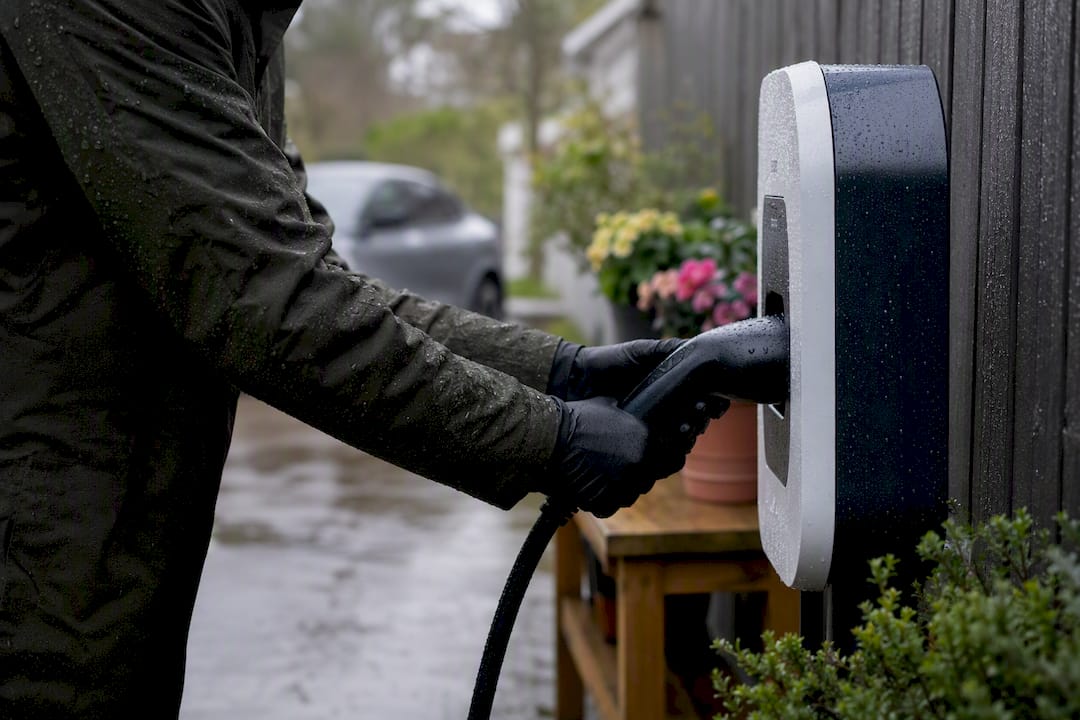
Yes. Charging your EV outdoors in normal rain is safe when you use certified, undamaged equipment and follow a few basic precautions. Two things make this possible: connector pins that never carry power until a safe “handshake” is confirmed, and GFCI/RCD ground-fault protection that cuts power in milliseconds if anything goes wrong.
- Charging equipment is built to standards like IEC 61851/62196, and outdoor-rated gear typically carries an IP65 or IP66 rating for wet environments.
- Sealed connectors, drainage channels, and ground-fault detection work together so rain on the plug is a non-issue for properly maintained chargers.
Key Takeaways
Charging an EV outdoors in normal rain is safe because sealed connectors, control-pilot handshakes, and GFCI protection keep power off until a safe connection is confirmed.
| Point | Details |
|---|---|
| Rain is not the risk | Certified, undamaged equipment with proper GFCI protection makes normal rain a non-event for charging safety. |
| Check ratings before relying on outdoor use | Look for IP65/IP66 or NEMA 3R/4/4X markings on any charger left exposed to weather. |
| Storms and flooding are different | Pause charging during thunderstorms and never touch a submerged charger, cable, or vehicle. |
| Cold and wet cut performance, not safety | Expect roughly 10 to 30 percent lower range and charging efficiency in cold, damp conditions. |
| Professional installation removes the risk factors | Evchargerinstallationtoronto’s ESA-licensed electricians install weather-rated equipment with surge protection, permits, and rebate handling included. |
Table of Contents
- How charging safety systems protect you in wet weather
- Equipment ratings and quick checks before you plug in
- Practical do’s and don’ts for charging in the rain
- When to pause charging: storms, flooding, and damage
- How rain and cold affect charging speed and range
- When to call a licensed installer for a rainy-weather safety check
- Why a professional installation takes the guesswork out of rainy-weather charging
- Sources
How charging safety systems protect you in wet weather
Every Level 2 charger and EV performs a digital “handshake” called the control pilot signal before any power flows. The charger checks that the vehicle is properly connected and ready, and only then do contactors close to send current through the pins. Rain on the outside of the connector does not affect this process, because the pins themselves stay unenergized until that check clears.
GFCI or RCD protection adds a second layer. These circuits monitor for even tiny current leaks, the kind that could happen if water somehow bridged a connection, and they shut down power in a fraction of a second. Physical design helps too: connectors have drainage channels that route water away from the recessed contacts, so a light film of rain on the port is mechanically harmless rather than something the electronics need to compensate for.
Here is what actually happens if a charging cable falls into a puddle: nothing energizes. The system won’t complete its handshake with water pooling around exposed contacts, and the GFCI stands ready as backup.
- Control pilot handshake confirms a safe connection before contactors close.
- GFCI/RCD protection cuts power within milliseconds of any detected leak.
- Drainage channels and sealed housings keep water away from live contacts.
Pro Tip: If you ever see a charger’s status light flash an error after rain exposure, unplug at the wall or breaker first, then inspect. Don’t troubleshoot with wet hands on a live connector.
Equipment ratings and quick checks before you plug in
Not all EVSE is created equal, and knowing the rating system helps you judge whether your setup belongs outside at all. IP54 handles splashing water and is fine for sheltered spots, but exposed installations should carry IP65 or IP66, which means the enclosure resists direct water jets from any angle. On the North American side, look for NEMA 3R for basic outdoor exposure or NEMA 4/4X for units facing driving rain or coastal humidity.
Before you plug in, a 30-second visual check saves headaches:
- Confirm your unit’s IP or NEMA rating is stamped on the housing or listed in the manual.
- Locate the GFCI test button; press it monthly to confirm it trips and resets properly.
- Check the cable jacket for cracks, and inspect connector seals for rust or gaps.
- Look inside the plug end for any pooled water or corrosion before inserting it.
Skip charging and call an electrician if you spot cracked insulation, a connector that feels loose, or a housing seal that’s degraded. These are maintenance issues, not rain problems, but wet weather is exactly when they turn into safety issues.
Practical do’s and don’ts for charging in the rain
The habits that keep charging safe in wet weather are small and take seconds, but they add up over years of outdoor use.
- Do use a drip loop. Let the cable dip below the port before rising to the vehicle, so water runs off the cable instead of toward the connector.
- Do park to avoid puddles. Position your vehicle so the charge port and cable run stay clear of low spots where water collects.
- Do choose sheltered or tethered public units when you have a choice; tethered chargers tend to have more robust, better-sealed cable management than loose portable cords, according to charging network guidance.
- Don’t use household extension cords for Level 1 charging outdoors. They lack the sealing and gauge rating for sustained outdoor current draw.
- Don’t connect or disconnect while standing in water, and never handle a visibly damaged cable, even briefly.
Portable Level 1 setups need the most caution since they rely on standard outlets. A hardwired Level 2 charger at home is inherently more weatherproof once installed correctly. Public DC fast chargers are built for constant outdoor exposure and require the least worry from drivers.
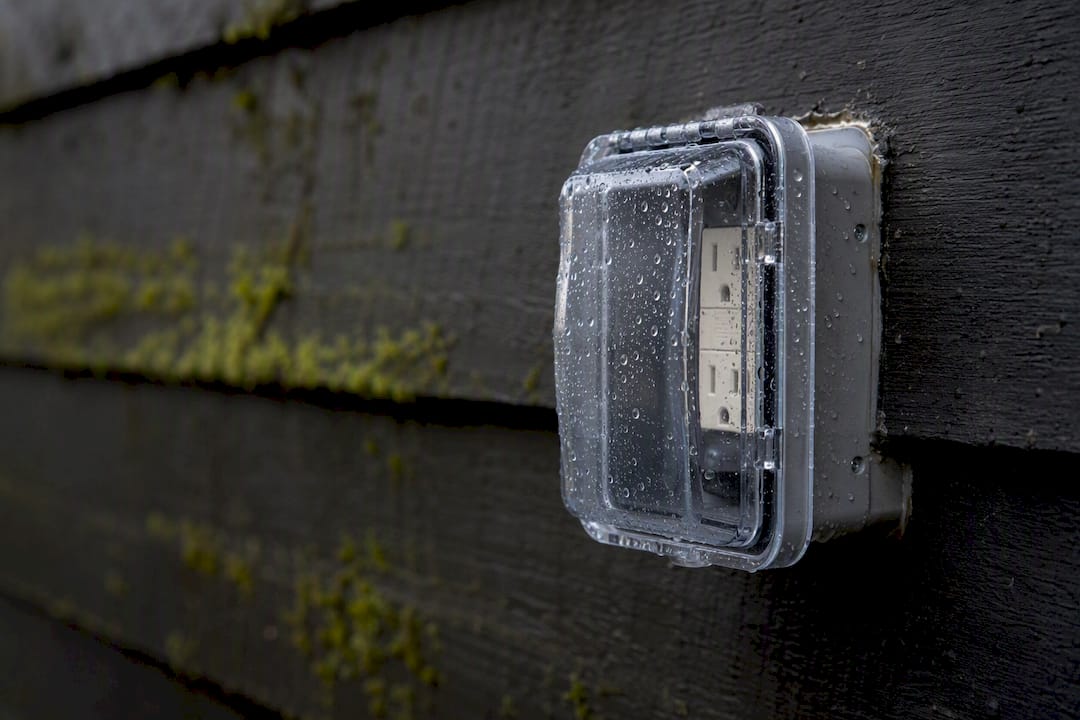
Pro Tip: Keep a spare in-use outlet cover on hand if you occasionally use a Level 1 setup on a standard 120V outlet outdoors. It’s a two-dollar part that prevents a real problem.
When to pause charging: storms, flooding, and damage
Rain itself is not the concern. Certain conditions are, and knowing the difference matters more than any single technical detail in this article.
- Thunderstorms: Lightning can send a power surge through your home’s electrical supply; learn more about whole-home surge protection to safeguard your system. Pause or disconnect charging until the storm passes, even though your EVSE has its own surge protection built in.
- Flooding: If the charger’s base is sitting in standing water, or your vehicle’s wheels are submerged, don’t touch the connector at all until the water fully recedes, per infrastructure safety guidance.
- Repeated faults: If your GFCI trips more than once while charging in wet weather, or you notice cracked casing or persistent breaker trips, stop charging and get it inspected. That pattern points to a hardware problem, not bad luck with weather.
How rain and cold affect charging speed and range
Wet weather is rarely a safety problem, but it’s often a performance one. Cold, damp conditions can reduce both driving range and charging efficiency, with observed impacts commonly landing in the 10 to 30 percent range depending on the vehicle and how cold it gets.
By the numbers: Cold, wet weather can cut charging efficiency and driving range by roughly 10 to 30 percent, largely due to battery chemistry slowing down and cabin heating drawing extra power.
Your battery management system compensates automatically, often reducing charge current when the pack is cold or nearing full, and some EVs support preconditioning that warms the battery before you plug in. If your vehicle offers navigation-based preconditioning to a charging stop, use it. Scheduling charging overnight, when temperatures are more stable, and slow-charging rather than rushing a fast top-up also helps preserve battery health through wet, cold stretches.
When to call a licensed installer for a rainy-weather safety check
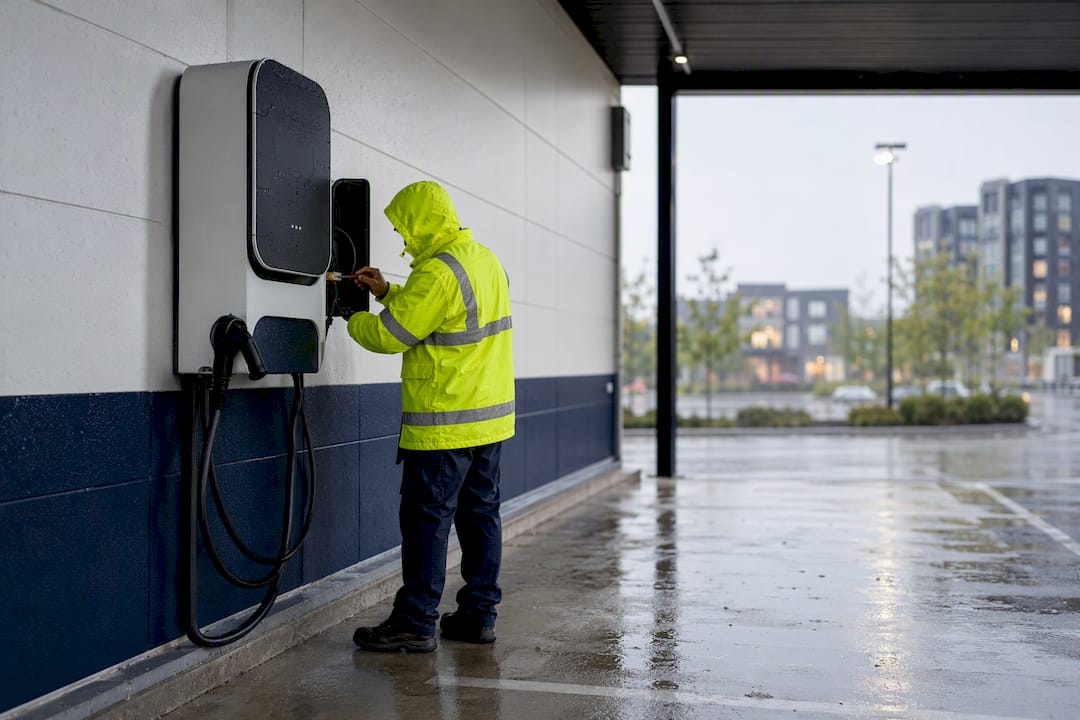
Certain signs mean it’s time to bring in a professional instead of troubleshooting yourself. Recurring GFCI trips during wet weather, any exposed or frayed wiring, a home panel that can’t support your charging load, or equipment that’s been flood-damaged all call for a licensed electrician, not a DIY fix.
An ESA-licensed installer brings a few things a homeowner can’t easily replicate:
- Correct mounting height and orientation so drip channels actually function as designed.
- Equipment matched to the right IP or NEMA rating for your specific installation site.
- Surge protection sized for your panel and exposure level.
- Permit filing, inspection scheduling, and rebate paperwork handled as part of the job.
Ask for documentation when the work is done: the permit number, inspection sign-off, and any warranty terms on the charger itself. A transparent installer will hand these over without you having to ask twice.
A homeowner’s note on staying calm about wet-weather charging
Honestly, rainy-weather charging worries people more than it should. A quick visual check before plugging in, storing the connector properly, and pressing that GFCI test button once a month cover almost everything that matters. None of it takes more than a minute, and it becomes second nature fast.
— Hafiz
Why a professional installation takes the guesswork out of rainy-weather charging
The equipment ratings, drip loops, and GFCI checks in this article all assume one thing: your charger was installed correctly in the first place. That’s where a DIY outdoor setup often falls short, and where Evchargerinstallationtoronto changes the equation. Our ESA-licensed electricians install with correct mounting height, the right IP/NEMA-rated equipment for your exposure level, and surge protection built in, all for transparent pricing starting from $1,800.
We handle permits and inspections at no extra charge, and we manage rebate applications worth up to $5,000 on qualifying new EV purchases, so you’re not chasing paperwork on top of chasing quotes. Same-week booking means you’re not waiting weeks for a safe, code-compliant outdoor install while your Level 1 setup limps along on an extension cord. If your home needs more capacity first, our smart load management option can sometimes skip a costly panel upgrade entirely.
Get a clear number for your specific home with our free installation cost calculator, and book your assessment this week.
Sources
Claims here draw on CSA Group’s electric mobility standards, Natural Resources Canada’s winter EV guidance, and manufacturer weatherproofing resources for further reading on charger ratings and storm safety.
- Standards help prepare North America’s infrastructure for an electric mobility future | CSA Group
- Charging in the rain: a myth-busting guide for UK EV drivers in 2026 | GRIDSERVE
Recommended
- EVEMS Installation Toronto | Smart Load Management | Skip the Panel Upgrade | EV Install Pro Toronto
- Does an EV charger need surge protection? | EV Install Pro Toronto
- Dryer outlet EV charging: safe options for Canadian homeowners | EV Install Pro Toronto
- Find EV Chargers Near Me in Toronto & the GTA | Live Map | EV Install Pro Toronto
Get Your Free Installation Quote
Free assessment · ESA permit included · Same-week availability across the GTA