What are the condo EV charger rules in Canada?
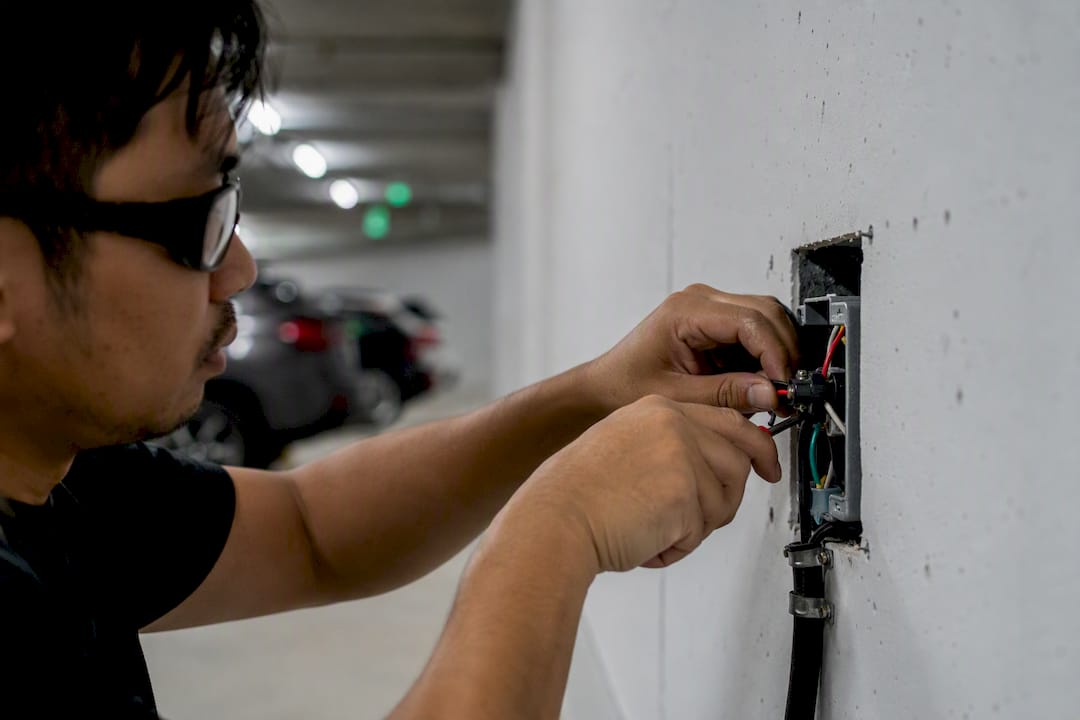
Yes, condo owners across Canada can install EV chargers, and boards can approve them. The approval path, cost split, and timeline depend on whether the owner or the corporation initiates the work, and on which province the condo sits in. If you’re an owner, your first move is assembling a professional application package. If you’re on the board, your first move is following the statutory notice and review process.
Three authorities matter most when you’re sorting out condo EV charger rules:
- The Condominium Authority of Ontario (CAO) sets out Ontario’s process
- Ontario Regulation 48/01 governs response timelines and rejection grounds
- Natural Resources Canada’s ZEVIP program funds a share of multi-unit installation costs
Ontario’s own guidance is specific: if a corporation’s installation cost stays under 10% of its annual budgeted common expenses, the board can proceed after a 60-day notice period, provided owners wouldn’t see it as reducing their use of common property.
TL;DR:
- Ontario limits condo board approval to safety, legal, or structural issues backed by a professional report; otherwise, applications proceed after specific timelines.
- Funding from NRCan’s ZEVIP, provincial programs, and utility support can cover most costs, with retrofit expenses typically between $2,000 and $5,000 per stall.
- Applications should include stamped electrical drawings, clear scope, liability insurance proof, and metering plans to ensure quicker approval from boards.
- Provinces like BC and Quebec have distinct rules, with BC easing voting thresholds and Quebec emphasizing prebuilt EV-ready infrastructure in new constructions.
- Using licensed electricians to handle permits, load calculations, and rebate paperwork significantly speeds up approval and reduces administrative burden.
Table of Contents
- Legal process for owners and boards installing EV chargers
- How do provincial EV charger rules differ across Canada?
- What permits and electrical work does an installation require?
- What funding and rebates help cover condo EV charger costs?
- What documents does a successful application need?
- How EV charger agreements and cost-sharing typically work
- Running an EV charging project as a board or property manager
- How professional installers reduce approval friction for condos
- How disputes over condo EV charger installations get resolved
- What condo boards and owners should know heading into 2026
- How EV Install Pro handles condo EV charger installations
- Key Takeaways
- Where to check condo EV charger rules and funding details
- Sources
Legal process for owners and boards installing EV chargers
Two separate legal pathways exist under Ontario’s condo framework, and mixing them up is the most common mistake owners make.
The owner-initiated pathway works like this:
- Submit a written application to the board with your proposed scope of work
- The board has 60 days to respond in writing
- If the board doesn’t reject the application in writing within that window, you may proceed
- You then have 90 days to enter into a formal agreement with the corporation
The board-initiated pathway lets the corporation install chargers itself, without individual owner requests, as long as the cost doesn’t exceed 10% of the annual budgeted common expenses and the board judges that owners won’t view it as a material reduction in use or enjoyment of common elements.
Rejections aren’t a board’s to hand out freely. Legal commentary is consistent on this point:
A corporation may only refuse an owner’s application for limited reasons: the work is contrary to law, it threatens structural integrity, or it creates a serious health and safety risk. A bare “no” isn’t enough. A professional report is required to justify any rejection.
That single requirement changes how owners should approach a request. A vague ask invites a vague refusal. A technical package backed by an electrician’s report leaves the board little room to say no without evidence of its own.
How do provincial EV charger rules differ across Canada?
Condo EV charger rules aren’t uniform nationally. Where you live changes both your rights and your process.
- British Columbia: Amendments to the Strata Property Act strengthened owners’ right to request charging and made blanket refusals unlawful. Many charging-related approvals now pass by a straightforward majority vote instead of the older three-quarters threshold, and owners who hit a wall have tribunal routes available through the Civil Resolution Tribunal alongside municipal support programs.
- Ontario: Regulation 48/01 remains the governing framework, with the CAO publishing detailed procedural guidance. The 10% budget rule and the 60-day and 90-day timelines apply specifically here, and they’re the most codified rules in the country.
- Québec: New-build condos increasingly face EV-ready requirements at the construction stage, meaning conduit and panel capacity get built in before anyone moves in. Existing buildings retrofitting after the fact face a different, more negotiated process without the same statutory scaffolding.
- Other provinces: Protections vary considerably, and some jurisdictions have no dedicated EV charging provisions in their condominium legislation at all. Check your provincial condo act and any recent amendments before assuming Ontario or BC rules apply to you.
What permits and electrical work does an installation require?
Getting the legal approval is only half the job. The technical side determines whether your application survives board scrutiny in the first place.
- Electrical permit and inspection: Electrical safety authorities require permits and licensed electrical contractors for EV charger installs in multi-unit buildings, with load calculations and inspections treated as standard practice, not optional extras.
- Load calculations: A licensed electrician, and sometimes a professional engineer or certified Field Safety Representative, needs to confirm the building’s electrical service can handle the added draw without tripping capacity limits.
- Metering choice: Boards typically favour individual sub-metering or network billing systems that track usage per unit, since unallocated electricity costs are a common source of board pushback.
- Blockers to flag early: panel capacity limits, the need for feeder upgrades, and trenching costs for chargers located far from the main electrical room.
Pro Tip: Get your electrician to walk the parking garage before you submit anything. A five-minute site visit that flags a feeder distance problem saves weeks of back-and-forth with the board later.
A licensed electrician handling your ESA permit from the outset removes one of the biggest reasons board applications stall.
What funding and rebates help cover condo EV charger costs?
Multi-unit charging projects rarely run on owner money alone anymore.
- NRCan’s ZEVIP program has funded charging installations in multi-unit residential buildings, with condo corporations and non-profit housing operators among the eligible applicant types. Funding amounts and intake windows shift, so timing your application to an open round matters.
- Provincial and utility programs through BC Hydro, Québec initiatives, and various municipal offers add another layer of support on top of federal funding.
- Building-level financing usually comes from reserve funds, special levies, or corporation loans, and the mix changes who ends up paying, and how much, between individual owners and the corporation as a whole.
Typical per-stall retrofit costs land roughly between $2,000 and $5,000 CAD before incentives, depending on panel work, cable run distance, and whether an EVEMS load management system is part of the scope. Buildings that align rebate applications with their procurement schedule tend to capture a larger share of eligible costs.
What documents does a successful application need?
Boards approve professional construction proposals faster than they approve informal requests scribbled on an email. The difference between the two is almost always the completeness of the technical package.
- Stamped electrical drawings from a licensed engineer or contractor
- A clear scope of work describing exactly what gets installed and where
- Contractor licence information and proof of liability insurance
- CSA/ESA compliance confirmation
- A metering and billing plan showing how usage costs get tracked
- Written commitments on maintenance, operating costs, and indemnity language
| Application Element | Why Boards Ask For It |
|---|---|
| Stamped electrical drawings | Confirms a licensed professional designed the system, not a guess |
| Proof of insurance | Protects the corporation if something goes wrong post-installation |
| Metering plan | Prevents disputes over who pays for electricity used |
| Indemnity clause | Shifts liability for the charger itself onto the owner, not the corporation |
Respond quickly when a board asks for clarification. A two-week silence on a simple question can push your file to the bottom of the agenda for the next board meeting.
How EV charger agreements and cost-sharing typically work
Every approved installation in Ontario eventually needs a formal agreement, and that document does more legal work than most owners expect.
- Standard clauses cover ownership of the equipment, ongoing maintenance obligations, insurance requirements, and what happens to the charger if the unit sells.
- Cost allocation splits differently depending on who initiated the project: owner-initiated installs usually put capital and operating costs on that owner, while corporation-initiated projects spread costs across the common expense budget.
- Registration on title often follows, tying the agreement to the unit rather than the person, which matters if you sell before the charger’s useful life is up.
Under Ontario Regulation 48/01, once a board doesn’t reject an application within 60 days, the owner has 90 days to enter into a formal agreement with the corporation. Miss that window, and the approval can lapse.
Disagreements over agreement terms typically move to mediation or arbitration before litigation, consistent with most condo dispute processes in Ontario.
Running an EV charging project as a board or property manager
Boards handling a building-wide rollout need a different checklist than an owner handling a single stall.
- Run a proper RFP: require proof of ESA licensing, warranty terms, and liability insurance from every bidder before shortlisting.
- Choose your infrastructure model: a shared EVEMS load-management system often lets a building add many chargers without a costly feeder upgrade, while a straight panel upgrade suits buildings with lower expected EV adoption or simpler electrical layouts.
- Plan resident communication: draft a clear policy covering who gets access, how billing works, and what happens when someone doesn’t pay their charging invoice.
Pro Tip: Survey owners on EV ownership plans before choosing between EVEMS and a panel upgrade. A building with three EV owners today but thirty expected within five years should design for the future load, not the current one.
Buildings that adopt a building-wide EV-ready plan upfront avoid the piecemeal installs that strain feeder capacity down the line. If a parking area needs surface work for conduit routing or trenching, coordinating with asphalt maintenance specialists during the same project window can save a second disruption to residents later.
How professional installers reduce approval friction for condos
Boards reject applications far more often when the paperwork looks improvised. The CAO’s own guidance backs this up directly: applications built around a complete technical submission, stamped drawings, load calculations, insurance, and a metering plan, are consistently the ones that clear a board faster than informal requests.
That’s the gap a licensed installer closes. When an electrician handles the ESA permit, coordinates the load calculation, and manages the rebate paperwork as one package, the board sees a finished proposal instead of a list of open questions.
- Turnkey timelines typically run from initial site assessment through completed installation within a few hours once permits clear
- Cost drivers usually come down to panel distance from the parking stall and whether an EVEMS system gets bundled in
- Professional rebate management removes the administrative burden that otherwise falls on volunteer board members
A board reviewing a request backed by a licensed contractor’s documentation has far less reason to hesitate than one facing an owner’s handwritten proposal.
How disputes over condo EV charger installations get resolved
Disagreements happen even with a solid application, and Ontario’s condo framework gives owners and boards a defined path rather than leaving them to argue indefinitely.
If a board rejects an application, the first step is usually a written request for the specific professional report that justifies the refusal, since legal grounds for rejection are limited to matters of law, structural integrity, or health and safety. If no such report exists, that refusal may not hold up.
Ontario’s Condominium Authority Tribunal (CAT) handles certain condo disputes online, offering a faster and less expensive route than the courts for issues that fall within its jurisdiction. Not every EV charger dispute qualifies, so checking scope before filing saves time. Many disagreements never reach that stage at all; they get resolved through mediation once both sides put their positions and supporting documents on the table.
Agreements themselves often specify a dispute resolution process, sometimes arbitration, sometimes a mediation step before either party can escalate. Reading that clause before signing matters more than most owners realize, since it determines how a future disagreement over maintenance costs or removal terms actually gets settled.
Boards should document every rejection reason in writing, tied to a specific professional report, from the very first response. That single habit prevents most disputes from escalating past the initial exchange, because it gives both sides a paper trail to negotiate from rather than a shouting match at the next AGM.
What condo boards and owners should know heading into 2026
Professionalize the application from day one. A stamped drawing and a load calculation do more to move a board than any amount of persuasive writing in a cover letter. Talk to your utility early, rebate windows shift, and boards should draft a standing EV policy now so the next request doesn’t start from zero.
— Hafiz
How EV Install Pro handles condo EV charger installations
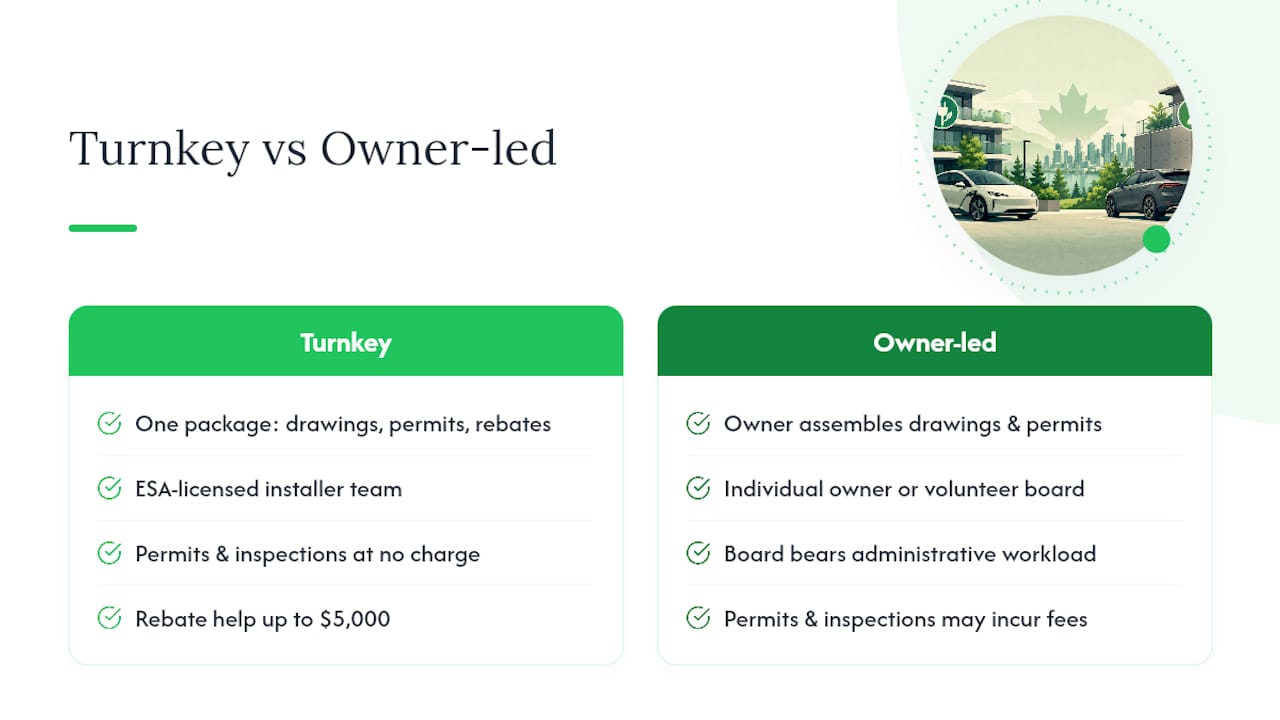
Evchargerinstallationtoronto’s turnkey approach cuts the exact friction this guide just walked through: instead of an owner assembling stamped drawings, ESA permits, and rebate paperwork separately, one ESA-licensed team handles all of it as a single package for condos and multi-unit properties across the Greater Toronto Area.
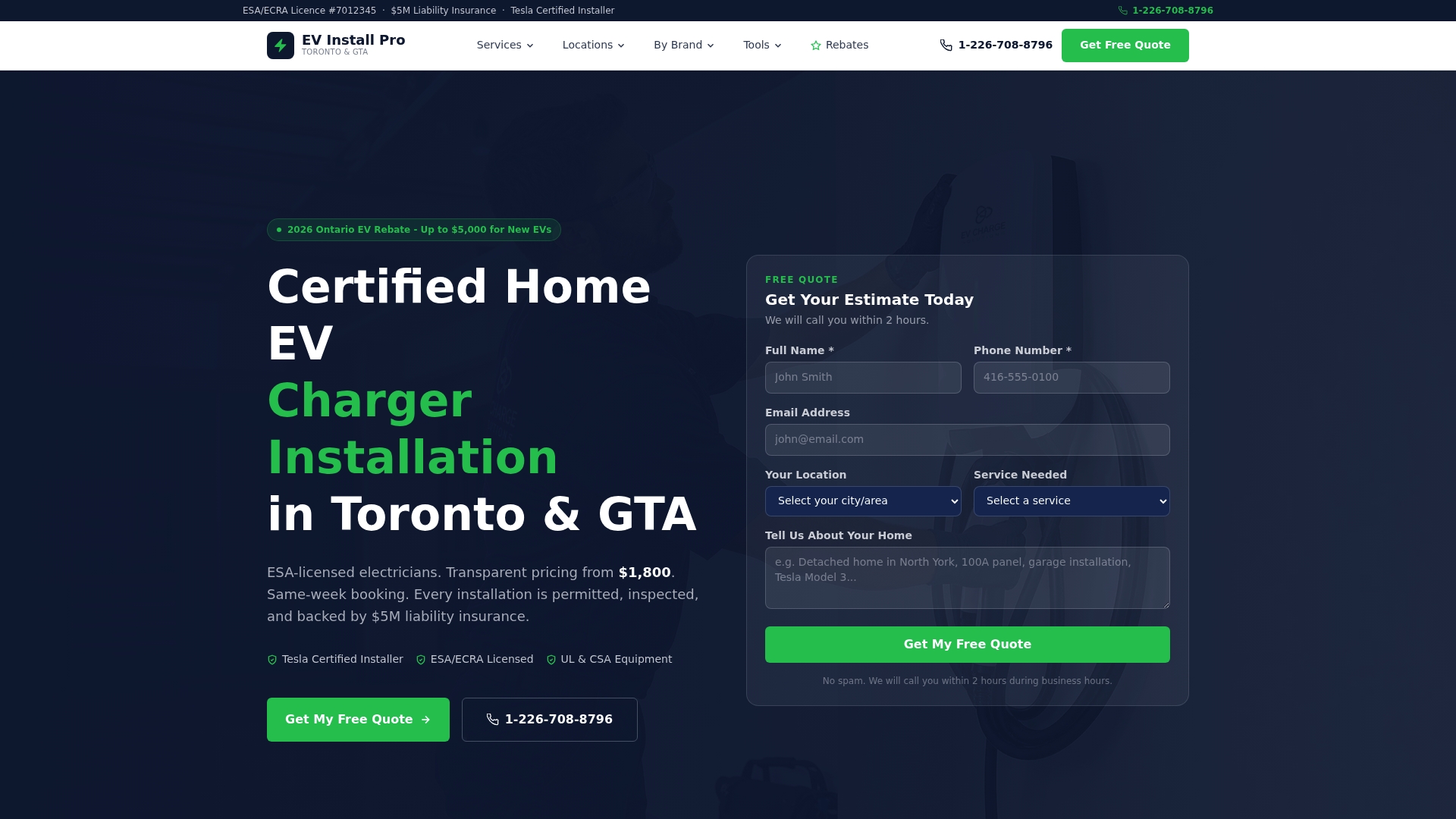
That matters because boards approve complete technical submissions faster than informal requests, and a licensed installer who manages permits and inspections at no extra charge removes the administrative load that usually falls on a volunteer board or a single owner. Evchargerinstallationtoronto’s electricians also handle rebate applications worth up to $5,000 for new EV purchases, coordinate directly with property managers on board liaison, and can advise on EVEMS load management for buildings weighing a panel upgrade against a shared system. Installations typically wrap up within a few hours once permits clear, with transparent pricing starting from $1,800.
If you’re preparing an application or advising your board on next steps, run your project through the EV charger installation cost calculator to get a free estimate before you submit anything.
Key Takeaways
Condo EV charger approval in Canada depends on provincial rules, statutory timelines, and a technical application package strong enough to survive board scrutiny.
| Point | Details |
|---|---|
| Ontario timelines are fixed | Boards have 60 days to reject an application in writing, and owners get 90 days to sign an agreement after that. |
| The 10% rule governs board-led installs | Corporations can install chargers without individual requests if costs stay under 10% of the annual budget. |
| Rejections need professional backing | Boards can only refuse for legal, structural, or safety reasons, and must support that refusal with a professional report. |
| Provincial rules vary sharply | BC strengthened right-to-charge protections and eased voting thresholds; Québec focuses on EV-ready new builds. |
| Evchargerinstallationtoronto handles the technical side | Licensed electricians manage ESA permits, load calculations, and rebate paperwork as one package for GTA condos. |
Where to check condo EV charger rules and funding details
Verify statutory text and program details directly before submitting an application:
- CAO’s EV charging guide for Ontario’s procedural steps and timelines
- Lash Condo Law for legal explanations of rejection grounds
- NRCan’s ZEVIP page for current federal funding eligibility and intake dates
- Electric Autonomy’s bylaw tracker for municipal and provincial EV-ready requirement updates
Sources
- CAO guide on electric vehicle charging systems
- Lash Condo Law — electric vehicle charging stations in condos guide
- Make your condo EV ready — Plug In BC (ZEVIP referenced)
Recommended
- EV Charger Installation in a Toronto Condo or Apartment: The Complete 2025 Guide | EV Install Pro Toronto
- Condo & Apartment EV Charger Installation Toronto | Board Approval Included | EV Install Pro Toronto
- Getting a condo EV charger permit approved in Toronto | EV Install Pro Toronto
- Tesla charger condo: Toronto owners’ guide | EV Install Pro Toronto
Get Your Free Installation Quote
Free assessment · ESA permit included · Same-week availability across the GTA