Tesla charger condo: Toronto owners’ guide

Yes, you can install a Tesla-compatible Level 2 charger in your Toronto condo parking stall. The path requires condo board approval, an ESA-licensed electrician, and a building permit — but it is a well-worn process that hundreds of GTA condo owners have already completed.
Your two immediate next steps:
- Contact an ESA-licensed installer with condo experience (EV Install Pro offers free condo assessments and handles board submissions) for a site assessment and written quote.
- Gather your parking stall number, photos of the nearest electrical room, and a copy of your condo’s declaration or parking rules before your first call.
Table of Contents
- Who should you call in Toronto for a Tesla-compatible condo install?
- How is condo EV charging typically structured?
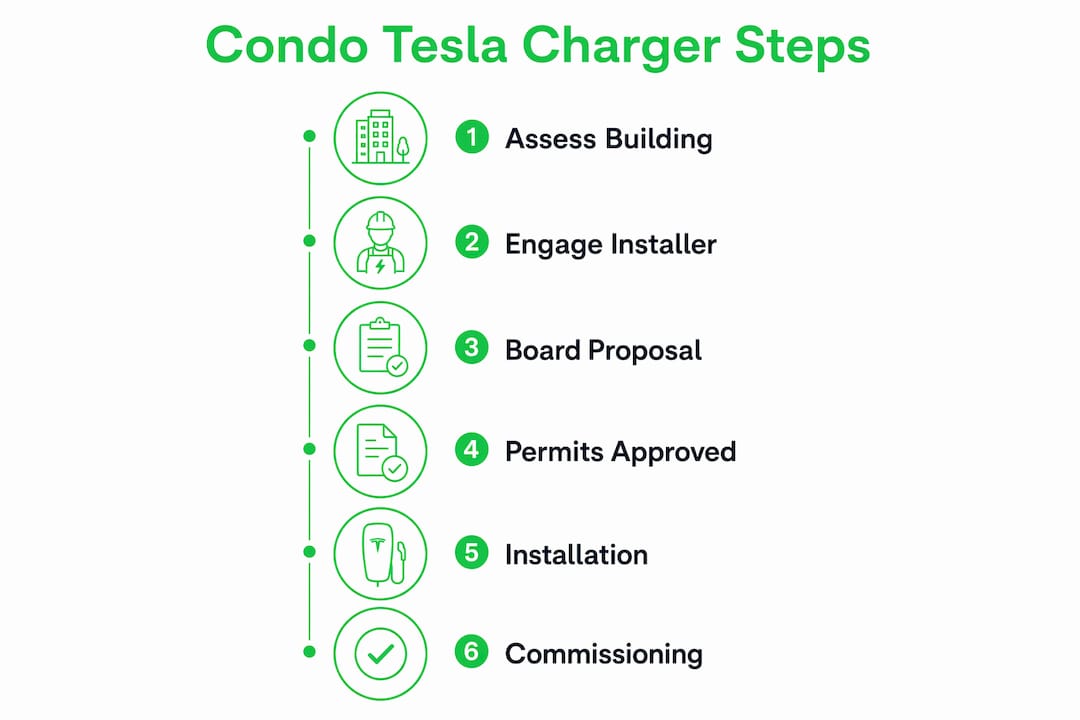
- Step-by-step: how to get your Tesla charger installed in a condo stall
- What does a condo Tesla charger install cost in the GTA?
- What permits and compliance steps does Ontario require?
- How do you handle billing and metering for condo EV charging?
- What should your condo board proposal include?
- Local provider profiles: EV Install Pro and Tesla Destination Charger
- Key takeaways
- Why the shared-backbone approach is the right call for Toronto condos
- EV Install Pro: condo charger installs across the GTA
- Useful official references and local sources
Who should you call in Toronto for a Tesla-compatible condo install?
Two types of local resources matter here: a licensed installation company that manages the full condo process, and Tesla’s own hardware and Destination Charger network for product compatibility.
| Dimension | EV Install Pro (Evchargerinstallationtoronto) | Tesla Destination Charger (Toronto locations) |
|---|---|---|
| Service model | Individual owner install or building-wide infrastructure | Hardware supply and Tesla charging solutions at commercial locations |
| Starting price | From $800 (owner final connection on existing backbone) | Not publicly listed for condo installs |
| Permit & rebate handling | Yes — ESA permit applications and rebate support included | Not applicable as a condo installation service |
| Condo-board experience | Yes — board submissions, engineering memos, EVEMS | N/A |
| Load management / billing | EVEMS / DCC-12 smart load management supported | N/A |
| Warranty / aftercare | Written quote; ESA certificate of inspection; 4.9-star rated service | Manufacturer warranty on hardware |
| GTA service area | Greater Toronto Area, same-week booking available | Toronto locations at 75 Bremner Blvd and 188 University Ave |
Tesla’s Wall Connector is designed for houses, apartments, condos, and workplaces, so hardware compatibility is not the obstacle. The obstacle is the condo approval and electrical process — and that is where an ESA-licensed installer earns its fee.
Pro Tip: Ask any installer for a sample condo-board submission and one local reference from a completed condo project before you sign anything.
How is condo EV charging typically structured?
Three models are used in Toronto and the GTA, each with different cost and administrative implications.
- Individual owner install: The owner pays for everything from the electrical room to their stall. Works in smaller buildings with spare panel capacity. Fastest to approve, but the most expensive per unit if multiple owners follow later.
- Shared backbone, individual final connections: The building funds the main conduit and panel capacity; each owner pays only for the final charger connection to their stall. Industry best practice recommends this model because it lowers per-stall cost and makes future installs far cheaper.
- Building-wide turnkey network: The corporation installs and manages all chargers, typically through a third-party network operator. Highest upfront cost, but simplest for residents.
| Model | Who pays core upgrade | Typical timeline | Scalability |
|---|---|---|---|
| Individual owner install | Owner | 4–12 weeks | Low |
| Shared backbone + owner final connection | Building funds backbone; owner pays final drop | 3 months (first install) | High |
| Building-wide network | Corporation | — | Highest |
An EV-ready approach — pre-installing conduit and capacity to each stall — reduces per-stall cost significantly and speeds up adoption as more residents buy EVs. If your building is doing any electrical work, push for conduit to every stall at the same time.
Pro Tip: Even if only one or two owners want chargers today, propose conduit to all stalls now. The marginal cost during active construction is a fraction of what a retrofit costs later.
Step-by-step: how to get your Tesla charger installed in a condo stall
- Gather stall details. Note your parking stall number, take photos of the stall and the nearest electrical room, and pull your condo’s declaration or parking rules. Confirm whether your stall is owned or licensed.
- Book a site assessment. Contact an ESA-licensed condo installer for a load calculation and written quote. The assessment identifies whether your building needs a panel upgrade or can use EVEMS load management instead.
- Prepare your board submission. Include the technical memo, the installer’s written quote, a proposed cost-split between building and owner, and a draft resolution. Collect signed interest letters from neighbours — buildings that present a resident-led, evidence-based case get board approval faster.
- Arrange permits and installation. Your ESA-licensed electrician applies for the building permit and schedules the ESA inspection. Never let an unlicensed contractor do this work — the certificate of inspection is required for your home insurance and the building’s records.
- Choose your billing method. Confirm how electricity costs will be allocated: sub-meter, networked charger billing, or an EVEMS solution. Get this in writing before installation begins.
Boards are more likely to approve EV charging when owners present a collaborative, evidence-based plan rather than a confrontational legal demand. A signed resident interest form and an engineer’s memo address the two questions boards ask first: how many people want this, and is the building’s electrical system safe for it.
What does a condo Tesla charger install cost in the GTA?
Cost depends heavily on whether your building already has backbone infrastructure and whether a panel upgrade is needed.
| Cost component | Typical range (GTA) |
|---|---|
| Labour and conduit (owner final connection, existing backbone) | From $800 (starting price) |
| Panel or service upgrade (if required) | Additional cost; varies by scope |
| EVEMS / DCC-12 load management hardware | Varies by building size |
| Permit fees | Included by Evchargerinstallationtoronto |
| Rebate support | Included; rebates available can offset upfront cost |
Realistic timeline by stage:
- Site assessment and written quote: 1–3 days
- Board approval: 4–12 weeks (faster with a strong submission)
- Permit processing: 1–2 weeks
- Installation and ESA inspection: 1 day (a few hours for a straightforward install)
Installation cost details vary by building age and electrical capacity. Ontario rebate programmes can reduce net cost, and Evchargerinstallationtoronto handles those applications on your behalf.
What permits and compliance steps does Ontario require?
In Ontario, a Level 2 EV charger installation is a regulated electrical work project. Here is what to expect:
- ESA permit: Required for any new circuit or panel work. Your ESA-licensed electrician applies on your behalf. An ESA permit is not optional — it is the legal requirement under the Ontario Electrical Safety Code.
- ESA inspection: After installation, an ESA inspector verifies the work. You receive a certificate of inspection, which the building and your insurer may require.
- Engineering report: Buildings with constrained electrical capacity often require a stamped engineering load calculation before the board will approve the project.
- Building permit: Some Toronto buildings require a separate building permit for conduit routing through common areas. Your installer confirms this during the site assessment.
Many condo installs avoid a full service upgrade entirely. EVEMS or DCC-12 load management devices allow multiple Level 2 chargers to operate within existing panel capacity by shifting loads intelligently.
Pro Tip: Ask your installer to confirm in writing whether an engineering report is required for your specific building before you submit to the board. Boards that receive incomplete submissions often table the vote for months.
Your building’s bylaws may impose additional requirements — electrical room access hours, conduit routing restrictions, or insurance certificates. Review these before your board submission.
How do you handle billing and metering for condo EV charging?
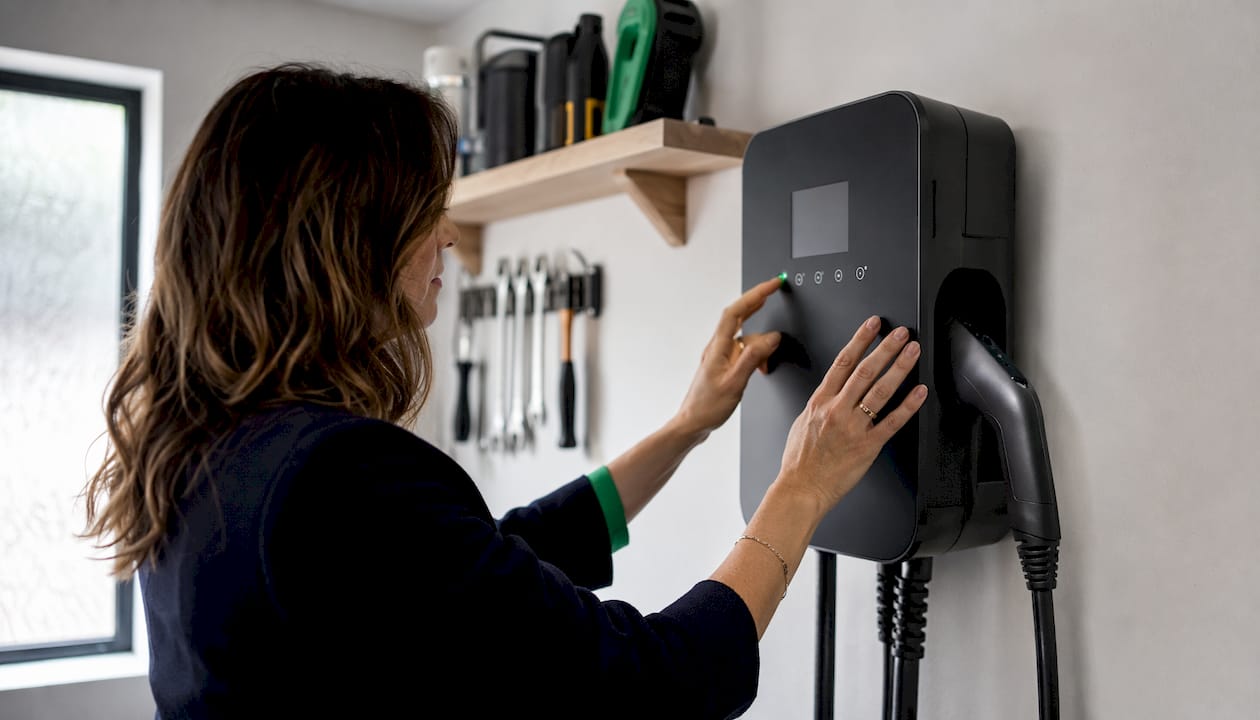
Choosing the wrong billing method creates ongoing disputes. The options, and their trade-offs:
- Dedicated sub-meter per stall: Accurate and fair. Requires physical meter installation and monthly reading or automated data collection.
- Networked charger billing: The charger reports usage to a third-party platform; residents receive itemised bills. Low board administration, but requires a networked charger model.
- EVEMS smart billing: Integrated with load management hardware; tracks consumption per stall automatically.
- Common element chargeback: The building pays the electricity bill and charges owners a flat or estimated fee. Simple to set up, but creates disputes when usage varies widely.
EV charging toolkits for multi-unit buildings recommend smart metering or networked billing to ensure fair energy allocation and reduce condo administrative overhead. Manual chargebacks work in very small buildings but become unmanageable as more residents add chargers.
Pro Tip: Before committing to a billing platform, ask the provider for a live demo of the billing dashboard and ask specifically how they handle off-site meter reconciliation when a resident disputes a charge.
| Billing method | Accuracy | Board admin load | Capital cost |
|---|---|---|---|
| Dedicated sub-meter | High | Medium | Low–medium |
| Networked charger billing | High | Low | Medium |
| EVEMS smart billing | High | Low | Medium–high |
| Common element chargeback | Low | High | Low |
What should your condo board proposal include?
A complete submission answers the board’s questions before they ask them.
Checklist of required documents:
- Site assessment report from an ESA-licensed electrician
- Written quote with itemised costs (hardware, labour, permits, EVEMS if applicable)
- Engineering memo or load calculation (if required by building age or capacity)
- Proposed payment model (who pays backbone vs. final connection)
- Draft board resolution or bylaw amendment text
- Sample indemnity wording (owner assumes responsibility for charger maintenance)
Sample board points to address:
- Minimal disruption: installation is completed within a few hours per stall; conduit routing through common areas is pre-approved with management.
- Cost allocation: the building funds backbone conduit; individual owners pay for the final charger connection and hardware.
- Reversibility: the charger can be removed and the stall returned to its original state if the owner sells.
- Insurance and liability: the owner carries contents insurance covering the charger; the ESA certificate of inspection satisfies the building’s insurer.
- Ongoing maintenance: the owner is responsible for charger maintenance; the installer provides a written warranty.
Suggested attachments: resident interest form with signatures, cost-split scenarios for 5/10/20 stalls, and a one-page summary of available rebates and permit responsibilities.
Pro Tip: Collect signed interest letters from at least three to five neighbours before your board meeting. A resident-led proposal with demonstrated demand is far harder for a board to defer than a single owner’s request.
Local provider profiles: EV Install Pro and Tesla Destination Charger
EV Install Pro (Evchargerinstallationtoronto)
Evchargerinstallationtoronto is an ESA-licensed installer serving the Greater Toronto Area, with specific experience in condo and multi-unit projects. Their services cover the full condo install process:
- Condo board submission support and engineering coordination
- ESA-licensed installation with permit and inspection handling at no extra charge
- EVEMS and smart load management to avoid panel upgrades where possible
- 200A panel upgrades where a service increase is required
- Rebate application support
- Transparent pricing starting from $800; same-week booking available
- 4.9-star customer rating
Getting a written quote that itemises permit handling, rebate support, and ESA-licensed labour is the single most reliable way to compare condo EV charger installers in Toronto. Vague quotes that bundle everything into one number make it impossible to know what you are actually paying for.
Tesla Destination Charger (Toronto locations)
Tesla operates Destination Charger locations at addresses including 75 Bremner Blvd and 188 University Ave in Toronto. These locations provide Tesla charging hardware and confirm local product availability, but they do not substitute for an ESA-licensed installer who manages condo board approvals, permits, and load calculations. Use Tesla’s Destination Charger network to verify hardware compatibility and to charge your vehicle while your condo install is in progress.
| Provider | Role in a condo project | ESA licensing | Board support |
|---|---|---|---|
| EV Install Pro (Evchargerinstallationtoronto) | Full condo install service | Yes | Yes |
| Tesla Destination Charger (Toronto) | Hardware reference and public charging | N/A | No |
What to ask on your first call to any installer:
- How many condo installs have you completed in the GTA?
- Can you provide a sample board submission and one local condo reference?
- Do you handle the ESA permit and inspection, or does the owner arrange that?
- What warranty do you offer on labour and hardware?
- What is your typical timeline from site assessment to completed installation?
Key takeaways
Getting a Tesla-compatible Level 2 charger in your Toronto condo is achievable when you follow the right sequence: ESA-licensed installer, board submission with resident support, permit, and a fair billing solution.
| Point | Details |
|---|---|
| Board approval is the main bottleneck | A resident-led, evidence-based submission with an engineer’s memo speeds approval significantly. |
| Shared backbone lowers per-stall cost | Building funds the main conduit; owners pay only the final connection, reducing individual cost. |
| EVEMS avoids panel upgrades | Load management hardware lets multiple Level 2 chargers run on existing capacity without a service upgrade. |
| Automated billing prevents disputes | Smart metering or networked charger billing is recommended over manual chargebacks for any multi-unit building. |
| Evchargerinstallationtoronto handles it end-to-end | ESA-licensed, condo-experienced, with permit handling and rebate support from $800 starting price across the GTA. |
Why the shared-backbone approach is the right call for Toronto condos
The instinct many condo owners have is to go it alone: get a quote, present it to the board, and hope for a yes. That works occasionally, but it leaves the next owner to start from scratch and often results in a patchwork of incompatible chargers and billing headaches.
The shared-backbone model — building funds the conduit, owners pay the final connection — is the approach that actually scales. It gives the board a clear cost boundary, gives future owners a cheaper path to charging, and gives the building a professional electrical infrastructure rather than a collection of ad hoc runs. Pair that with automated billing and an ESA-licensed installer who has done this before, and the whole process becomes manageable. That is the approach Evchargerinstallationtoronto recommends, and it is the one that consistently gets approved in Toronto buildings.
EV Install Pro: condo charger installs across the GTA
Evchargerinstallationtoronto delivers end-to-end condo EV charger installation across the Greater Toronto Area, with pricing starting from $800 and same-week booking available.
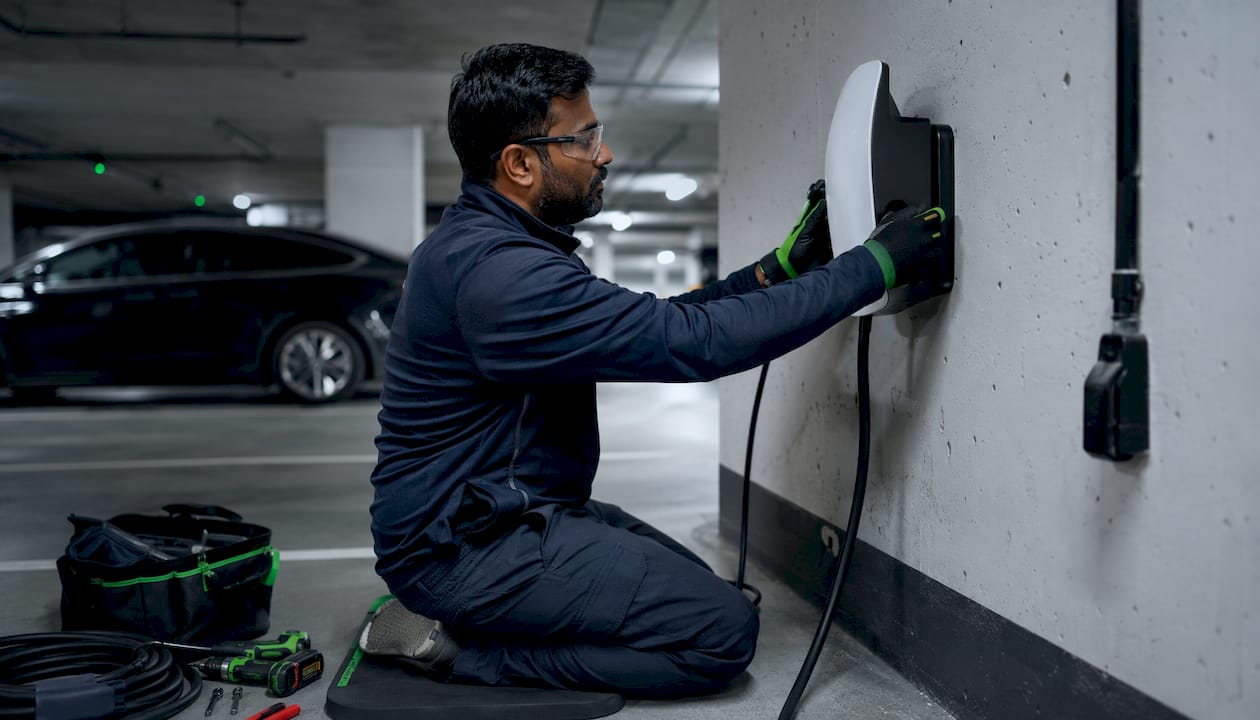
What’s included in every condo install:
- Condo board submission support and engineering coordination
- ESA-licensed installation with permit and inspection handling
- EVEMS smart load management where a panel upgrade can be avoided
- Rebate application support to reduce your net cost
- Written quote with no hidden fees; 4.9-star rated service
Use the cost calculator to get a free estimate for your specific stall and building, or check the live charger map to confirm GTA coverage in your neighbourhood. Ready to move forward? Request your free condo assessment today.
Useful official references and local sources
- Tesla home charging overview — Wall Connector compatibility for condos, apartments, and workplaces
- Tesla Destination Charger network — Toronto locations and hardware reference
- CBC News: how condo dwellers got EV charging in their buildings — real Toronto case studies and practical lessons
- Charge at Home: EV charging at new condos toolkit — billing and metering best practices for multi-unit buildings
- Plug In BC: implementing EV charging in multifamily buildings — shared backbone funding model guidance
- ThinkEV: EV charging condo and apartment guide — EV-ready pre-wiring and cost reduction strategies
- Evchargerinstallationtoronto: condo install service page — board approval support and GTA condo install details
- Evchargerinstallationtoronto: Ontario rebates page — current rebate programmes and application support
- Evchargerinstallationtoronto: ESA permit guidance — what the permit covers and how the installer handles it
The single most useful thing you can attach to a board submission is a one-page summary showing how many residents have expressed interest, what the per-stall cost looks like under the shared-backbone model, and who handles the permit. Boards approve what they understand. Make it easy for them.
Recommended
- EV Charger Installation in a Toronto Condo or Apartment: The Complete 2025 Guide | EV Install Pro Toronto
- Condo & Apartment EV Charger Installation Toronto | Board Approval Included | EV Install Pro Toronto
- EV Charger Guides & Blog | EV Install Pro Toronto | EV Install Pro Toronto
- EV Charger Installation Cost in Toronto 2025: Complete Pricing Guide | EV Install Pro Toronto
Get Your Free Installation Quote
Free assessment · ESA permit included · Same-week availability across the GTA