Avoid Insurance Risk: Get Your Ontario EV Charger Permit in 5 Steps
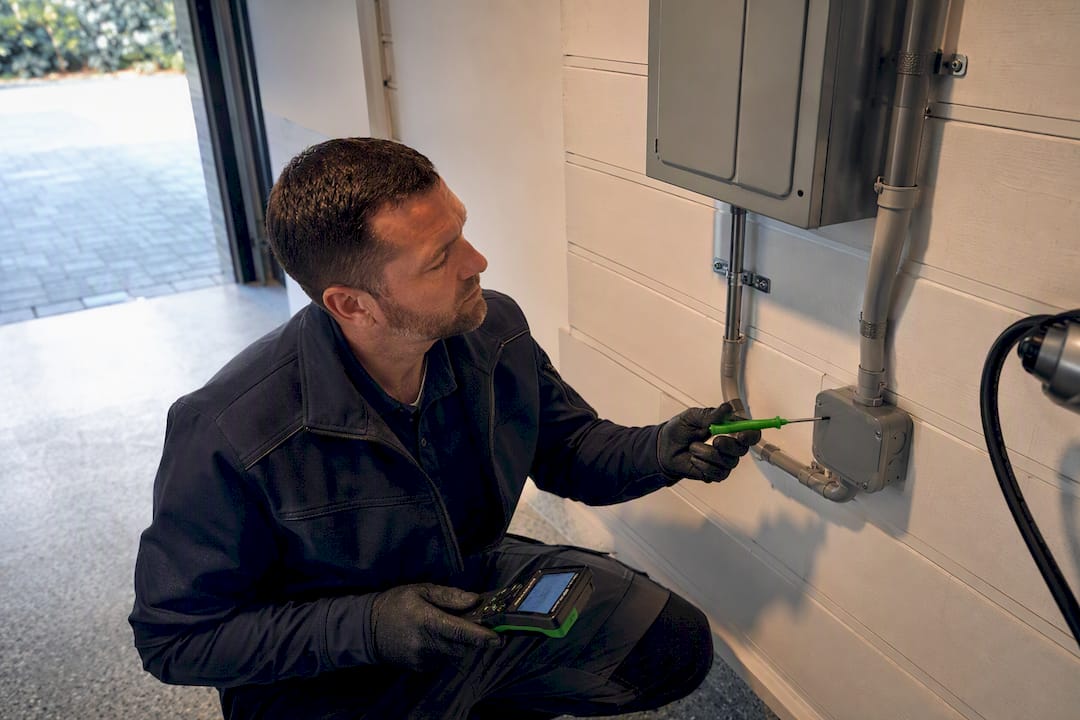
Yes. If you’re installing a new 240V (Level 2) circuit for an EV charger anywhere in Ontario, you must file an ESA notification of work, also called an electrical permit, before the work begins. The Electrical Safety Authority enforces this rule province-wide. Your next move is simple: hire an ECRA/ESA-licensed contractor to file and manage that notification, since the alternative, a homeowner notification, carries real insurance and resale risk.
TL;DR:
- Installing a new 240V EV charger in Ontario requires an ESA permit filed by a licensed electrician before starting work to ensure compliance and insurability.
- A permit is only necessary for dedicated 240V circuit installation, breaker upgrades, or increasing overall electrical service capacity, not for Level 1 chargers.
- Final inspections validate proper breaker size, wiring, grounding, and certification labels, with non-compliant chargers failing on-site inspection.
- Typical install costs range from $1,800 to $3,500, but panel upgrades can push total expenses over $5,000, especially if additional wiring or condo approval is needed.
- Only chargers with CSA, cUL, or cETL marks meet certification standards, and permits, inspections, and Certificates of Acceptance should be managed by licensed professionals to avoid insurance or resale issues.
Table of Contents
- Which installations need a permit: Level 1 vs Level 2
- Who can perform the work, and what inspectors check
- How to get the permit: from quote to Certificate of Acceptance
- Costs and timeline: what to actually budget for
- Equipment and safety: certification marks that actually matter
- Condo and shared-parking installations: extra steps to expect
- How Evchargerinstallationtoronto handles permits for GTA homeowners
- Quick practical checklist: what to ask before you sign
- How we can help with your permit and installation
- Sources
Which installations need a permit: Level 1 vs Level 2
A Level 1 charger plugs into a standard 120V household outlet. It’s slow, often adding 5 to 8 kilometres of range per hour, and if you’re using an existing outlet without any new wiring, it typically doesn’t trigger a permit requirement. A Level 2 charger runs on a dedicated 240V circuit and charges four to seven times faster. That speed comes with a legal obligation.
Here’s what actually triggers the ESA notification of work:
- Installing a new dedicated 240V circuit for the charger
- Adding or upgrading a breaker to support the added load
- Increasing your home’s electrical service capacity to accommodate the charger
- Running new wiring from your panel to the charger location
Ontario’s own guidance confirms you must get a permit before starting installation, and every finished job has to comply with the Ontario Electrical Safety Code. Technically, homeowners can pull their own notification for their primary residence. In practice, licensed electricians strongly advise against doing your own 240V work. The margin for error on load calculations and grounding is thin, and the consequences of getting it wrong show up years later, at claim time or closing.
Who can perform the work, and what inspectors check
ECRA/ESA-licensed contractors, known as Licensed Electrical Contractors or LECs, are the legal standard for EV charger installs in Ontario. You can verify any contractor’s licence number directly through ESA’s public database before signing a quote. That five-minute check protects you more than any sales pitch does.
Homeowner notification exists as an option for your own primary residence, but it shifts all liability onto you. Skip the licensed step, and you risk two things: a denied insurance claim if something goes wrong electrically, and a buyer walking away from your sale until the wiring gets remediated and certified.
At final inspection, an ESA inspector typically checks:
- Correct breaker sizing for the charger’s rated load
- Wire gauge matched to circuit distance and amperage
- Proper grounding and GFCI protection where required
- Clearances around the charger and panel access
- Certification labels on the charging equipment itself
Pro Tip: Ask any contractor to show you their ECRA/ESA licence number in writing, on the quote, not just verbally on the phone.
How to get the permit: from quote to Certificate of Acceptance
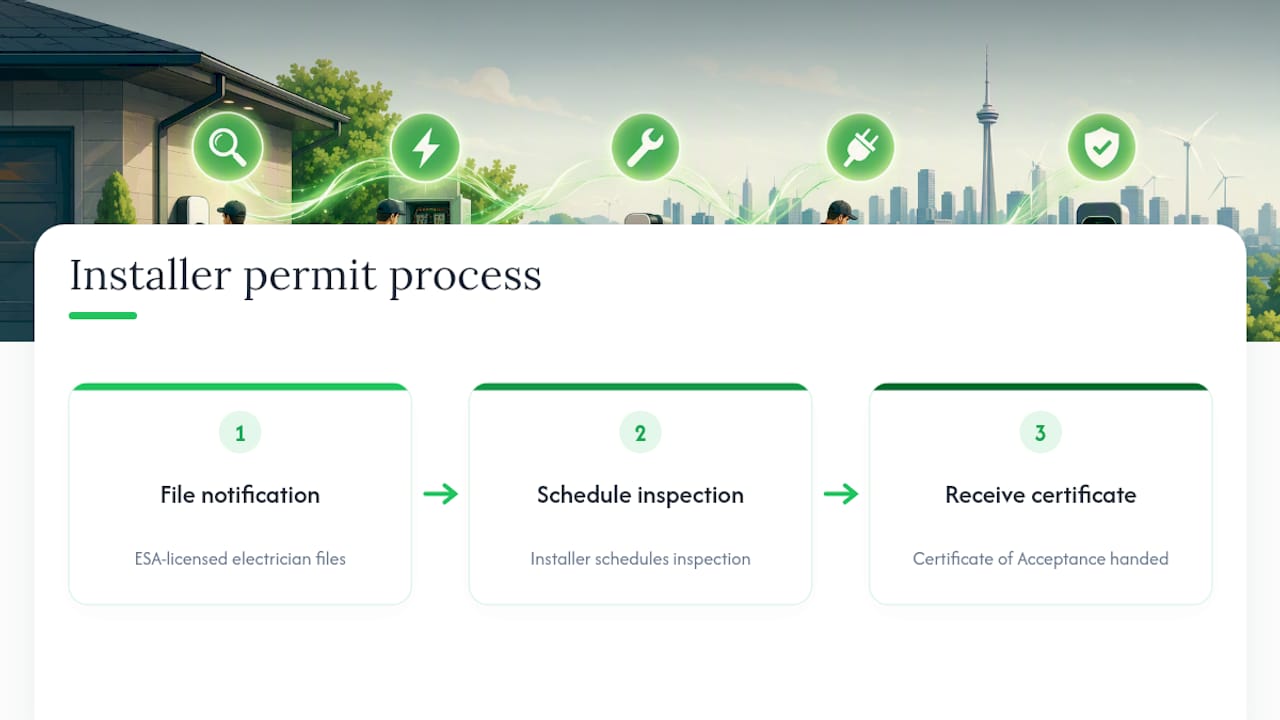
Getting from “I want a charger” to “I have a working, certified one” follows a predictable sequence. Most Ontario homeowners can expect this order:
- Get quotes and confirm licensing. Choose a contractor, confirm their ECRA/ESA number, and check that the quote lists the permit as a line item, not an unexplained extra.
- File the notification of work. Your contractor typically files this with ESA before any wiring starts. Filing after the fact is a code violation, not a shortcut.
- Complete the installation. This includes a load calculation for your panel, wire and breaker selection, mounting the charger, and confirming grounding and GFCI protection.
- Book the ESA inspection. Straightforward installs are commonly inspected and approved within one to three business days of the work finishing.
- Receive your Certificate of Acceptance. Keep this document. It’s your proof of a legal, insurable installation.
Many installers, including ours, handle permit filing and inspection scheduling as a built-in part of the job rather than something you coordinate separately.
Costs and timeline: what to actually budget for
A typical all-in Level 2 home installation in Ontario runs roughly $1,800 to $3,500, covering the charger, wiring, labour, and permit. That range assumes your electrical panel has enough spare capacity.
The real cost driver isn’t the charger. It’s your panel. Homes needing a panel upgrade to support the new load can see total costs climb toward $5,000 or higher.
A few budgeting notes worth flagging:
- Ask contractors to separate material, labour, and permit fees on your quote.
- A simple install near an existing panel with capacity to spare finishes fastest, often the same day.
- Panel upgrades add scheduling time for a separate inspection and sometimes utility coordination.
- Condo and shared-parking installs run longer due to board approval steps, covered below.
Equipment and safety: certification marks that actually matter
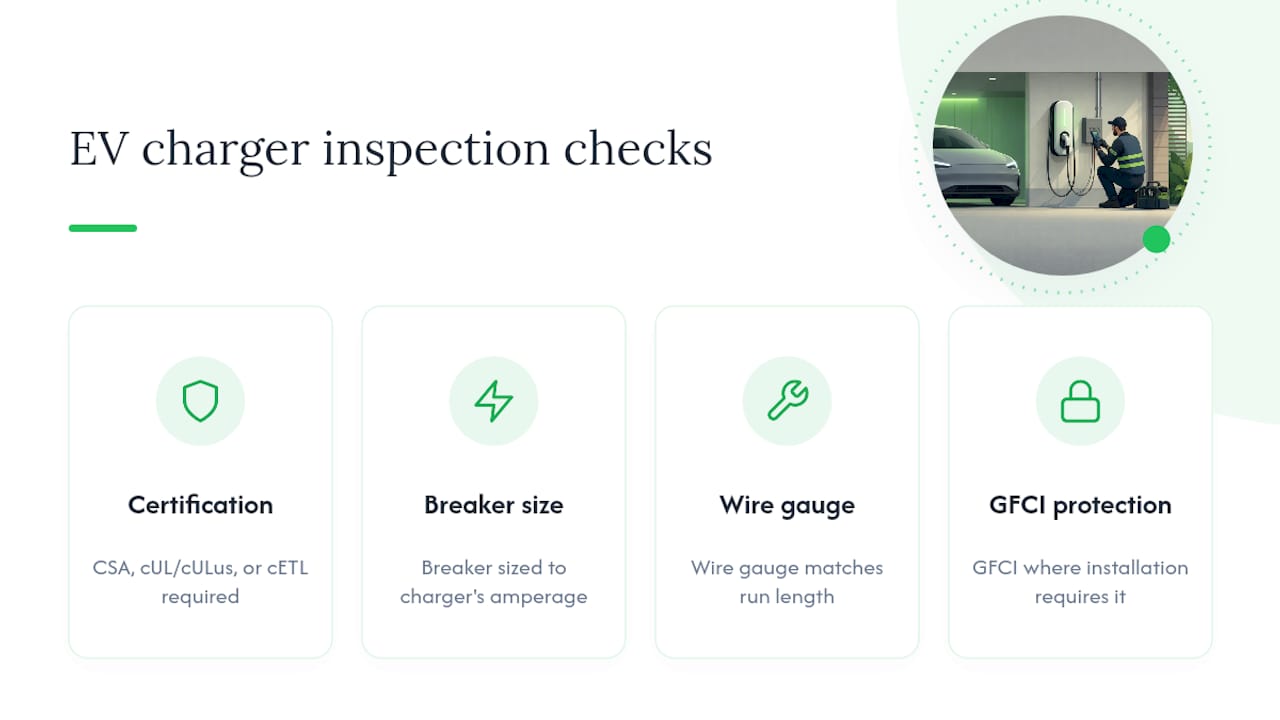
Every charger installed in Ontario must carry a recognized Canadian certification mark, specifically CSA, cUL/cULus, or cETL. Inspectors check for this label at final inspection, and a charger without one fails on the spot, no matter how well it’s wired.
Beyond the label, inspectors look for correctly sized breakers matched to the charger’s amperage, wire gauge appropriate for the run length, GFCI protection where the installation calls for it, and proper mounting clearances. Before you buy any charger, ask the retailer or contractor to confirm the certification mark and load rating in writing. Vendor marketing copy isn’t a substitute for a visible CSA or cUL sticker on the unit itself. For homeowners curious about the wiring fundamentals behind panel capacity, this guide to home wiring and prewiring breaks down the basics in plain language.
Condo and shared-parking installations: extra steps to expect
Condo owners face governance hurdles on top of ESA rules. Most buildings require board approval before any electrical work touches shared parking infrastructure, and that approval process commonly asks for a building-level load study, a metering or cost-allocation plan, and written insurance documentation.
A few things speed this along:
- Bring a clear, written proposal to your board, not a verbal request.
- Include contractor quotes and the ECRA/ESA licence number upfront.
- Budget extra weeks, sometimes months, for board review beyond the standard install timeline.
Smart load management systems can also ease board concerns, since they let multiple units share existing capacity without a full building upgrade.
How Evchargerinstallationtoronto handles permits for GTA homeowners
Every install we complete runs through ESA-licensed electricians who file the notification of work, schedule the inspection, and hand you the Certificate of Acceptance. That’s the same process outlined above, managed for you rather than by you.
Some installers handle rebate paperwork for eligible new EV purchases, and permit and inspection handling may be included in the installation fee. Author credentials for Hafiz, who covers electrical compliance topics for this site, are available on request.
Quick practical checklist: what to ask before you sign
Hire a licensed contractor for anything touching a 240V circuit. Ask five things on any quote: their ECRA/ESA number, whether the permit fee is included, their load calculation approach, inspection timing, and who keeps the Certificate of Acceptance. Skip permits, and you risk denied insurance claims or a stalled home sale.
Pro Tip: File your Certificate of Acceptance with your home insurance policy documents. You’ll need it at claim time or when you sell.
— Hafiz
How we can help with your permit and installation
There’s no shortage of electricians in the GTA willing to wire a charger, but permit paperwork is where most delays and denied insurance claims actually happen. Evchargerinstallationtoronto folds ESA notification filing, inspection scheduling, and rebate applications into one fixed-price job, so you’re not chasing three separate parties to get a working, insurable charger.
Licensed electricians typically complete a straightforward Level 2 install within a few hours, with pricing starting at competitive market rates across the Greater Toronto Area. If a panel upgrade or smart load management setup is necessary for your home, installers usually inform you before you commit, not after. Start with our free cost calculator to see what your specific installation is likely to run, then book a same-week appointment once you’re ready.
Sources
- Electric Vehicles & Charging Systems - ESA
- Ontario
- EV Charger Home Install Ontario: Level 2 EVSE, ESA Permit | Get a Better Quote
Recommended
Get Your Free Installation Quote
Free assessment · ESA permit included · Same-week availability across the GTA