Up to $5,000 at Stake: iZEV/EVAP Rebate Checklist for Canadian Buyers
The iZEV rebate itself is closed, but its replacement, the Electric Vehicle Affordability Program (EVAP), covers purchases made on or after February 16, 2026. You qualify if your vehicle’s final transaction value is $50,000 or less, or if the vehicle is Canadian built, in which case that cap doesn’t apply. Rebates run up to several thousand dollars for battery-electric and fuel-cell vehicles and for eligible plug-in hybrids, applied by the dealership right at checkout.
TL;DR:
- The EVAP program now measures final transaction value, including options and accessories, which can cause vehicles to exceed the $50,000 cap more easily.
- Rebates are up to $5,000 for battery-electric, fuel-cell, and longer-range plug-in hybrid vehicles, with Canadian-built models exempt from the cap.
- Accessories, dealer fees, and upgrades added before tax count toward the final transaction value, but taxes, leasing, warranties, and home chargers do not.
- Confirm vehicle eligibility by checking the official list, requesting an itemized quote, and verifying the vehicle’s origin before signing any deal.
- Provincial incentives may stack with EVAP but vary by region and timing; owners should verify local rules and coordinate installation timing to maximize rebates.
Table of Contents
- What changed: iZEV closed and EVAP now sets the rules
- Who and what qualifies under EVAP?
- How do you confirm eligibility before you sign?
- What mistakes actually cost buyers the rebate?
- Do provincial rebates stack with EVAP?
- Why installation timing matters as much as the paperwork
- Get your rebate and your charger sorted at the same time
- Sources
What changed: iZEV closed and EVAP now sets the rules
If you’ve been searching for iZEV rebate eligibility rules and coming up confused, that’s because the program you’re thinking of no longer exists. iZEV closed on March 31, 2025, and Ottawa didn’t reopen it. Instead, it launched EVAP for transactions dated February 16, 2026 or later.
That gap between closure and relaunch matters because it changed how eligibility gets measured. iZEV looked at MSRP. EVAP looks at your final transaction value, the actual price you agree to pay once options, accessories, and dealer fees are added in. This is a meaningfully different test, and it’s why a vehicle that qualified under the old rules could fail the new one if you load up on add-ons.
EVAP is funded to run until March 31, 2031, or until its budget runs dry, whichever comes first.
- In the first program year, higher rebates apply for BEVs and FCAVs, with lower amounts for eligible PHEVs
- Later years: scheduled reductions as program funding declines
EVAP is funded with substantial federal resources, and Transport Canada has been clear that once that money is spent, the program ends regardless of the calendar date.
Who and what qualifies under EVAP?
Three vehicle categories carry different rebate amounts. Battery-electric vehicles (BEVs) and fuel-cell electric vehicles (FCEVs) qualify for the highest rebate tier. Longer-range plug-in hybrids also receive rebates at that higher level, while shorter-range PHEVs get a lower rebate. The distinction comes down to electric-only range, so check your exact trim rather than assuming a model name guarantees a tier.
The $50,000 threshold is where most confusion happens, because it’s not the sticker price you see advertised. Final transaction value bundles together everything the dealer charges before tax:
- Base vehicle price and trim level
- Optional packages and factory upgrades
- Paint and colour surcharges
- Dealer-installed accessories
- Dealer administration fees
What it excludes is just as important. Sales tax, financing or lease charges, extended warranties, and home chargers don’t count toward the cap. That last exclusion catches people off guard. A charger quote from your electrician stays separate from your vehicle deal entirely.
| Vehicle category | Rebate amount |
|---|---|
| Battery-electric (BEV) | Up to $5,000 |
| Fuel-cell (FCEV) | Up to $5,000 |
| Longer-range plug-in hybrid | Up to $5,000 |
| Shorter-range plug-in hybrid | several thousand dollars |
Vehicles built in Canada are exempt from the $50,000 cap entirely, regardless of how loaded the trim is. That’s a real advantage for buyers eyeing domestic-built models, since it removes the single biggest source of eligibility anxiety. Vehicles built outside a country with a free-trade agreement with Canada generally don’t qualify, which rules out some imports you might expect to see on the list. Each buyer is limited to one rebate per year, and Transport Canada applies separate limits for organizational or fleet purchases.
How do you confirm eligibility before you sign?
Nobody fills out a rebate application under EVAP. The dealership handles that paperwork and gets reimbursed directly by Transport Canada, which means your job is verification, not filing. Here’s the sequence that protects you.
- Check the official list first. Search the Transport Canada EVAP vehicle list for your exact year, model, and trim before you set foot in a showroom. The list carried 69 eligible vehicles as of August 2026, and inclusion doesn’t guarantee your specific deal qualifies unless the price rules also hold.
- Request an itemized quote. Every option, accessory, and fee should appear as its own line so you can add them up against the $50,000 cap yourself.
- Verify the manufacturing origin. Ask the dealer to note in writing whether the vehicle is Canadian built or sourced from a free-trade partner country.
- Confirm the rebate appears on the bill of sale. It should show as a distinct line item, not a verbal promise folded into “the deal.”
- Keep every document. Save the quote, the bill of sale, and any written eligibility confirmation in case a dispute comes up later.
Pro Tip: Ask the dealer for a running subtotal that excludes taxes, financing, and chargers as you add options. Watching that number in real time is the fastest way to see exactly where you sit against the $50,000 line.
What mistakes actually cost buyers the rebate?
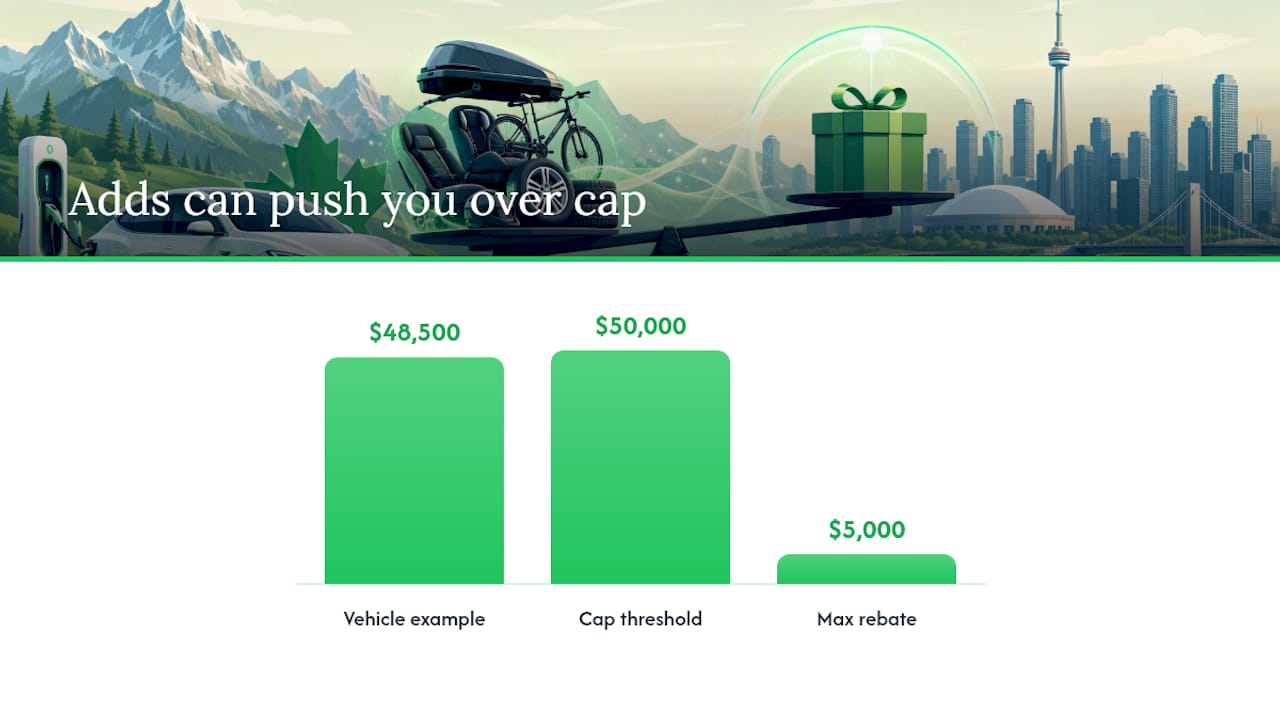
The most common failure point isn’t the vehicle. It’s what gets added to it. Dealer-installed accessories, mandatory admin fees, and factory option packages all count toward final transaction value, and industry explainers have flagged this as the biggest surprise buyers run into under the new rules. A vehicle priced at $48,500 can slide past $50,000 the moment you add a paint upgrade and a dealer-fitted accessory package.
A few habits keep you protected:
- Ask which accessories are optional and have them removed from the quote if they push you over the cap.
- Request itemized discounts rather than a single bundled “deal price” that hides what’s inside it.
- Get conditional eligibility confirmed in writing before you sign anything.
- If a dealer disputes your eligibility or won’t itemize, raise it with Transport Canada directly rather than accepting a verbal explanation.
Dealers must show the rebate as a line item on your bill of sale. Don’t finalize a deal on a handshake assurance that “it’ll be applied.”
Do provincial rebates stack with EVAP?
Provincial EV incentives don’t follow one universal rule. Some provinces allow stacking with federal rebates, others cap combined incentives, and application windows don’t always line up with EVAP’s dates. Before you assume you’ll get both, check your province’s own program page for its current status and timing relative to the federal schedule.
- Confirm whether your province’s program is currently open or paused.
- Check whether the provincial incentive is applied at point-of-sale like EVAP, or requires a separate claim.
- Note any total combined-incentive limits that might affect how you order add-ons.
Ontario buyers planning around both federal and provincial support should also see our guide to claiming the EV rebate in Ontario, which walks through timing your purchase alongside home charging setup.
Why installation timing matters as much as the paperwork
Getting the rebate approved is only half the job. What we see trip buyers up is the gap between vehicle delivery and having a working home charger ready to go. If your paperwork trail is scattered across delivery day, that’s a bad time to also be scrambling for a permit.
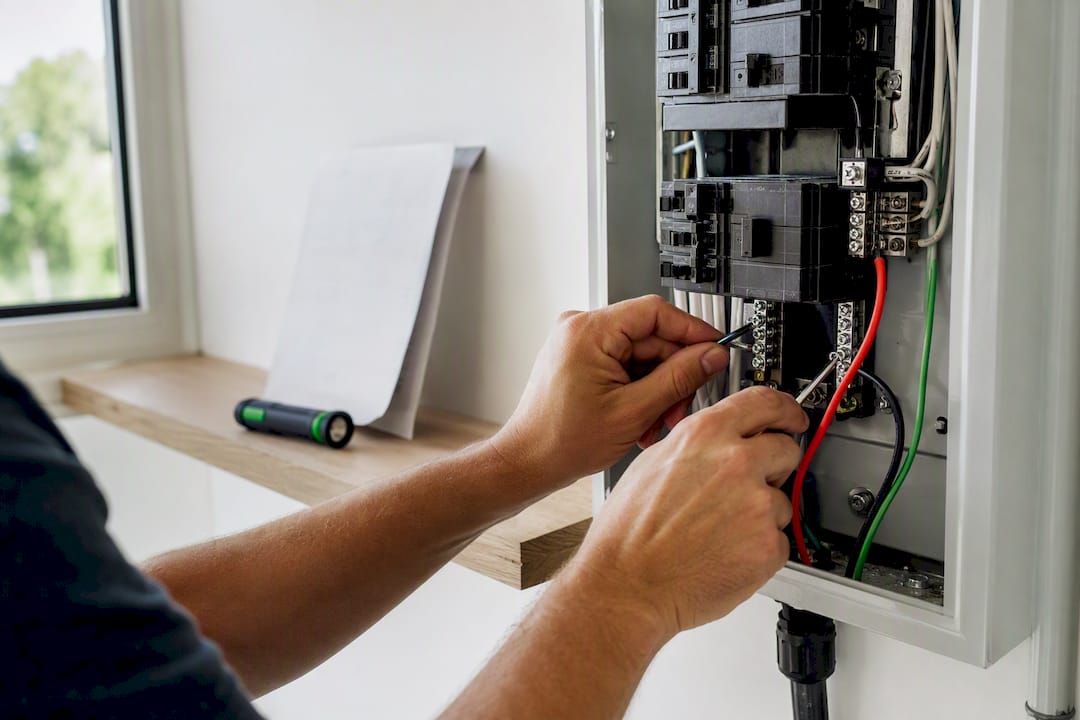
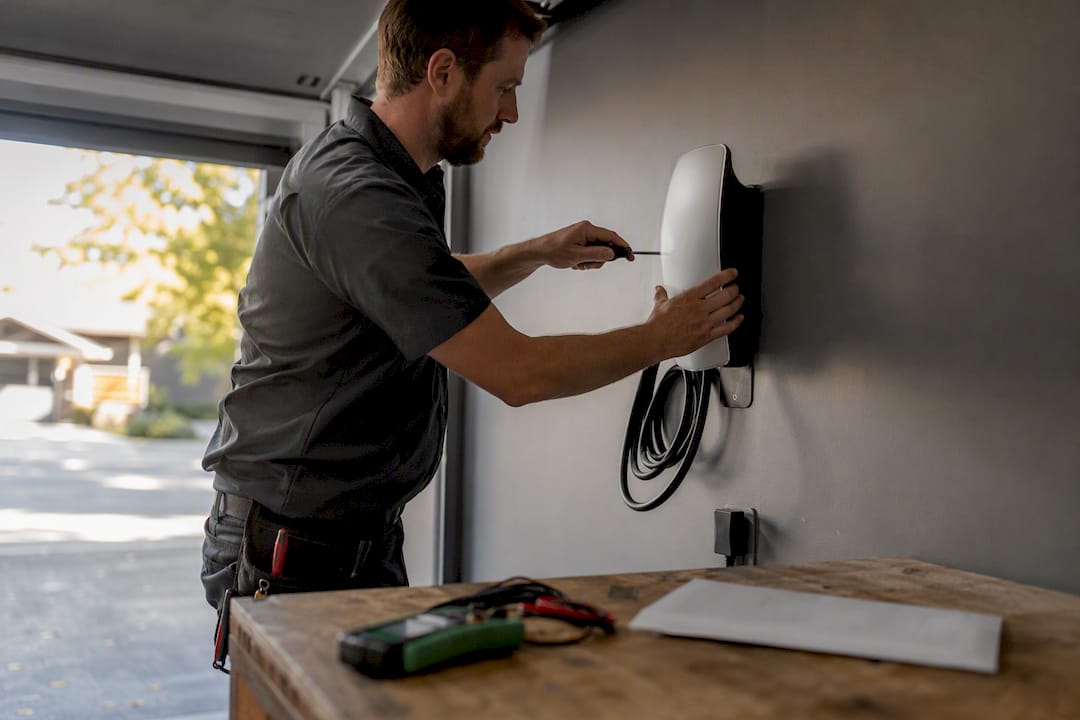
A licensed electrician handling your charger installation can coordinate around your delivery window, manage the ESA permit and inspection, and flag which costs, like the charger itself or a set of winter tires, sit outside your final transaction value and won’t affect your rebate math. That’s exactly the kind of detail that gets missed when a buyer is juggling a dealership, a rebate, and an electrical contractor all on separate timelines.
Homeowners in the Greater Toronto Area who plan their charger installation timeline alongside their vehicle order tend to avoid the awkward week of owning an EV with nowhere to plug it in.
— Hafiz
Get your rebate and your charger sorted at the same time
Evchargerinstallationtoronto is the practical next step once your vehicle deal is locked in. Instead of chasing separate quotes for wiring, permits, and rebate paperwork, our ESA-licensed electricians handle the whole install, including panel upgrades and permit filing, at transparent pricing starting from $1,800.
We book same-week appointments so your charger is ready around delivery day, not weeks after. Beyond the install itself, our team supports rebate applications worth up to $5,000 for new EV purchases, working alongside the dealer process you’ve just confirmed. If you’re finalizing your vehicle order now, get a personalized cost estimate with our EV charger installation cost calculator and line up your installation date before the vehicle arrives.
Recommended
Get Your Free Installation Quote
Free assessment · ESA permit included · Same-week availability across the GTA