EV rebate Ontario: how to claim the $5,000 federal incentive
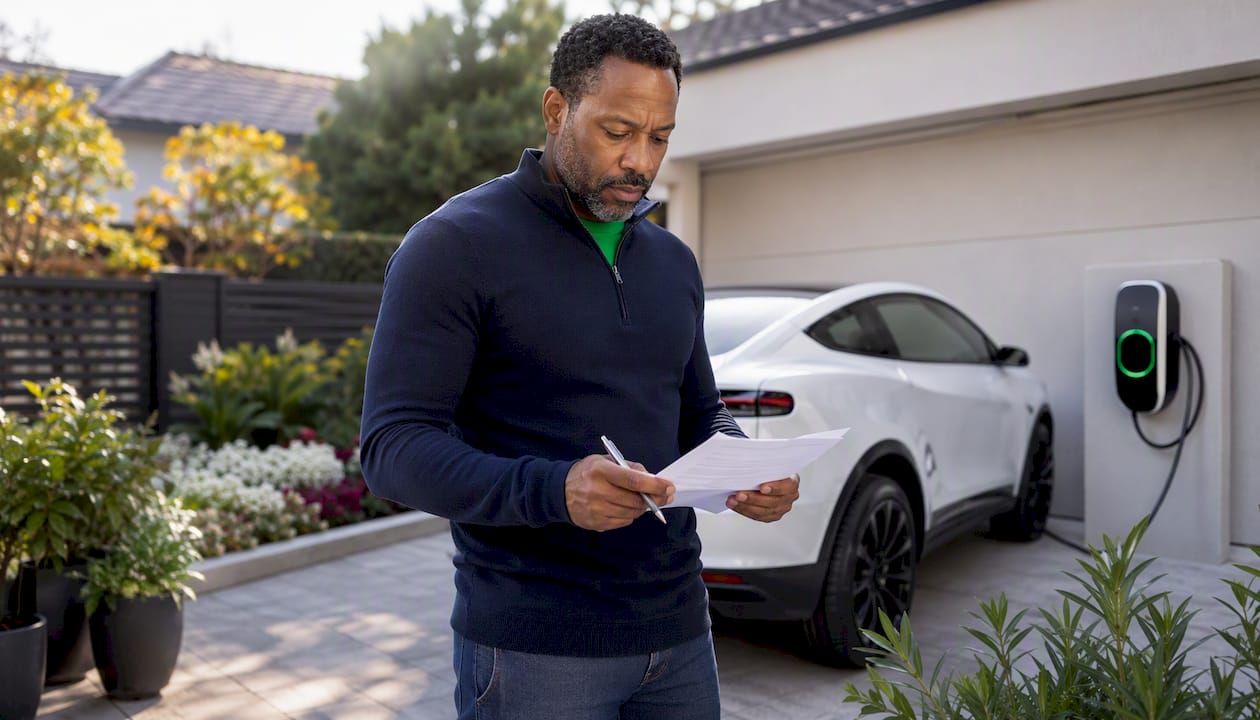
Ontario buyers have access to the federal Electric Vehicle Affordability Program (EVAP), which offers point-of-sale incentives of up to $5,000 for qualifying battery-electric and fuel-cell vehicles, and up to $2,500 for eligible plug-in hybrids. Ontario has offered no provincial purchase rebate since July 2018, so the federal EVAP is the only purchase incentive available to you right now.
Here is what that means in practice:
- BEVs and fuel-cell vehicles: incentives up to $5,000 at point of sale
- Plug-in hybrids (PHEVs): incentives up to $2,500 (tiered amounts apply depending on the model)
- Final transaction value cap: there is a cap of $50,000 on the final transaction value, including options and dealer fees but excluding taxes
- Canadian-made vehicles: exempt from the $50,000 cap
- No provincial top-up: Ontario adds no additional purchase incentive beyond the federal amount
Pro Tip: Confirm your dealer is enrolled in EVAP before you pay any deposit. The rebate is applied at the point of sale — it will not be deducted automatically unless the dealer is enrolled and submits the paperwork to Transport Canada.
TL;DR: Search the Transport Canada EVAP vehicle list for your model, then call your dealer to confirm enrolment before you sign anything.
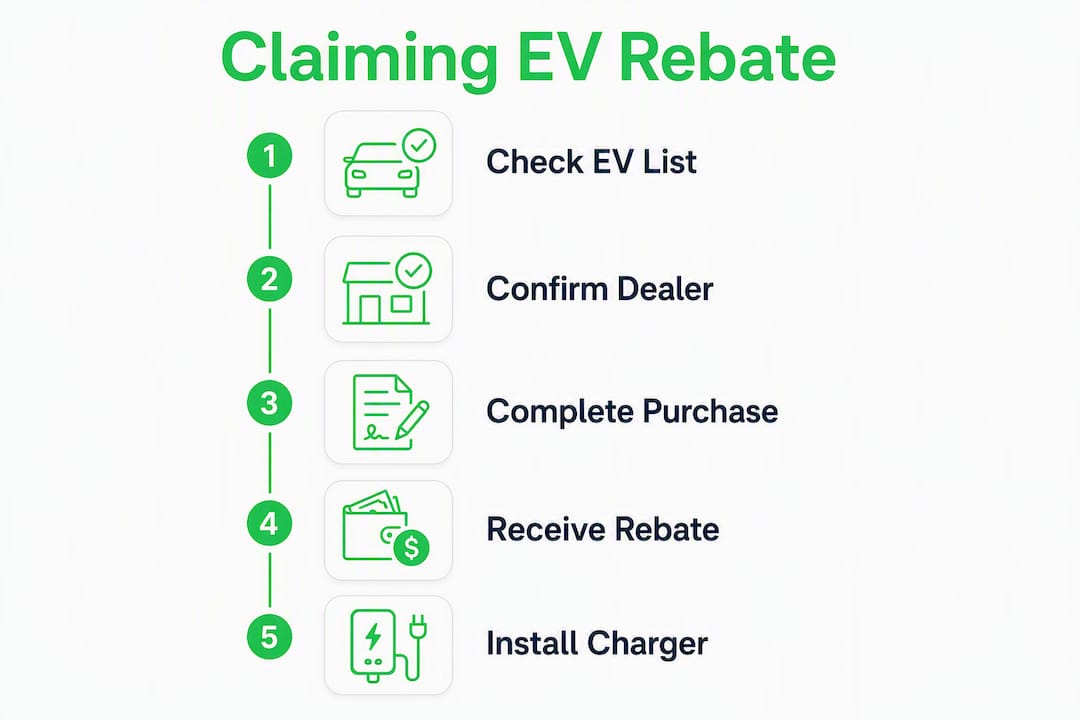
Table of Contents
- What does the federal EVAP actually pay Ontario buyers?
- Ontario’s provincial rebate situation: what you can still access
- How to check whether your vehicle qualifies for EVAP
- What rebates and savings are available for home EV charger installation?
- Timing risks and funding limits you need to know about
- A practical checklist to maximise your total EV savings in Ontario
- How a licensed local installer helps with rebate paperwork and permits
- Key takeaways
- Why Ontario buyers need to stop assuming the rebate will just happen
- Ready to get your home charger installed and rebates handled?
- Authoritative sources to verify before you buy
What does the federal EVAP actually pay Ontario buyers?
The Electric Vehicle Affordability Program launched on February 16, 2026, and runs to March 31, 2031, subject to available funding. The incentive amounts are straightforward:
incentives up to $5,000 for battery-electric and hydrogen fuel-cell vehicles, and up to $2,500 for plug-in hybrids. Applied at point of sale — no mail-in rebate, no post-purchase claim.
How the $50,000 final transaction value cap works
The cap is not based on the sticker price. It is based on the final transaction value, which includes the vehicle price, any factory or dealer-installed options, and dealer fees. Taxes are excluded from the calculation. If your final transaction value exceeds $50,000, the vehicle does not qualify — regardless of its MSRP.
The one meaningful exception: vehicles manufactured in Canada are exempt from the $50,000 final transaction value cap. If you are buying a Canadian-built EV, the price ceiling does not apply.
| Incentive type | Max amount | Vehicle category | Price cap |
|---|---|---|---|
| Battery-electric / fuel-cell | $5,000 | BEV, FCEV | $50,000 final transaction value (Canadian-made exempt) |
| Plug-in hybrid | Up to $2,500 | PHEV | $50,000 final transaction value |
| New vs. used | New and eligible used | Both | Applies to both categories |
| Lease | Eligible | Both | Minimum lease term required |
Eligibility limits per buyer
The EVAP places firm limits on how many incentives one person or organisation can receive. Individuals are limited to one incentive over the five-year program. Businesses and organisations can receive up to ten incentives over the program period. Approved carsharing companies have a separate allowance of up to fifty incentives per calendar year.
How the rebate reaches you
The incentive is applied at the point of sale by an enrolled dealership or authorised seller. You cannot apply for it yourself after the fact. The dealer confirms your eligibility and the vehicle’s eligibility, you sign an Attestation Form, and the dealer submits documentation to Transport Canada for reimbursement. The incentive deduction appears directly on your bill of sale.

Confirm the vehicle is on the Transport Canada EVAP vehicle list before you visit the dealership. The list is updated periodically, and a model that qualified last month may have been removed or had its trim-level eligibility changed.
Ontario’s provincial rebate situation: what you can still access
Ontario cancelled its provincial EV incentive in July 2018 and has not reinstated a purchase rebate since. That makes Ontario an outlier among Canadian provinces with significant EV adoption.
The financial gap is real. Buyers in PEI and Manitoba can stack a provincial $4,000 incentive on top of the federal $5,000, reaching roughly $9,000 in combined savings. Quebec offered $2,000 on top of federal in 2026. Ontario buyers receive none of that provincial layer, which means the federal EVAP is your ceiling for purchase incentives.
That said, Ontario buyers are not entirely without local support. The savings just come from different places.
Where Ontario buyers can still find savings
Utility rebates for home chargers: Several Ontario utilities offer rebates on Level 2 charger hardware and installation. Eligibility and amounts vary by service territory, so check your utility’s website directly.
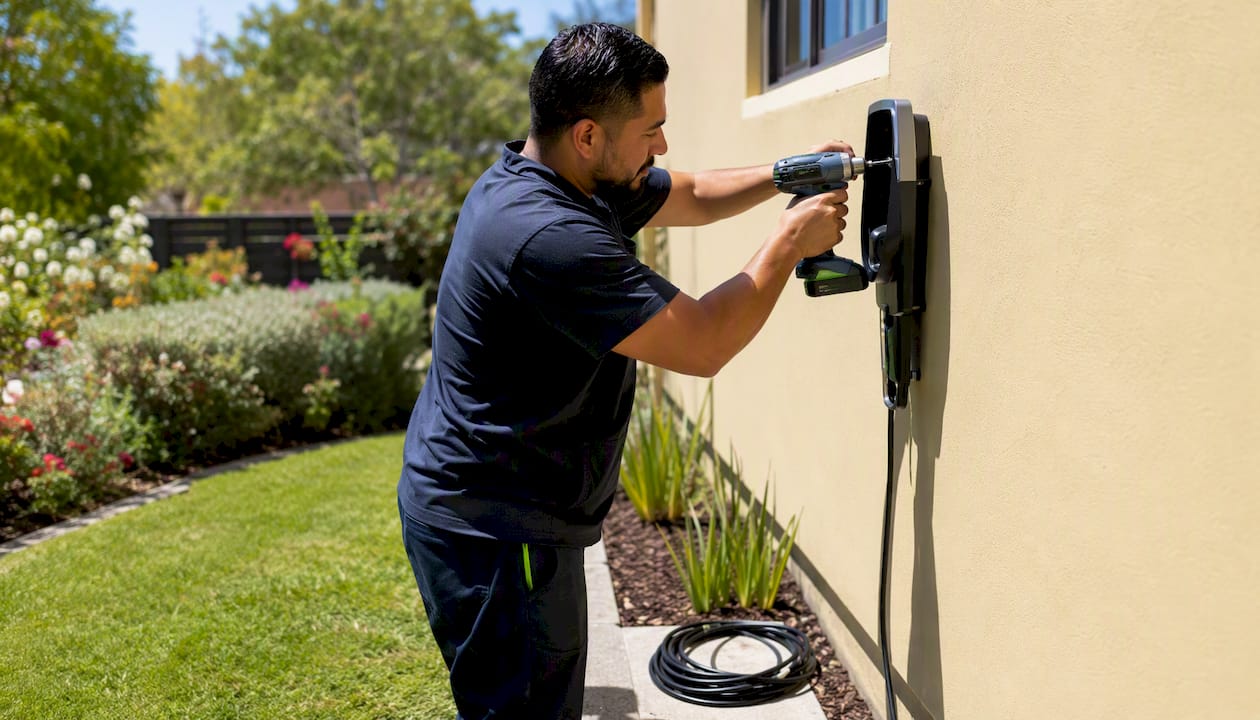
Municipal pilot programmes: Some municipalities in the GTA and surrounding regions have run or are running charging infrastructure pilots. These are not purchase rebates, but they can reduce your charger installation costs.
HOV and green licence plate perks: Ontario’s green licence plate programme allows eligible EVs to use high-occupancy vehicle lanes regardless of the number of passengers. This is not a cash saving, but it has real daily value for GTA commuters.
Time-of-Use (TOU) electricity pricing: This is one of the most underused savings levers available to Ontario EV owners.
Pro Tip: Ontario’s off-peak electricity rate can be as low as $0.076/kWh, which makes overnight charging significantly cheaper than daytime rates. Set your charger to run between 11 PM and 7 AM on weekdays to take full advantage. Check your utility’s current TOU schedule, as rates are reviewed periodically.
Before you finalise your budget, check your municipality’s website and your utility provider’s rebate portal for any active charger programmes in your service area.
How to check whether your vehicle qualifies for EVAP
This is a four-step process. Do not skip step three.
- Search the Transport Canada EVAP vehicle list — Go to the official federal vehicle list and search for your exact make, model, and trim. Eligibility is trim-specific — a base model may qualify while a higher trim with more options does not, because the final transaction value pushes it over $50,000.
Questions to ask your dealer before you sign
- Are you currently enrolled in the federal EVAP programme?
- Will the $5,000 (or applicable amount) be deducted on the bill of sale?
- Which fees are included in the final transaction value calculation?
- For leases: what is the minimum lease term, and how does the rebate appear in the lease payments?
For leased vehicles, the rebate is reflected in the lease structure rather than as a direct cash deduction. Minimum lease term requirements apply, so confirm the term before signing.
What rebates and savings are available for home EV charger installation?
The vehicle purchase rebate and the charger installation rebate are separate programmes. You can pursue both, and for most Ontario homeowners, the charger side is where local savings are most accessible.
| Rebate type | Source | Typical range | Notes |
|---|---|---|---|
| Utility hardware/installation rebate | Local utility (e.g., Toronto Hydro, Hydro One) | Varies by territory | Check your utility’s rebate portal directly |
| Municipal pilot grant | City or regional programme | Varies | Not available in all municipalities |
| Workplace charging support | Employer or building owner | Varies | Separate from residential programmes |
| TOU rate savings | Ontario electricity pricing | Ongoing | Off-peak rate as low as $0.076/kWh |
Utility programmes change frequently and vary by service territory. A rebate available in one part of the GTA may not be available in another. The EV charger rebates page at Evchargerinstallationtoronto tracks current local offers and can confirm what applies to your address.
Pro Tip: Use a licensed installer who provides a rebate-ready invoice and documented permit records. Many utility rebate programmes require proof of ESA permit and a licensed electrician’s sign-off. Missing either one can result in a rejected claim.
For a full breakdown of what installation costs look like in the GTA, the EV charger installation cost guide for Toronto covers pricing, panel upgrade considerations, and how rebates interact with total cost.
Timing risks and funding limits you need to know about
The EVAP is not a permanent entitlement. Transport Canada can modify eligibility criteria or end the programme at any time. Funding is finite, and when it runs out, the programme stops — regardless of the March 2031 end date.
Specific risks to watch for:
- Dealer not enrolled: The most common reason buyers miss the rebate. Confirm enrolment before any deposit.
- Vehicle removed from the eligible list: Models can be added or removed as Transport Canada updates the list. Check the list the week you plan to purchase, not months earlier.
- Funding exhausted: The programme runs until funding is depleted or March 31, 2031, whichever comes first.
- Final transaction value changes: If you add options or the dealer adjusts fees after your initial quote, the final transaction value may push the vehicle over the cap.
- Country-of-origin rules: Vehicles manufactured in certain jurisdictions may be excluded. Chinese-manufactured vehicles are currently excluded from EVAP eligibility. Confirm the manufacturing country for any vehicle you are considering.
Action items before you commit: Check the last-updated date on the Transport Canada EVAP pages. Confirm dealer enrolment in writing. Do not pay a non-refundable deposit until you have confirmed both the vehicle’s eligibility and the dealer’s enrolment status.
A practical checklist to maximise your total EV savings in Ontario
Follow these steps in order. Each one protects the savings you are entitled to.
-
Identify qualifying models. Use the Transport Canada EVAP vehicle list to shortlist models that qualify at your target price point. If you are considering a Canadian-built vehicle, note the price-cap exemption.
-
Calculate the final transaction value. Before you negotiate, ask the dealer for a written quote showing all fees and options included in the final transaction value. Confirm it stays under $50,000 (or confirm the Canadian-made exemption applies).
-
Confirm dealer enrolment. Ask directly and get confirmation in writing or via email. Do not assume enrolment based on the brand or dealership size.
-
Compare lease vs. purchase impact. The rebate applies to both, but the mechanics differ. For a lease, confirm the minimum term and how the incentive appears in the payment structure.
-
Stack charger rebates and TOU savings. Once the vehicle purchase is confirmed, contact your utility about charger hardware and installation rebates. Set up a TOU plan and schedule overnight charging to capture off-peak rates.
-
Hire an ESA-licensed electrician for your charger installation. This is not optional if you want utility rebates accepted. An ESA-licensed electrician provides the permit documentation and rebate-ready invoice that programme administrators require.
-
Keep all paperwork. Retain your signed Attestation Form, bill of sale showing the EVAP deduction, ESA permit, installation invoice, and any utility rebate application confirmations.
On negotiation
The federal rebate should appear as a line-item deduction on your bill of sale. Some dealers may try to absorb it into other discounts or present it as part of a package deal. Insist it appears separately and clearly. That documentation matters for your records and for any future rebate claims tied to the vehicle.
How a licensed local installer helps with rebate paperwork and permits
Buying the vehicle is step one. Getting a compliant, rebate-eligible home charger installed is step two — and the paperwork matters as much as the hardware.
A licensed installer handles the full process:
- Site assessment and load calculation: Determines whether your existing panel supports a Level 2 charger or whether a panel upgrade is needed.
- ESA permit submission: Files the required Electrical Safety Authority permit before work begins, which is mandatory in Ontario.
- Installation and inspection coordination: Completes the installation and arranges the ESA inspection sign-off.
- Rebate-ready documentation: Provides the invoice format and permit records that utility rebate programmes require.
Where a panel upgrade is not needed, smart load management systems like the EVEMS (DCC-12) can allow a Level 2 charger to operate safely on an existing panel by managing load dynamically. This can save homeowners the cost of a full panel upgrade.
Pro Tip: Ask your installer to confirm exactly which documents your utility’s rebate programme requires before the installation date. Getting the invoice format right the first time avoids delays and rejected claims.
Evchargerinstallationtoronto’s team of ESA-licensed electricians handles permits, inspections, and rebate documentation as part of every installation. Pricing starts from $800, same-week bookings are available, and the service carries a 4.9 customer satisfaction rating. For condo and multi-unit properties, the team also manages EVEMS installations and building-specific permit requirements.
Key takeaways
Ontario buyers can access up to $5,000 through the federal EVAP for a qualifying battery-electric vehicle, with no provincial purchase rebate available since 2018 — making dealer enrolment confirmation and vehicle eligibility verification the two most critical steps before you sign.
| Point | Details |
|---|---|
| Federal EVAP amounts | Up to $5,000 for BEVs; up to $2,500 for PHEVs, applied at point of sale. |
| No Ontario provincial rebate | Ontario cancelled its provincial purchase incentive in 2018 and has not reinstated it. |
| Final transaction value cap | $50,000 including options and dealer fees (taxes excluded); Canadian-made vehicles are exempt. |
| Dealer enrolment is mandatory | Only enrolled dealers can apply the rebate — confirm before paying any deposit. |
| Evchargerinstallationtoronto | Handles ESA permits, rebate documentation, and Level 2 charger installation across the GTA from $800. |
Why Ontario buyers need to stop assuming the rebate will just happen
The single biggest mistake Ontario EV buyers make is treating the EVAP rebate as automatic. It is not. It requires a specific sequence: an enrolled dealer, a qualifying vehicle at a qualifying final transaction value, a signed Attestation Form, and correct documentation submitted to Transport Canada. Miss any one of those steps and the rebate does not happen — and there is no appeal process for consumers after the fact.
Ontario’s lack of a provincial purchase rebate makes this federal programme more important here than in almost any other province. In Manitoba or PEI, a buyer who misses the federal rebate still has a provincial backstop. In Ontario, you do not. The federal EVAP is the whole picture for purchase savings.
The charger side is where Ontario buyers have more flexibility. Utility rebates, TOU pricing, and permit-compliant installations create real savings that compound over years of ownership. But those savings also require correct paperwork from a licensed installer. A rejected utility rebate claim because the ESA permit was missing or the invoice format was wrong is a preventable loss.
The practical takeaway: treat the rebate process as a checklist, not an assumption. Verify the vehicle, verify the dealer, verify the installer’s credentials, and keep every document.
Ready to get your home charger installed and rebates handled?
Evchargerinstallationtoronto takes the paperwork off your plate. Once you have confirmed your vehicle qualifies for the federal EVAP, the next step is getting a compliant Level 2 charger installed at home — and making sure your utility rebate claim goes through without a hitch.
The team at Evchargerinstallationtoronto are ESA-licensed electricians serving Toronto and the Greater Toronto Area. Every installation includes permit handling, ESA inspection coordination, and a rebate-ready invoice your utility programme will accept. Smart load management (EVEMS) is available for homes and condos where a full panel upgrade is not the right fit. Pricing starts from $800, with same-week availability in most GTA neighbourhoods.
Use the free installation cost calculator to get an instant estimate for your home, or visit the Ontario EV charger rebates page to see which utility and local programmes currently apply to your address. Then book directly for a same-week installation.
Note: Evchargerinstallationtoronto installs and services home EV chargers. It is not a vehicle seller and does not administer the federal EVAP programme.
Authoritative sources to verify before you buy
Programme rules and funding levels can change without notice. Check the last-updated date on each page before you act.
- Transport Canada EVAP vehicle list — the definitive list of qualifying models and trims; check this the week you plan to purchase
- Plug’n Drive / Find My EV Match — non-profit tool that aggregates national incentives and helps match buyers to qualifying vehicles and programmes
- Evchargerinstallationtoronto rebates page — current utility and local charger rebate programmes available in the GTA and surrounding areas
Update notice: Transport Canada can change EVAP eligibility criteria, funding levels, or the vehicle list at any time. Always confirm the current status directly on the official government pages before finalising your purchase or signing any dealer paperwork.
Recommended
- EV Charger and Energy Rebates Ontario 2026 | EV Install Pro Toronto | EV Install Pro Toronto
- EV rebate Canada 2026: maximize your savings | EV Install Pro Toronto
- EV Charger Rebates York Region 2026 | Markham, Vaughan, Richmond Hill | EV Install Pro Toronto
- EV Charger Installation Cost in Toronto 2025: Complete Pricing Guide | EV Install Pro Toronto
Get Your Free Installation Quote
Free assessment · ESA permit included · Same-week availability across the GTA