Tesla charger installation cost: 2026 guide for Toronto homeowners
Tesla charger installation cost is the total expense you pay to set up a Tesla Wall Connector at home, covering hardware, professional labour, materials, permits, and any electrical upgrades required. In Canada, that figure typically lands between $1,200 and $3,500 for a standard job, though complex installations can push well past $6,000. Toronto homeowners face the same variables as the rest of the country, plus local permit timelines and Ontario-specific rebate programmes that can meaningfully reduce the final bill. Understanding what drives the cost puts you in a far stronger position before you call a single electrician.
What factors influence the cost of installing a Tesla charger at home?
No two homes produce the same quote. There is no fixed universal price because home-specific variables like panel amperage and physical wiring constraints shift the total dramatically. Knowing the main drivers helps you anticipate costs before the first site visit.
Electrical panel capacity is the single biggest variable. Older Toronto homes built before 1990 commonly run on 100-amp service. Adding a Level 2 charger to a panel already near capacity requires an upgrade to 200-amp service. Panel upgrades cost $1,500 to $4,000 or more, making them the most significant line item on many installation invoices.
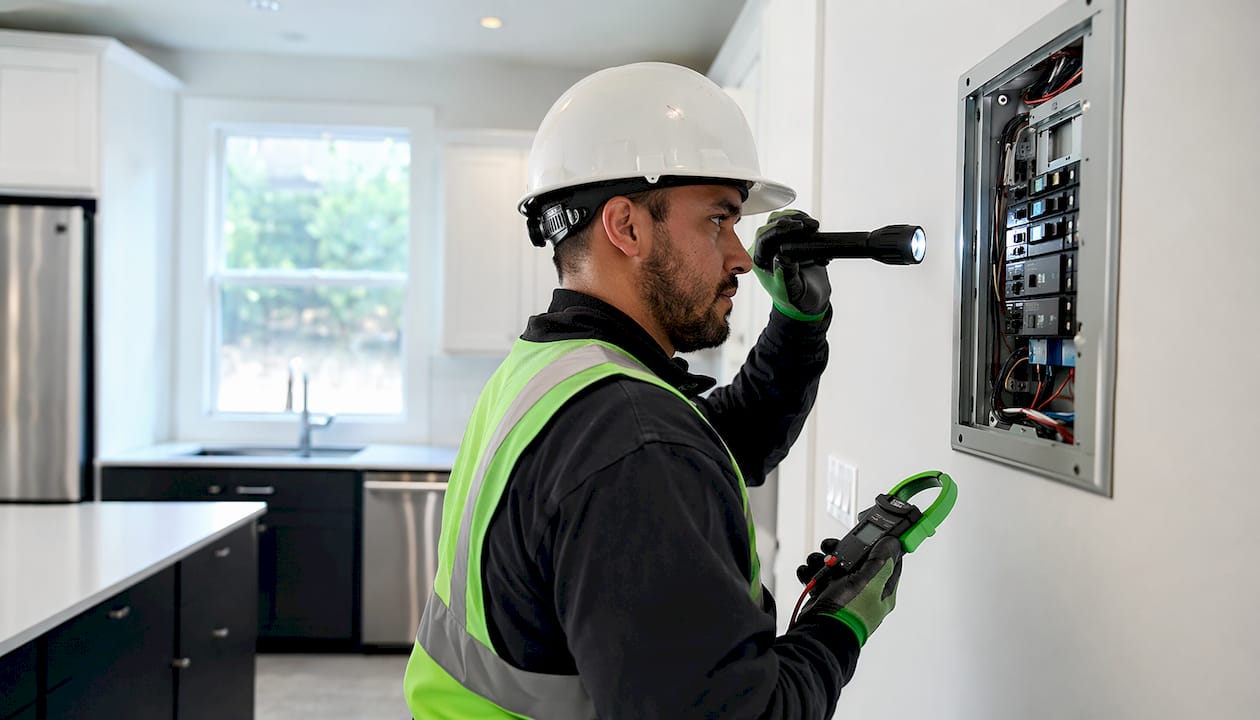
Wiring distance and complexity is the second major driver. Running wire from your electrical panel to the charger location adds cost based on distance, conduit type, and whether trenching is needed. Labour and materials for wiring can add $50 to over $1,200 depending on the run length. A detached garage in Etobicoke or a backyard carport in Scarborough can push that figure to the higher end quickly.
Other cost factors include:
- Hardware price. The Tesla Wall Connector currently costs approximately $450 to $760 CAD in Canada in 2026. Prices have risen and can shift again, so check Tesla’s official store before finalizing your budget.
- Licensed electrician labour. Labour typically accounts for $300 to $1,500 of the total, depending on job complexity and local rates.
- Permit and inspection fees. Most Ontario municipalities require a permit. Fees vary by city but are a non-negotiable part of a compliant installation.
- Materials. Wire gauge, conduit, breakers, and junction boxes all add to the bill. Heavier gauge wire for longer runs costs more.
- Trenching. Running conduit underground to a detached garage adds both labour hours and materials cost.
Pro Tip: Book a site assessment before requesting quotes. An electrician who physically inspects your panel and measures the wire run will give you a far more accurate number than one quoting over the phone.
Typical Tesla charger installation cost scenarios in Canada
Pricing falls into three broad tiers based on installation complexity. The table below outlines realistic budget ranges for Canadian homeowners in 2026.
| Scenario | Hardware | Labour and materials | Permits | Estimated total |
|---|---|---|---|---|
| Basic (panel nearby, minimal wiring) | $450–$760 | $300–$500 | $100–$200 | $850–$1,460 |
| Standard (longer wire run, minor drilling) | $450–$760 | $600–$1,200 | $150–$300 | $1,200–$2,260 |
| Complex (panel upgrade, long distance, trenching) | $450–$760 | $1,500–$4,000+ | $200–$400 | $2,150–$5,160+ |
Standard installations in 2026 range from $1,200 to $2,500 including hardware, labour, materials, and permits, with complex jobs potentially exceeding $3,500. That range reflects real-world conditions across Canadian cities, including Toronto, where older housing stock and detached garages are common.
Toronto homeowners should also factor in Ontario’s rebate programmes. Canadian Tesla Wall Connector hardware prices rose to about $760 CAD in mid-2026, pushing total budgets upward. Local utility rebates and provincial incentives can offset several hundred dollars from the final cost. You can review current Ontario rebates and incentives before committing to a budget.
Pro Tip: Ask your electrician to separate the quote into hardware, labour, materials, and permit costs. A transparent, itemized quote makes it easier to compare bids and spot where savings are possible.
Why hiring a licensed electrician and getting a permit matters
Skipping the permit is the most expensive shortcut a homeowner can take. DIY or unpermitted installations risk insurance claim denial, fire hazards, and voiding the Tesla vehicle warranty. That is not a theoretical risk. Inspectors regularly find dangerous wiring faults that unlicensed installers miss, including grounding failures and missing GFCI protection.
The permit and inspection process is straightforward when you work with a licensed electrician. Inspections typically take 30 to 60 minutes, and the full permit approval process adds roughly one to two weeks to the project timeline. That wait is worth it. A permitted installation protects your home’s resale value and keeps your insurance policy intact.
Choosing a licensed electrician is not just a legal requirement. It is the only way to confirm that your charger, your home’s wiring, and your Tesla vehicle warranty are all protected from day one. An ESA-licensed electrician in Ontario carries the credentials to perform the work, pull the permit, and pass the inspection without putting any of those protections at risk.
Key reasons to insist on a licensed, permitted installation:
- Insurance protection. An unpermitted installation gives your insurer grounds to deny a claim if a fire or electrical fault occurs.
- Warranty compliance. Tesla’s vehicle warranty requires proper installation. An unpermitted job can void it.
- Code compliance. Ontario’s Electrical Safety Authority (ESA) sets the standards. Licensed electricians know them.
- Resale value. Buyers and their home inspectors check for permits. An unpermitted charger can complicate or delay a sale.
- Safety. A permitted installation gets a formal inspection. That inspection catches problems before they become hazards.
To find a qualified installer in Toronto, look for ESA-licensed electricians with documented experience in Tesla Wall Connector installation. Ask for proof of licence and confirm they handle permit applications as part of their service.
How to plan and budget effectively for Tesla charger installation
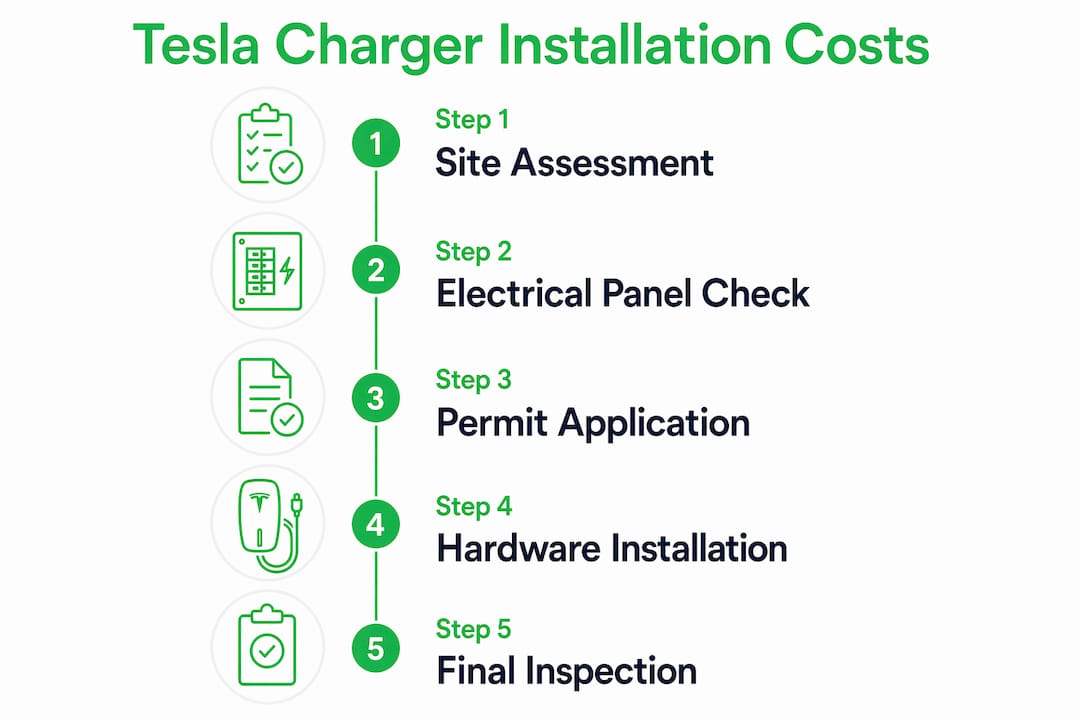
A clear plan before you call an electrician saves both time and money. Follow these steps to get accurate quotes and avoid surprises.
- Photograph your electrical panel. Take a clear photo of the panel label showing amperage, breaker slots, and any existing EV-related breakers. Send this to every electrician you contact. It lets them give a more accurate preliminary estimate.
- Measure the distance from your panel to the charger location. Walk the likely wire route and note any walls, floors, or outdoor sections the wire must cross. Longer and more complex routes cost more.
- Identify whether your panel needs an upgrade. If your home runs on 100-amp service and your panel is near capacity, budget for a potential upgrade. A panel upgrade for your EV charger is a common requirement in older Toronto homes.
- Get at least three quotes. Quotes that do not evaluate panel location or wiring plans can mislead homeowners. Insist that each electrician visit the site or review your photos before quoting.
- Research rebates before signing anything. Federal and provincial programmes can reduce your out-of-pocket cost. Check current eligibility requirements, as programme details change.
- Build permit time into your schedule. Permits add one to two weeks to the overall timeline. If you need the charger operational by a specific date, start the process early.
- Confirm the quote includes permits and inspection. Some electricians quote labour only. A complete quote covers hardware, labour, materials, permits, and the inspection visit.
Pro Tip: A qualified electrician performs a load calculation before installation to determine if a panel upgrade is necessary. Choosing a lower amperage setting on the Wall Connector can sometimes avoid an upgrade, but it reduces charging speed. Ask your electrician to walk you through that tradeoff before deciding.
Key takeaways
Tesla charger installation cost in Canada ranges from under $1,500 for a basic setup to over $5,000 when panel upgrades, long wire runs, and permits are included.
| Point | Details |
|---|---|
| Cost range varies widely | Standard installations run $1,200–$2,500; complex jobs with panel upgrades can exceed $5,000. |
| Panel upgrades are the biggest cost driver | Upgrading from 100-amp to 200-amp service adds $1,500–$4,000 to the total. |
| Hardware prices fluctuate | Tesla Wall Connector hardware costs $450–$760 CAD in 2026; check Tesla’s store before budgeting. |
| Permits protect you legally and financially | Unpermitted work voids the Tesla warranty and can invalidate home insurance claims. |
| Rebates reduce net cost | Ontario and federal programmes can offset several hundred dollars from your installation expenses. |
What I’ve learned after seeing hundreds of Toronto installations
The number I see catch homeowners off guard most often is not the hardware price. It is the panel upgrade. A homeowner in East York budgets $1,500, gets a site visit, and learns their 1960s panel needs a full 200-amp upgrade before a single wire can be run to the garage. That single line item can double or triple the original estimate.
Hardware pricing is the second surprise in 2026. Tesla Wall Connector prices have risen and continue to fluctuate. Homeowners who budget based on a price they saw six months ago often find the number has shifted by the time they are ready to buy. Check the official Tesla store the week you are ready to proceed, not the month before.
The longer-term view matters here too. Home charging with a properly installed Tesla Wall Connector delivers real savings over public charging and gasoline over time. The upfront cost is real, but it is a one-time expense against years of lower per-kilometre costs. Engage a professional early, get the panel situation sorted, and the rest of the project moves quickly.
— Hafiz
Evchargerinstallationtoronto.ca: get a precise cost estimate for your home
Evchargerinstallationtoronto.ca takes the guesswork out of budgeting for your Tesla Wall Connector setup. Their team of ESA-licensed electricians serves homeowners across the Greater Toronto Area, handling everything from the initial site assessment to permit applications and the final inspection, with transparent pricing starting from $800.
Use the free installation cost calculator to get a personalized estimate based on your home’s panel, location, and charger placement. Evchargerinstallationtoronto.ca also manages access to current rebates and incentives, so you know exactly what programmes apply to your installation before you commit. Same-week bookings are available, and the team holds a 4.9 customer rating across completed installations in Toronto and the GTA.
FAQ
How much does a Tesla Wall Connector installation cost in Canada?
Standard Tesla Wall Connector installation in Canada ranges from $1,200 to $2,500 in 2026, including hardware, labour, materials, and permits. Complex jobs involving panel upgrades or long wire runs can exceed $3,500.
Do I need a permit to install a Tesla charger in Toronto?
Yes. Ontario requires a permit for Level 2 EV charger installations. Skipping the permit risks voiding your Tesla vehicle warranty and can invalidate home insurance claims in the event of an electrical fault.
How long does a Tesla charger installation take?
A standard installation takes 3–5 hours on-site. Permit approval adds approximately one to two weeks to the overall timeline, so plan accordingly if you have a target completion date.
What is the biggest cost driver in a Tesla charger installation?
Electrical panel upgrades are the largest single cost factor. Homes with 100-amp service often require an upgrade to 200-amp service before a Level 2 charger can be safely installed, adding $1,500 to $4,000 or more to the total.
Are there rebates available for Tesla charger installation in Ontario?
Yes. Federal and provincial programmes can offset several hundred dollars from your installation cost. Eligibility depends on your location, income, and the type of installation. Check current Ontario EV charger rebates for up-to-date programme details.
Recommended
Get Your Free Installation Quote
Free assessment · ESA permit included · Same-week availability across the GTA