Can you charge at 120V at home and will it be enough?
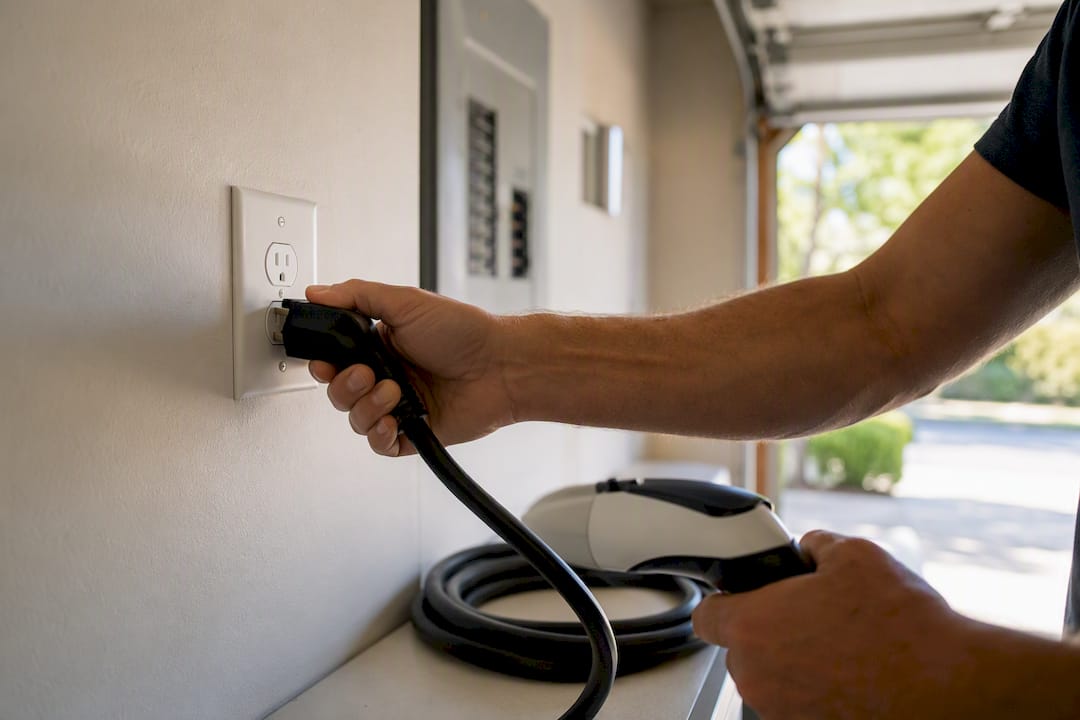
Yes. A regular 120V outlet can be a perfectly usable nightly top-up for many EV owners, using the cordset that came with your vehicle. It becomes limiting once your daily driving pushes past roughly 40 miles (65 km) or you routinely arrive home close to empty.
The rule of thumb is simple: Level 1 charging adds about 2 to 5 miles (3 to 8 km) of range per hour. Overnight, that’s typically 20 to 40 miles (32 to 65 km) back in the battery, which covers most commutes without any electrical work.
Before you rely on it every night, check these three things:
- The outlet is on a dedicated circuit, not shared with other appliances.
- You’re using the OEM cordset; avoid extension cords.
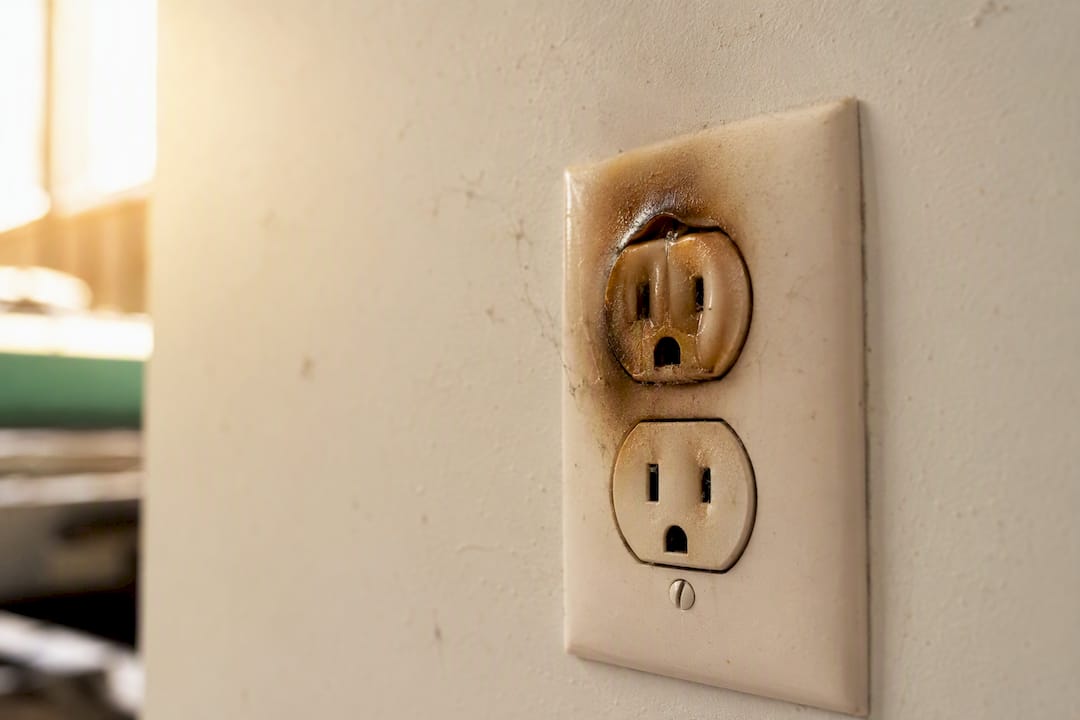
- The outlet shows no signs of damage or wear.
Key Takeaways
Level 1 (120V) charging suits most shorter commutes, but daily driving beyond moderate distances, or a shared multi-EV household, calls for a dedicated circuit check and possibly a Level 2 upgrade later.
| Level 1 speed | Expect a modest range increase per hour, enough for overnight top-ups. | Daily threshold | Level 1 works well for shorter daily commutes. | Non-negotiable safety checks | Use a dedicated circuit, avoid extension cords, and inspect outlets for signs of damage. | Level 2 payoff | 240V charging provides significantly faster replenishment rates than 120V. | Professional next step | Licensed electricians assess your electrical panel and handle installation permits and rebates for a Level 2 upgrade.
Table of Contents
- Charging at 120V home: how it actually works
- Who can actually rely on 120V charging?
- Is your outlet actually safe for nightly EV charging?
- Making Level 1 charging work night after night
- Deciding whether to upgrade to Level 2 (240V)
- What a licensed installer actually checks before you upgrade
- What homeowners get wrong about 120V charging
- Ready to know exactly what your home needs?
- Frequently asked questions
- Sources
Charging at 120V home: how it actually works
A standard household outlet delivers a moderate continuous power level to your car. That is a fraction of what a clothes dryer pulls, which is why it charges slowly but safely on existing home wiring.
According to Natural Resources Canada, Level 1 charging adds about 2 to 5 miles (3 to 8 km) per hour and can take 40 to 50-plus hours to fully charge a depleted battery electric vehicle from empty.
By the numbers:
- A 40 kWh battery (common in smaller EVs) can take a full day or more to charge fully on 120V.
- A 75 kWh battery (common in longer-range EVs) requires significantly longer to charge fully.
- Level 2, 240V charging adds 20 to 30-plus miles (32 to 48-plus km) per hour, roughly 6 to 8 times faster.
That gap matters less than it sounds, because you’re rarely charging from empty. Most nights you’re just replacing the miles you drove that day, and an 8 to 10 hour overnight window on 120V handles that comfortably for shorter commutes.
Who can actually rely on 120V charging?
Match your daily distance to one of these three profiles before deciding whether Level 1 works for you.
- Short commuter, under 20 miles (32 km) a day. An 8 to 10 hour overnight charge on 120V easily replaces this, with range to spare most nights.
- Average commuter, 30 to 40 miles (48 to 65 km) a day. This sits right at the edge. Natural Resources Canada notes Level 1 is often sufficient for drivers under roughly 40 miles (65 km) daily, but you’ll want a full 10 to 12 hour charging window with no exceptions.
- Heavy commuter, over 50 miles (80-plus km) a day. Level 1 will struggle to keep pace day after day, especially once winter range loss enters the picture.
A quick math check works for any EV: divide your battery’s usable kWh by roughly 1.4 kW to estimate hours for a full charge, then compare that to your actual nightly plug-in window. Multi-vehicle households should run this calculation per car, since a second EV sharing one outlet on alternating nights changes the math fast. Cold weather adds another variable. NRCan’s guidance on electric vehicle charging points out that cold temperatures reduce range and slow effective charging, so garage or sheltered parking helps Level 1 owners more than most realize.
Is your outlet actually safe for nightly EV charging?
Not every 120V outlet is built for hours of continuous draw. A few checks now can prevent a bigger problem later.
- Confirm the outlet sits on a dedicated branch circuit. Older wiring sometimes shares a 15-amp circuit with other loads, and a continuous 12A draw from EV charging needs more headroom than code allows on a shared line.
- Garage and outdoor outlets should have GFCI protection and proper grounding, both standard requirements for the environments where EV charging usually happens.
- Never use an extension cord. Continuous EV charging loads raise fire risk on cords not rated for it, and it can void your charging cable’s warranty or violate local electrical code.
- Skip daisy-chaining through power bars and retire any outlet that looks scorched, loose, or discoloured.
Pro Tip: If your home still runs on original 1980s or 1990s wiring, ask an electrician whether your circuit is rated 15A or 20A before you start charging nightly. A dedicated 20A circuit gives more margin for continuous loads than an older 15A line, according to the Alternative Fuels Data Center.
Stop charging immediately and call an electrician if you notice heat at the outlet or plug, a burning smell, or a breaker that trips repeatedly.
Making Level 1 charging work night after night
Small habits make a bigger difference on 120V than on faster chargers, since you have less margin for error over an 8 to 10 hour window.
- Charge during off-peak hours. Scheduling overnight charging, either through your utility’s time-of-use rates or your car’s built-in timer, keeps running costs down without changing your routine.
- Stick with the OEM cordset. It’s matched to your vehicle’s charging profile. Skip third-party cables you haven’t verified.
- Dedicate the outlet. Don’t share it with a space heater, dehumidifier, or freezer while your car charges.
- Run a first-session check. Feel the outlet and plug after an hour of charging, and confirm the breaker isn’t nuisance-tripping before you trust it every night.
Deciding whether to upgrade to Level 2 (240V)
Level 2 charging changes the math entirely. U.S. Department of Transportation figures put it at 20 to 30-plus miles (32 to 48-plus km) per hour, roughly 6 to 8 times faster than Level 1. That turns an overnight top-up into a full charge in a few hours, which matters if you drive more than 40 miles (65 km) a day or share one charger between two EVs.
Costs vary by home, but three factors drive the number every time:
- Charger hardware itself
- Electrician labour for a dedicated 240V circuit
- Whether your electrical panel has room, or needs an upgrade
Rebates can offset a meaningful chunk of that cost for new EV purchases. Some homeowners can also skip a full panel upgrade using smart load management that throttles EV charging when other big appliances are running. A licensed electrician typically completes the installation itself within a few hours once permits are in hand, though the full comparison between 120V and 240V is worth reading if you’re on the fence.
What a licensed installer actually checks before you upgrade
A short site visit answers most of the questions homeowners have before committing to Level 2.
An ESA-licensed electrician will check your panel’s spare capacity, confirm breaker sizing matches the new load, inspect the condition of your existing outlet or circuit, and verify the whole job meets Ontario’s electrical code.
A complete installation service typically includes:
- Permit filing and post-install inspection
- Rebate paperwork for eligible new EV purchases
- A clear, upfront price before work begins
- A defined timeline from quote to completed install
Pro Tip: When you’re comparing quotes, ask each electrician whether permits and rebate handling are included in the price or billed separately. That single question often explains why two quotes for the same job look so different.
What homeowners get wrong about 120V charging
Most advice online treats Level 1 charging as a stopgap, something you tolerate until you can afford better. That framing misses what the numbers actually show: for a driver doing 25 miles (40 km) a day, a 240V charger is solving a problem they don’t have.
The bigger blind spot is wiring condition, not charging speed. Homeowners obsess over miles-per-hour while ignoring whether their garage outlet has sat untouched since the house was built. An outlet that’s fine for a shop vacuum once a month is a different animal under eight hours of continuous draw, night after night.
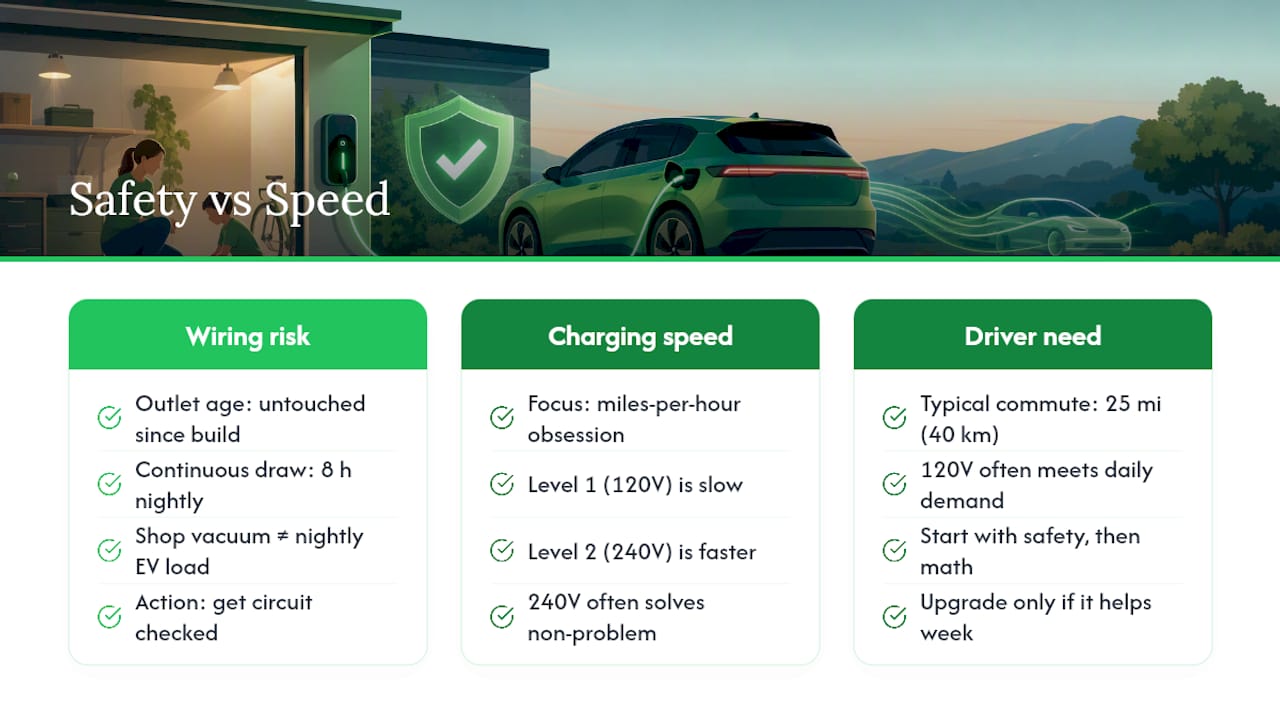
My honest read: don’t start with “should I upgrade to Level 2.” Start with “is my current outlet actually safe for this.” Run the math on your commute, get the circuit checked, and only then decide if the extra speed of Level 2 solves a real problem in your week rather than a hypothetical one.
Ready to know exactly what your home needs?
Reading about dedicated circuits and panel capacity is one thing. Knowing your specific garage outlet, breaker panel, and commute actually line up is another. Evchargerinstallationtoronto sends ESA-licensed electricians to check exactly that: panel capacity, breaker sizing, and whether your existing wiring can safely support nightly charging, or whether a Level 2 upgrade solves a real gap in your routine.
Every job includes permit filing and inspection at no extra charge, and if you’re buying a new EV, the team handles rebate paperwork worth up to $5,000 on your behalf. Pricing starts at $1,800, quoted upfront before any work begins, with same-week booking and most installs completed in a few hours. If your commute is creeping past that 40 mile (65 km) mark, run your numbers through the EV charger installation cost calculator and get a free assessment before you decide.
Frequently asked questions
Can I charge my EV every night on a regular 120V outlet? Yes, provided the outlet is on a dedicated circuit and in good condition. It works well for daily driving under roughly 40 miles (65 km), using the cordset that came with your vehicle.
How many hours does it take to fully charge an EV at 120V home charging speeds? A full charge from empty typically takes 40 to 50-plus hours, depending on battery size. Most owners never charge from empty, so nightly top-ups of 8 to 12 hours are far more realistic.
Is charging devices at home on 120V outlets any different from charging an EV? Yes. Household electronics draw power briefly, while EV charging pulls a continuous 1.2 to 1.5 kW load for hours, which is why outlet condition and dedicated circuits matter so much more for vehicles.
Do I need an electrician if I only plan to use the outlet in my garage? Get it inspected first. A licensed electrician can confirm the circuit isn’t shared, check for proper grounding and GFCI protection, and flag any wiring that predates modern code.
When does it make sense to upgrade to Level 2 charging? Consider it once your daily driving regularly exceeds 40 miles (65 km), you’re charging two EVs from one outlet, or you want a full charge in a few hours instead of overnight.
Sources
For official speed and installation guidance, see Natural Resources Canada and the Alternative Fuels Data Center. For a Toronto-area quote, visit EV Install Pro’s homepage.
- Electric vehicle charging | Natural Resources Canada
- Charger types and speeds | U.S. Department of Transportation
- Charging electric vehicles at home | Alternative Fuels Data Center
Recommended
- 120V vs 240V charging: what Canadian EV owners need to know | EV Install Pro Toronto
- 100 amp vs 200 amp: a homeowner’s guide to future-proofing | EV Install Pro Toronto
- Two EVs, one charger: your practical home guide | EV Install Pro Toronto
- EVEMS Installation Toronto | Smart Load Management | Skip the Panel Upgrade | EV Install Pro Toronto
Get Your Free Installation Quote
Free assessment · ESA permit included · Same-week availability across the GTA