Get Up to 50% Reimbursement: Condo Boards’ EV Charger Grants (Canada)
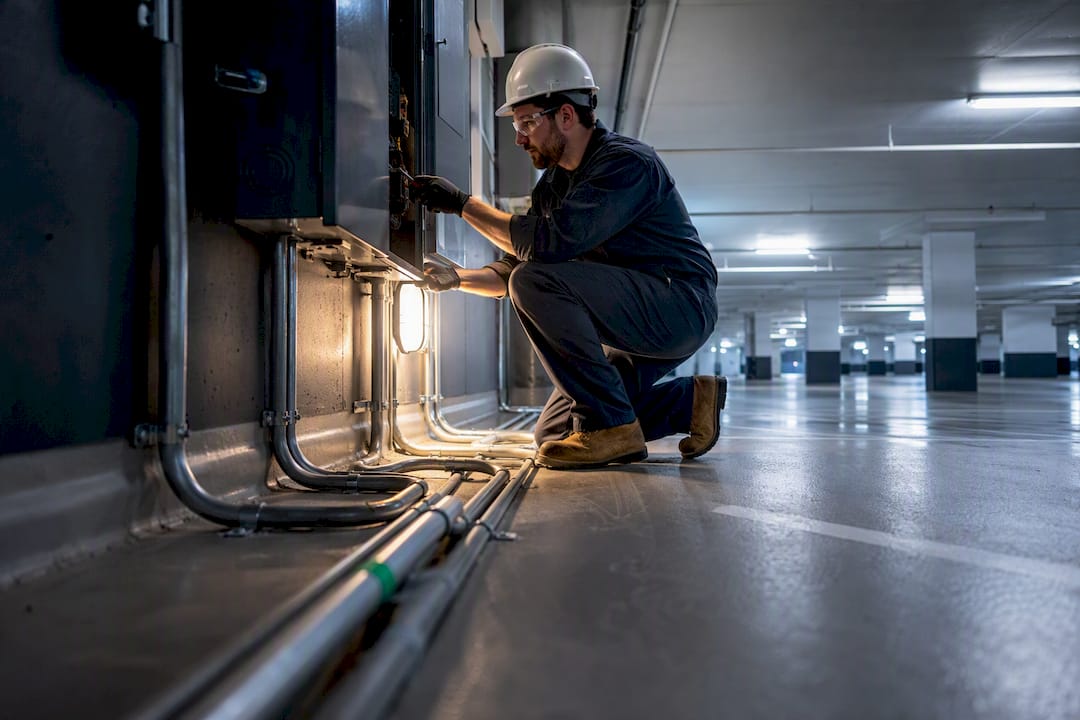
Yes, condos and multi-unit residential buildings across Canada can access federal, provincial, and municipal grants for EV charging infrastructure. Most programs require an authorised applicant, such as a condo board, property manager, or building owner, and nearly all demand pre-approval before any purchase or construction begins. Funding typically covers an EV Ready plan and part of the infrastructure and charger costs, not the full project.
TL;DR:
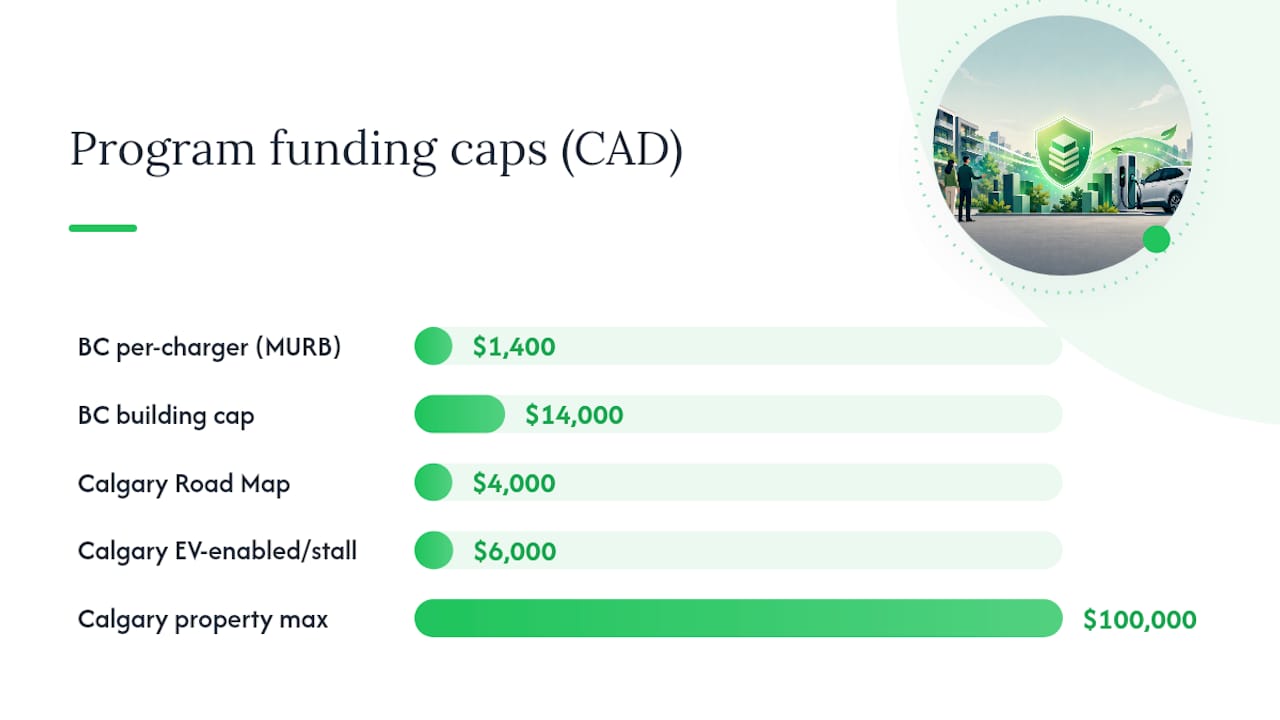
- Most grants cover up to 50% of eligible costs, with per-charger caps typically between $1,000 and $4,500, and building caps around $14,000.
- Applications require an authorized applicant, such as the condo board or property manager, and must include an EV Ready plan, electrical capacity, and itemized quotes from licensed electricians.
- Starting work before securing pre-approval or a reservation often leads to application rejections, and incomplete or incorrect documentation is a common obstacle.
- Rebate programs frequently change, so boards should verify current terms with provincial or municipal portals immediately before applying.
- Ongoing costs like maintenance, electricity, and eventual replacements are not covered by grants and should be budgeted for during long-term planning.
Table of Contents
- What are the top condo EV charger grants to check first?
- Who can apply, and does your building even qualify?
- How much money can a condo actually get?
- Getting your building ready: plans, engineers, and licensed electricians
- What’s the real timeline, and where do applications go wrong?
- What costs actually qualify, and how should you invoice them?
- Should you fund chargers first, infrastructure first, or stage the rollout?
- How a licensed installer speeds up condo grant approvals
- Why old condo electrical systems fight you every step of the way
- What have successful condo grant applications actually looked like?
- What’s changing across provinces and cities in 2026?
- What happens to costs after the grant money is spent?
- What I’ve learned watching condo EV projects succeed or stall
- How Evchargerinstallationtoronto handles the rebate paperwork for you
- Sources
What are the top condo EV charger grants to check first?
Before your board spends a dollar on quotes or engineering reports, figure out which programs actually apply to your building. Coverage varies by province, city, and even utility territory, so the smart move is checking multiple layers of government at once rather than assuming one grant covers everything.
Here’s where to start looking:
- Natural Resources Canada — Zero-Emission Vehicle Infrastructure Program (ZEVIP): federal infrastructure funding that can supplement provincial or municipal programs, particularly for larger multi-unit or mixed-use projects. NRCan’s guidance on charger installation notes that rebates of up to 50% of installation costs may be available in some provinces, but applicants need to confirm details with their provincial or utility program directly.
- CleanBC Go Electric (BC Hydro): British Columbia’s flagship offer for MURBs, covering EV Ready plans, infrastructure upgrades, and charger rebates, with explicit per-charger and per-building maximums plus a hard pre-approval requirement, according to the CleanBC Go Electric incentive program guide.
- ChargeYYC (Calgary): a phased municipal program pairing EV Charging Road Map funding with EV Enabled infrastructure and charger rebates, all subject to a combined per-property cap, as outlined by the City of Calgary’s ChargeYYC program.
- Other provincial and utility programs: most provinces run some version of a MURB charging incentive through their energy ministry or major utility, and municipal pilots often layer on top as additional funding.
Program terms shift often enough that a rebate amount you read about last year may already be outdated. ChargeHub’s tracker of Canadian EV charging incentives is a practical way to spot-check current provincial and municipal offers before you build a budget around numbers that may have changed.
Who can apply, and does your building even qualify?
Individual condo owners almost never qualify to apply directly for building-level infrastructure grants. Programs are built around an authorised applicant, meaning your strata or condo corporation, a property manager acting on the board’s behalf, or the registered building owner. If you’re a resident who wants a charger, your first move isn’t filling out a grant form. It’s raising the issue with your board.
Eligibility rules cluster around a few recurring patterns:
- Unit count thresholds. Some programs set the bar at 3 or more units; others require 5 or more before a building qualifies as a MURB for rebate purposes.
- Retrofit focus. Many rebate streams exclude new builds that already meet current EV-ready building codes, since the funding exists to fix older stock, not subsidise construction that’s already compliant.
- Shared infrastructure requirement. If your parking is served by shared electrical rooms or a common panel, expect the program to ask for documentation proving that shared setup, since that’s usually the whole reason retrofit funding exists.
- Required paperwork. An EV Ready plan (EVRP), electrical capacity plans, and quotes from a licensed electrical contractor are close to universal asks.
- Special top-ups. Some programs, including CleanBC’s, offer higher rebate percentages for Indigenous-owned buildings, and municipal pilots like ChargeYYC apply their own eligibility quirks that don’t necessarily match provincial rules.
If your building was constructed after your province’s EV-ready code came into force, don’t assume you’re automatically shut out. Some programs still fund upgrades beyond baseline code, particularly EVEMS or additional stalls past the minimum requirement.
How much money can a condo actually get?
The structure most programs use is a percentage of eligible costs up to a fixed dollar cap, usually somewhere around 50%, with per-charger caps landing anywhere from roughly $1,000 to $4,500 depending on the program and whether the applicant qualifies for a higher tier.
British Columbia’s CleanBC program gives a concrete example of how these numbers actually work. EV Ready MURB charger rebates commonly cap at $1,400 per charger under the EV Ready stream, or $2,000 per charger for a standalone installation, with an overall building cap around $14,000, according to the BC Hydro program guide. Indigenous-owned buildings can see that percentage climb to 75% or higher per charger.
Calgary’s ChargeYYC illustrates a different rebate architecture entirely. Phase 1 funds the EV Charging Road Map itself, up to $4,000. Phase 2 pairs an EV Enabled Rebate of up to $6,000 per stall (capped at $90,000 per property) with an EV Charger Rebate of up to $1,000 for a single-port station or $2,000 for a dual-port unit (capped at $10,000), for a combined property maximum of $100,000, per the City of Calgary’s program page.
Pro Tip: Dual-port stations are frequently counted as two chargers in rebate math, not one. A single pedestal with two ports can qualify for roughly double the per-charger rebate compared to installing two separate single-port units, which is often the more cost-effective equipment choice for a board trying to stretch a limited grant.
Here’s the quick-reference version:
- Typical reimbursement rate: up to 50% of eligible costs.
- Per-charger caps: roughly $1,000 to $4,500, program-dependent.
- BC building cap example: around $14,000, with Indigenous top-ups reaching 75%.
- Calgary combined property cap: up to $100,000 across Road Map, EV Enabled, and charger rebates.
Getting your building ready: plans, engineers, and licensed electricians
Almost every serious rebate program asks for an EV Ready plan, sometimes called an EVRP or an Electrical Planning Report, before it will even consider your application. This document specifies how many stalls will be EV Ready, who owns the equipment, how much electrical capacity the building has to work with, and what infrastructure upgrades the building actually needs. Per the CleanBC program guide, a proper EVRP for shared infrastructure buildings must also identify the total parking stall count and the minimum number of EV Ready stalls required, generally one per unit or one per stall, whichever number is lower.
Here’s the practical sequence for getting a building rebate-ready:
- Commission the EVRP from a qualified consultant. An engineering firm or a technical consultant with EV infrastructure experience typically prepares this, not the electrician doing the installation.
- Get itemised quotes from a licensed electrician. NRCan’s guidance is explicit that programs want licensed contractors and quotes broken down by activity, not a single lump-sum number.
- Confirm EVEMS eligibility before assuming you need a panel upgrade. Smart load management systems can let a building support more EV Ready stalls on existing electrical capacity, but you need the program’s written confirmation that EVEMS satisfies its requirements, and that acceptance needs to be documented in the EVRP itself.
- Pull your permits early. Don’t wait until after the work starts.
If your building has an aging electrical service and the idea of a full panel upgrade for every stall sounds financially painful, an EVEMS installation is worth investigating before you commit to a bigger infrastructure scope than you actually need.
Pro Tip: Ask your engineering consultant to draft the EVRP with the exact terminology your target rebate program uses. Reviewers move faster through applications that mirror their own program language, and mismatched terminology is a common reason for a first submission to bounce back with clarification requests.
What’s the real timeline, and where do applications go wrong?
The sequence is fairly consistent across programs, whether you’re dealing with a provincial utility or a municipal pilot:
- Check eligibility against unit count, building age, and shared infrastructure requirements.
- Secure pre-approval or a reservation letter before you buy equipment or sign a contractor agreement.
- Commission your EVRP and collect itemised electrician quotes.
- Complete the contractor work and pull permits.
- Pass inspection.
- Submit your final claim with all required documentation.
Pre-approval letters aren’t a formality. They come with a defined completion window, and missing that deadline, or submitting a final invoice that doesn’t match the exact itemised format the program specifies, is one of the most common reasons rebates get denied outright, based on CleanBC’s program documentation.
The pitfalls that trip up boards most often:
- Starting work before pre-approval lands. Retroactive claims are almost universally disallowed.
- Submitting incomplete documentation, particularly missing electrical plans or an outdated EVRP.
- Non-itemised invoices that lump materials, labour, and permits into one line.
- Hiring an unlicensed contractor, which disqualifies the claim regardless of work quality.
- Claiming ineligible costs, like general common-area renovations bundled into an EV project invoice.
Lock in your rebate reservation before you finalise contractor scheduling, not after. Boards that reverse that order frequently find their contractor’s availability doesn’t line up with the program’s completion window.
What costs actually qualify, and how should you invoice them?
Eligible costs generally cover the EVRP fee itself, electrical infrastructure work from the junction box back, conduit and wiring, permit fees, licensed electrician labour, the charger hardware, and any EVEMS equipment. What doesn’t qualify is just as important to understand: vehicle purchases, general building improvements unrelated to EV charging, and renovations that happen to touch the same parking area but serve a different purpose.
Invoicing correctly matters as much as spending on the right things. Most programs want:
- A breakdown by activity (engineering, electrical, permits, hardware) rather than one combined total.
- Confirmation of whether GST/HST is included in the eligible cost calculation, since program guidance on this point varies.
- Quotes and final invoices from a licensed electrical contractor, matching the format specified in the program’s application package.
Boards that hand their treasurer a single lump-sum invoice from a contractor are setting themselves up for a rejected or delayed claim. NRCan’s charger installation guidance reinforces that itemised, contractor-issued documentation is close to a universal requirement, not a nice-to-have.
Should you fund chargers first, infrastructure first, or stage the rollout?
If some residents already own EVs and require chargers immediately, funding individual units may be appropriate. If demand is anticipated but not immediate, prioritising EV Ready infrastructure across more stalls can provide broader benefit and may be more cost-effective.
Starting with an EVRP often enables infrastructure rebates that facilitate later obtaining charger-specific rebates, as many programs require completed plans before funding equipment.
- Concentrated demand: fund chargers for current users.
- Latent or broad demand: prioritize infrastructure for future needs.
- Limited reserves: consider funding strategies such as special assessments or structuring grants to offset strata fees.
- Aging electrical service: EVEMS may allow more stalls without full upgrades if accepted by the program.
Reserve funds typically cannot cover upfront costs before rebates arrive; boards should plan accordingly to manage cash flow, as most programs reimburse after project completion.
How a licensed installer speeds up condo grant approvals
A condo board juggling an EVRP, contractor quotes, permits, and a rebate application on top of its regular duties is a lot to coordinate without help. This is where hiring a full-service licensed electrical contractor changes the math. A contractor experienced with condo projects can supply the itemised quotes formatted the way rebate programs expect, coordinate permit and inspection scheduling, and install both the chargers and any EVEMS the EVRP calls for.
A licensed electrical contractor experienced with condo and multi-unit projects handles permits and inspections as part of the installation rather than as a separate hurdle for the board to manage. That matters for rebate purposes specifically: an ESA-compliant installation with proper permit sign-off is often a prerequisite for final reimbursement, not just a safety formality.
Before your board signs a contract with any installer, ask for:
- Proof of ESA licensing for the electricians doing the work.
- A sample itemised invoice formatted to match rebate program requirements, not a generic lump-sum quote.
- References from comparable condo or MURB projects.
- Willingness to provide technical inputs for your EVRP if you’re working with a separate engineering consultant.
A contractor who balks at any of these requests is a signal worth paying attention to before, not after, you’ve committed reserve funds to the project.
Why old condo electrical systems fight you every step of the way
Most Canadian condos weren’t built with EV charging in mind, and that shows up the moment you start scoping a project. Buildings from the 1980s and 1990s typically have parking garage electrical systems designed for lighting and ventilation, not for dozens of Level 2 chargers pulling continuous load.
The core issue is usually panel capacity. Adding chargers one at a time without a plan can max out a feeder long before every resident who wants a charger gets one, which is exactly why the EVRP process asks for a full electrical capacity assessment upfront rather than letting installations happen reactively. Older buildings also frequently have electrical rooms that are already at capacity with other building systems, leaving little physical room for new conduit runs or sub-panels without a broader retrofit.
Distance is another practical headache. Parking stalls farthest from the main electrical room require longer conduit runs, which drives up both material costs and labour time, and that unevenness across a parking structure is a big part of why per-stall rebate math rarely lines up perfectly with per-stall actual costs.
This is precisely the gap EVEMS is designed to close. Instead of upgrading a panel to handle every possible charger running at full power simultaneously, a load management system shares available capacity dynamically across active chargers, letting a building support more EV Ready stalls without the expense of a full service upgrade, provided your rebate program accepts EVEMS as a qualifying solution.
What have successful condo grant applications actually looked like?
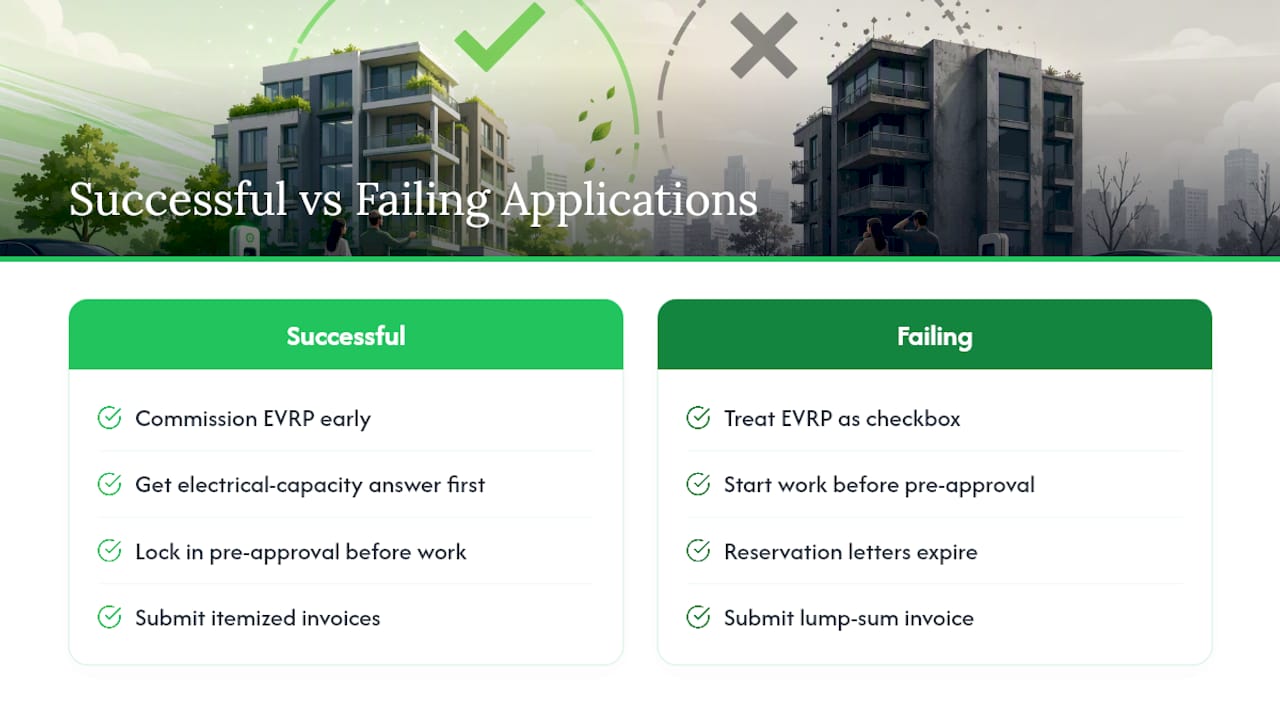
The pattern across successful applications is consistent regardless of province: boards that treat the EVRP as the foundation of the whole project, rather than a bureaucratic checkbox, tend to move through pre-approval and reimbursement with far fewer delays.
A building that commissions its EVRP early gets a real answer on electrical capacity before anyone signs a contractor agreement, which avoids the expensive scenario of ordering equipment only to discover the panel can’t support it. Boards that lock in pre-approval before finalising contractor schedules also avoid the timing trap of a reservation letter expiring while they’re still lining up quotes.
The applications that stall or get rejected tend to share the opposite pattern: work started before pre-approval came through, a lump-sum invoice submitted instead of an itemised one, or an EVRP that didn’t specify the minimum required EV Ready stall count the program was expecting to see. None of these are exotic mistakes. They’re process failures that a bit of upfront coordination, often from a contractor who has been through the rebate process before, tends to catch before they become a rejected claim.
The through-line across every program, from BC Hydro’s structured rebate tiers to Calgary’s phased ChargeYYC rollout, is that funding rewards buildings that plan infrastructure at a building level rather than reacting charger request by charger request.
What’s changing across provinces and cities in 2026?
Program terms shift regularly enough that a number you read last year may no longer be accurate. British Columbia’s CleanBC Go Electric program periodically adjusts per-charger caps, building maximums, and the Indigenous top-up percentage, so a board that budgeted around last year’s figures needs to re-check before applying.
Calgary’s ChargeYYC program is structured in phases by design, meaning Phase 1 Road Map funding and Phase 2 EV Enabled and charger rebates aren’t static offers; the city can adjust caps or eligibility as the pilot matures. Other provinces and utilities run their own versions of MURB charging incentives through provincial energy ministries or major utilities, and those terms move on their own schedules, often without much advance notice to the public.
Municipal pilots add another layer of unpredictability. A city program might launch with generous per-stall funding and then tighten eligibility once initial funding pools are allocated, or expand eligibility if uptake is slower than expected. The practical takeaway for a condo board isn’t to memorize today’s numbers. It’s to build a habit of checking the relevant provincial and municipal portals immediately before submitting an application, not months earlier when you first started planning, since ChargeHub’s incentive tracker and similar resources exist precisely because these terms move faster than most guides can keep up with.
What happens to costs after the grant money is spent?
Grant funding covers installation, not the years of operation that follow. Boards need to budget for a few recurring costs once chargers are live: routine maintenance on the charging hardware itself, periodic inspection of the shared electrical infrastructure, and eventually, software or firmware updates if the building installed networked or EVEMS-managed chargers.
Electricity costs are the other piece boards sometimes overlook. Depending on how the building bills for charging, whether through submetering, a flat monthly fee to charger users, or absorption into common area costs, someone needs to decide who pays for the electricity itself, since the rebate program only ever covered the capital cost of getting the equipment installed.
Chargers also have a service life. A unit installed under a 2026 rebate program won’t run forever without eventual repair or replacement costs, and boards that treat the initial grant as covering the full lifecycle of the equipment are setting up a budgeting surprise five or seven years down the road. Building this into the reserve fund planning at the time of installation, rather than treating it as a future problem, is the difference between a smooth long-term rollout and a strata council fielding angry emails when a charger breaks down with no maintenance budget allocated.
What I’ve learned watching condo EV projects succeed or stall
The single biggest predictor of whether a condo EV project goes smoothly isn’t the size of the grant. It’s whether the board understood pre-approval timing before they started. Nearly every stalled application I’ve seen traces back to one of three things: work beginning before a reservation letter arrived, a contractor without proper licensing doing the electrical work, or a gap between when the EVRP was commissioned and when the actual installation happened, during which program terms quietly shifted underneath the application.
My honest recommendation for any board just starting this process: get the EVRP done first, and get your pre-approval locked in before you sign a single contractor agreement. That order protects your rebate eligibility more than any other single decision you’ll make. If you want a second set of eyes on your building’s electrical capacity or rebate pathway before you commit, that’s a conversation worth having early rather than after a claim gets rejected.
— Hafiz
How Evchargerinstallationtoronto handles the rebate paperwork for you
Most of the friction in a condo EV project isn’t the electrical work itself. It’s the layer of paperwork sitting on top of it: coordinating an EVRP, chasing itemised quotes in the exact format a rebate program wants, and making sure permits and inspections land before a reimbursement deadline expires. Evchargerinstallationtoronto is a direct alternative to piecing that process together yourself across separate consultants and contractors. Our ESA-licensed electricians handle permits and inspections as part of the installation itself, at no extra charge, and we manage rebate applications worth up to $5,000 as a standard part of the job rather than an add-on service.
For condo boards specifically, that means one point of contact instead of three: a licensed contractor who understands what a rebate reservation letter requires, provides invoices formatted the way provincial and municipal programs expect, and completes most residential-scale installations within a few hours once permits clear. Pricing starts from $1,800, and same-week booking is typically available for straightforward jobs.
If your board is at the stage of scoping costs, use our EV charger installation cost calculator to get a realistic estimate before your next strata meeting, or check our Ontario EV charger and energy rebates page to see what provincial funding might already apply to your building.
Sources
- CleanBC Go Electric EV incentive program guide (BC Hydro PDF)
- Electric vehicle charging – Charger installation (Natural Resources Canada)
- ChargeYYC — City of Calgary
- ChargeHub — Rebates for home EV chargers in Canada (2026 update)
Recommended
Get Your Free Installation Quote
Free assessment · ESA permit included · Same-week availability across the GTA