Condo EV charger rules in Toronto: your 2026 approval guide
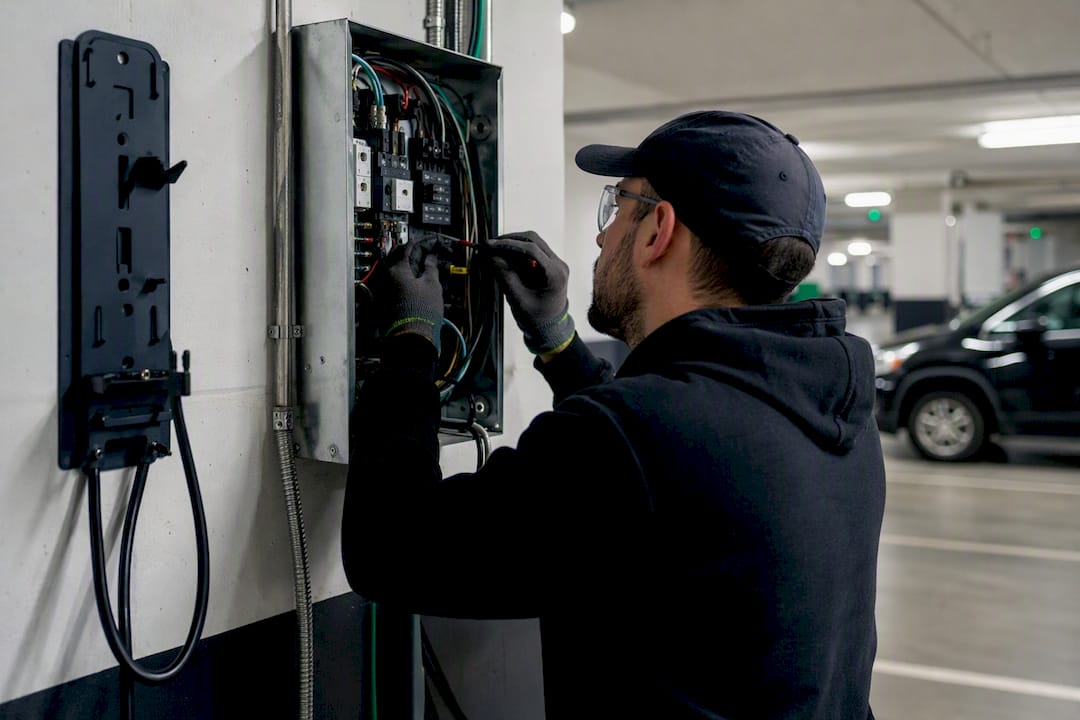
Yes, you can install an EV charger in a Toronto condo. Ontario Regulation 48/01 gives owners a formal application path, and condo corporations can install shared or dedicated charging infrastructure of their own accord. Every installation still needs an Electrical Safety Authority permit, regardless of who initiates the project.
Your immediate next step is simple: book a professional load assessment or request a scoped quote from an ESA-licensed installer before you approach your board. A load study gives your application weight and tells the board exactly what your building’s electrical capacity can support.
Three organizations back up everything in this guide, so you’re not relying on vendor claims alone:
- Condominium Authority of Ontario (CAO) — publishes the official EV guidance condo boards use to evaluate requests
- Electrical Safety Authority (ESA) — issues the permit and inspects every installation before it’s energized
- Zero Emission Vehicle Infrastructure Program (ZEVIP) — federal funding that can offset installation costs for multi-unit buildings
Key Takeaways
Getting a condo EV charger approved and installed in Toronto comes down to a compliant O Reg 48/01 application, a proper load assessment, and an ESA-licensed installer to close the loop.
| Point | Details |
|---|---|
| Legal pathway exists | O Reg 48/01 gives owners a formal application route and corporations can install independently. |
| Load assessment comes first | A professional load study determines wiring approach, EVEMS need, and supports the board application. |
| ESA permit is mandatory | Every installation needs a licensed contractor, an ESA permit, and a Certificate of Acceptance. |
| Approval has fixed timelines | Boards have 60 days to respond; agreements must finalize within 90 days of approval. |
| Funding can offset costs | ZEVIP and provincial programs help multi-unit buildings reduce installation costs when timed with procurement. |
| End-to-end providers simplify the process | Evchargerinstallationtoronto handles load studies, board support, permits, and rebate applications from $800. |
Table of Contents
- How condo EV charger rules work under O Reg 48/01
- What does a condo EV charger load assessment cover?
- Does an EV charger installation always need an ESA permit?
- How should condo boards approve EV charger installations?
- What rebates and funding programs apply to Toronto condos?
- Which EV charging vendors work with Toronto condos?
- What does a full-service Toronto installer actually deliver?
- Are accessible parking spaces required to have EV charging options?
- Who is liable if an EV charger causes damage or a fire in a condo garage?
- Who maintains EV chargers after installation in a condo?
- A statutory-first approach beats a vendor-first one every time
- A different path if you’d rather skip the vendor shortlist
- Frequently asked questions
- Sources
How condo EV charger rules work under O Reg 48/01
Ontario’s condo legislation gives owners two distinct routes. Under sections 24.2 to 24.6 of O Reg 48/01, an individual owner can apply directly to install a charger serving their own parking space, and the corporation must respond. Separately, a condo board can initiate a building-wide EV program without waiting for owner requests, often the more efficient path for larger retrofits.
The CAO’s guidance sets three procedural anchors every applicant should know:
- The board has 60 days to respond to a written owner application once it’s properly submitted with supporting documentation.
- If approved, owner and corporation must finalize a written agreement, registered on title, within 90 days of that approval.
- Installations costing less than 10% of the corporation’s annual budget generally don’t require a full ownership vote, which speeds up smaller projects considerably.
Boards can only refuse on narrow grounds: genuine structural or electrical infeasibility, a documented safety hazard, or a conflict with the reserve fund study. Each refusal requires a professional engineering or electrical report as evidence. A board can’t say no simply because it prefers not to deal with it.
What does a condo EV charger load assessment cover?
A load assessment is the single document that decides everything else about your project. A qualified engineer or licensed master electrician measures your building’s total electrical capacity, current peak demand, and how much headroom exists before you’d trip a service upgrade. This report becomes the backbone of your board application and your ESA permit submission.
From there, three retrofit paths are common in Toronto’s older parking garages:
- Dedicated circuit per stall — simplest technically, but wiring runs from the panel to each space can get expensive in below-grade garages with long conduit paths.
- Shared circuits with an EVEMS — an Energy Management System splits available power across multiple chargers dynamically, often avoiding a costly main service upgrade entirely.
- Central or shared chargers — fewer physical units serving multiple stalls on a rotation or reservation basis, common where panel capacity is genuinely tight.
Metering matters just as much as wiring. Some buildings use submetering so each owner pays their own electricity bill; others rely on networked billing through the charger’s software; some corporations simply fold the modest cost into common expenses.
Pro Tip: Ask your installer for the load study before you draft your board application, not after. A report that already recommends an EVEMS or phased rollout gives the board a ready-made solution instead of an open-ended request.
Does an EV charger installation always need an ESA permit?
Yes. Any work touching your electrical panel, running new circuits, or adding submetering equipment triggers a mandatory ESA permit. The permit doesn’t just cover the charger itself. It covers the entire circuit path, meaning the panel connection, conduit routing, and any metering hardware installed along the way.
Only a licensed electrical contractor can pull this permit and complete the work. Once installed, the ESA inspects the job and issues a Certificate of Acceptance, the document that confirms the installation meets code and is safe to energize.
Permit delays usually trace back to a short list of avoidable mistakes:
- Submitting incomplete conduit routing plans, forcing the ESA to request revisions
- Under-specifying the electrical load, which raises red flags during review
- Skipping the load assessment entirely and hoping the panel has enough spare capacity
- Using an unlicensed contractor, which voids the whole application
Working with an ESA-licensed contractor from the outset avoids nearly all of these. It’s also the reason a managed installer’s quote often looks pricier upfront than a handyman’s estimate. That price reflects paperwork most DIY approaches skip.
How should condo boards approve EV charger installations?
Boards need a repeatable, defensible process, not an ad hoc yes-or-no on each request. Ontario’s rules give a clear structure to follow:
- Confirm the vote threshold. Projects under 10% of annual budget can typically proceed without an ownership vote; larger retrofits need board or owner approval per the corporation’s bylaws.
- Issue proper notice. Any vote requires notice content specifying cost, scope, and funding source, giving owners the requisition rights guaranteed under the Condominium Act.
- Set a realistic meeting timeline. Between notice, quorum requirements, and the statutory 60-day response window, expect a minimum of two to three months from application to approval.
Costs vary hugely depending on scope. A single wired run to an adjacent stall might sit in the low thousands, while a dedicated Level 2 install in a retrofitted stall runs higher once conduit distance and panel work are factored in. Full building service or panel upgrades multiply those figures significantly, a pattern documented in CBC’s retrofit case studies from across Ontario.
A realistic project timeline looks like this: two to four weeks for the load assessment, 60 to 90 days for board approval and the registered agreement, then days to a few weeks for physical installation and ESA inspection once the paperwork clears.
What rebates and funding programs apply to Toronto condos?
Funding can meaningfully offset the up-front cost, especially for multi-unit projects where the corporation applies as an institutional applicant rather than leaving each owner to fend for themselves.
- ZEVIP (Zero Emission Vehicle Infrastructure Program) funds a share of eligible costs for multi-unit residential charging, though exact amounts and eligibility shift by intake window.
- IESO and Save on Energy programs occasionally fund load studies and equipment costs tied to broader energy efficiency upgrades.
- Municipal pilot programs in the Toronto area periodically open funding streams for shared infrastructure, though availability changes year to year.
The practical move is stacking programs where eligible and timing your vendor quote to match an open intake window, since funding windows close faster than most condo approval processes move. Our rebate breakdown walks through how these programs interact with a typical installation budget.
Which EV charging vendors work with Toronto condos?
Toronto has a handful of vendors with genuine multifamily experience, each built around a different strength. Here’s how the main players stack up on the dimensions that actually matter for a condo board evaluating proposals.
| Vendor | Core Services | Specialization | Standout Feature | Toronto Presence |
|---|---|---|---|---|
| FLO Charging Station | Hardware and network services | Public and residential networked charging | Large Canadian network with local support | National, strong Ontario footprint |
| SWTCH Charging Station | Turnkey installation and managed billing | Multifamily residential, charging-as-a-service | OCPP-certified managed charging, zero-capital options | Toronto-based |
| ChargePoint Charging Station | Hardware, software platform | Fleet, commercial, and mixed-use | Mature software and integration options | Active in Toronto market |
| Jule Charging Station | DC fast charging, battery storage | Retail and destination sites | Integrated battery storage and microgrid capability | Active in Toronto market |
| EV Connect Charging Station | Deployment and management platform | Property-managed charging, billing | Access control with granular billing tools | Active in Toronto market |
| ChargeLab Charging Station | Software-first charging management | Site hosts, resellers, white-label operators | Dynamic power management, AI-assisted maintenance | Active in Toronto market |
When you contact any of these vendors, ask four questions on the first call: how many condo projects have they completed, can they show a sample load study, what metering and billing options do they support, and what warranty backs the hardware and the installation labour. SWTCH’s multifamily-focused model is worth comparing against ChargePoint’s software depth if your building already runs mixed-use parking.
Use this table as a starting shortlist, not a final decision. Request a site visit, get a quoted load study in writing, and confirm the vendor’s scope of work is completed by an ESA-licensed contractor before signing anything.
What does a full-service Toronto installer actually deliver?
A managed installer handles the entire chain so you’re not coordinating five separate parties. The typical workflow looks like this:
- Site assessment and load study quote, delivered before any board conversation happens
- Support drafting the board application, including the technical language boards expect
- Full ESA permit application and inspection scheduling
- Physical installation, usually completed within a few hours once approvals are in place
- Certificate of Acceptance handling and rebate application administration on the owner’s behalf
Evchargerinstallationtoronto structures its own process this way, with transparent pricing starting from $800, same-week booking, and rebate support worth up to $5,000 for qualifying new EV purchases. That end-to-end model, backed by a 4.9 customer rating, is generally worth the premium over a low-cost handyman quote once you factor in the paperwork risk of a rejected ESA application.
A DIY or bargain approach can work for a simple single-stall retrofit with obvious spare panel capacity. It rarely works once EVEMS, submetering, or a board application is involved.
Are accessible parking spaces required to have EV charging options?
Ontario’s condo rules don’t currently mandate a fixed ratio of accessible EV charging spaces, but boards evaluating a building-wide program should treat accessibility as a planning input, not an afterthought. If your garage has designated accessible parking stalls, positioning at least one charger within reach of those spaces avoids a costly retrofit later when a resident with a mobility need also owns an EV.
Physical clearance matters as much as electrical capacity. Charger mounting height, cable reach, and the space needed to manoeuvre a wheelchair or scooter around a parked vehicle all factor into where a unit gets installed, not just which stall has the shortest conduit run. Ontario’s Accessibility for Ontarians with Disabilities Act (AODA) principles around barrier-free design apply to common element modifications generally, even where EV-specific accessibility rules haven’t caught up yet.
Boards planning a multi-stall rollout should ask their installer to flag which spaces serve accessibility needs during the load assessment, not after the wiring plan is finalized. Retrofitting accessible clearance into an already-installed charger location costs far more than designing it in from the start. If your condo has a resident with a documented accessibility requirement tied to their parking assignment, that request typically takes priority in the sequencing of a phased installation, ahead of owners without a documented need.
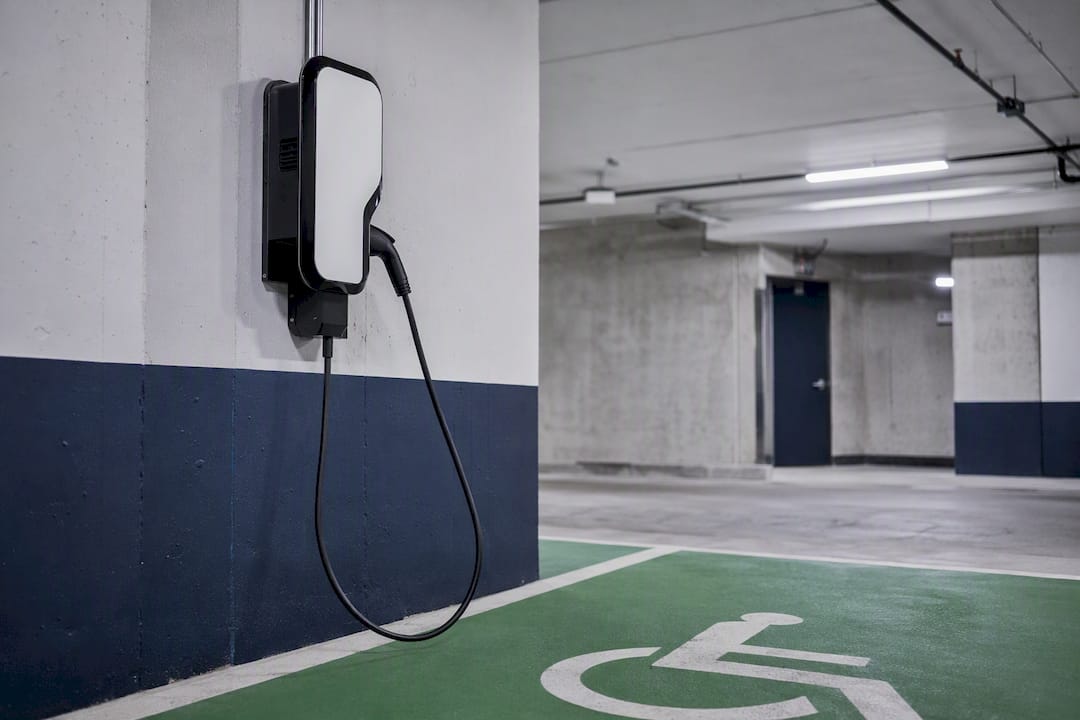
This is also where a shared or central charger model sometimes outperforms individual dedicated units, since a single accessible, well-located charger serving multiple stalls on a schedule can meet accessibility needs more affordably than retrofitting several individual stalls.
Who is liable if an EV charger causes damage or a fire in a condo garage?
Liability splits between the owner, the corporation, and the installer, and getting this wrong is one of the most common disputes boards face after approving a project. The written owner-corporation agreement registered on title should spell out exactly who insures what, and this document matters as much as the electrical permit itself.
Generally, the unit owner’s charger and the equipment serving their stall fall under their personal condo insurance policy, while the corporation’s master policy covers common element wiring, panels, and shared infrastructure up to the point where it connects to an individual unit’s equipment. Gaps between those two coverage zones are where disputes happen, particularly when a fault in shared EVEMS equipment damages an individually owned charger, or vice versa.
Ask your insurance broker directly whether your policy covers EV charging equipment before installation, not after a claim. Some standard condo policies exclude electrical modifications that weren’t disclosed at the time of underwriting, which can leave an owner exposed even when the installation itself was fully permitted and ESA-approved.
The corporation should also confirm that its master policy explicitly names EV charging infrastructure as covered common element equipment, since older policies written before charger installations became common may not automatically extend coverage to this category. A five-minute call to confirm this before installation is far cheaper than a denied claim after a garage fire or an electrical fault.
Who maintains EV chargers after installation in a condo?
Maintenance responsibility depends entirely on what your written agreement says, and this is a clause worth negotiating carefully before signing, not something to assume defaults sensibly. Dedicated chargers serving a single owner’s stall usually fall to that owner for ongoing upkeep, while shared or corporation-installed chargers typically become a common element the board maintains through its regular reserve fund planning.
Networked chargers from vendors like FLO, ChargePoint, or SWTCH generally include software monitoring that flags faults remotely, often before a resident even notices a problem. That remote diagnostic capability is one of the practical arguments for networked over basic non-networked hardware in a shared condo setting, since it reduces the chance a broken charger sits unnoticed for weeks.
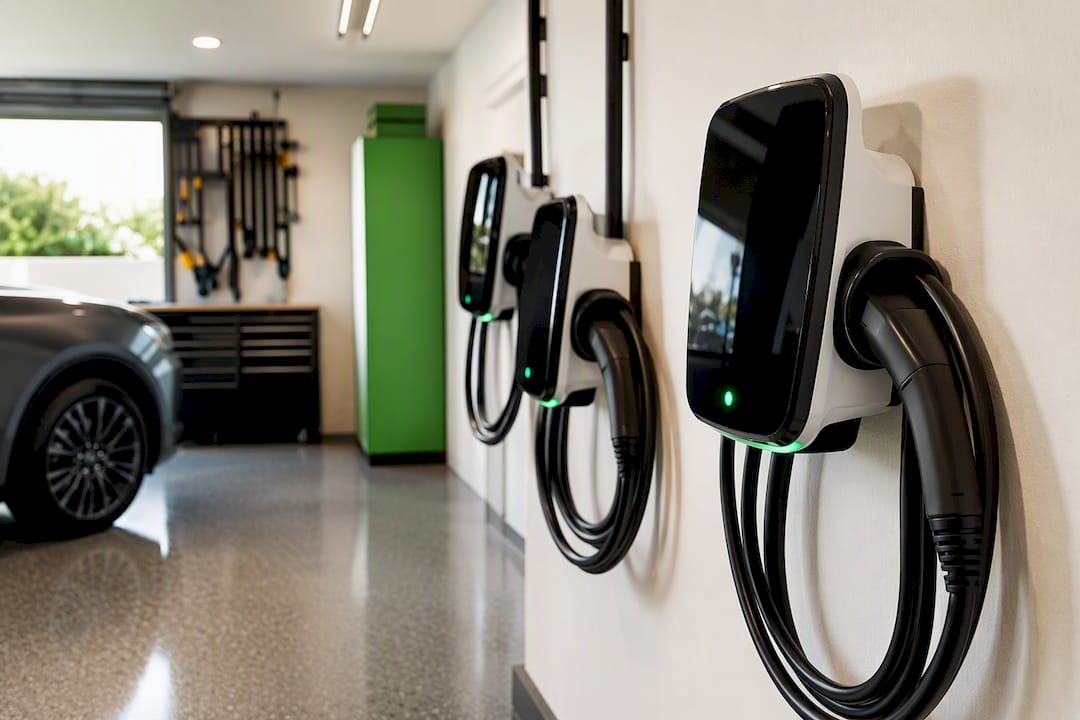
Warranty terms vary by vendor and installer, so confirm in writing what’s covered: the charging unit itself, the installation labour, and any EVEMS or load management hardware tied into the system. A five-year hardware warranty paired with a one-year labour warranty is a fairly typical structure, though terms differ across providers.
Long-term, boards should budget for periodic firmware updates, connector replacement (a wear item on frequently used shared chargers), and eventual hardware refreshes as charging standards evolve. Building this into the reserve fund study now avoids a surprise special assessment five to seven years down the line when a shared charger bank needs replacing.
A statutory-first approach beats a vendor-first one every time
Most condo EV charger content online leads with product comparisons and treats the legal process as a footnote. That ordering fails owners. The strongest applications start with the CAO guidance and the load study, then bring in a vendor once the technical and legal groundwork is settled.
The overlooked detail is how much power a well-prepared owner has under O Reg 48/01. Boards can’t simply stall indefinitely. The 60-day response rule and the narrow refusal grounds mean a board that drags its feet without a documented technical reason is arguably not following the regulation. Too few owners know this, and too many accept a vague “we’ll look into it” as a final answer.
What gets underestimated is the EVEMS route. Owners fixate on whether their building’s panel has “enough power,” when a load-managed shared system frequently solves the problem without a service upgrade at all. Treat the charger brand as the last decision you make, not the first.
A different path if you’d rather skip the vendor shortlist
The providers compared above, FLO, SWTCH, ChargePoint, Jule, EV Connect, and ChargeLab, all bring real strengths to condo projects, but each still leaves you coordinating the load study, the board paperwork, and the ESA permit as separate steps with separate parties. Evchargerinstallationtoronto folds all of that into one engagement.
Instead of piecing together a network provider, a separate electrician, and a rebate application on your own, you get one ESA-licensed team handling the load assessment, the board application language, the permit, the installation, and the rebate paperwork worth up to $5,000 on qualifying EVs. Pricing starts from $800 with same-week booking, so a straightforward single-stall project doesn’t sit in a queue for months. If your building needs shared load management instead of a full panel upgrade, our EVEMS installation service is built for exactly that scenario.
Ready to see what your project actually costs? Run the numbers on our cost calculator and get a scoped estimate before you bring anything to your board.
Frequently asked questions
Can I install an EV charger at a condominium in Toronto? Yes. O Reg 48/01 gives owners a formal application process, and condo corporations can also install shared infrastructure directly. Every installation still requires an ESA permit and licensed contractor.
Which condos in Toronto have EV charging already? Coverage varies widely by building age and board initiative. Newer developments increasingly include EV-ready wiring at construction, while older buildings typically need a retrofit application under the owner or corporation pathway.
Does an EV charger increase condo value? Dedicated EV charging access is increasingly viewed as a desirable amenity, particularly as EV adoption grows across the Greater Toronto Area, though no fixed dollar figure applies since resale impact depends on building type, location, and buyer demand.
Can I install an EV charger at my apartment if I rent rather than own? The O Reg 48/01 application pathway applies to condo owners, not tenants. Renters need their landlord or the unit owner to initiate the request on their behalf, since only an owner holds the standing to apply.
Sources
- CAO EV guide (O Reg 48/01 summary)
- CBC: condo EV charging retrofit case studies and cost ranges
- SWTCH — services and multifamily focus
Recommended
- EV Charger Installation in a Toronto Condo or Apartment: The Complete 2025 Guide | EV Install Pro Toronto
- Condo & Apartment EV Charger Installation Toronto | Board Approval Included | EV Install Pro Toronto
- Tesla charger condo: Toronto owners’ guide | EV Install Pro Toronto
- EV Charger Guides & Blog | EV Install Pro Toronto | EV Install Pro Toronto
Get Your Free Installation Quote
Free assessment · ESA permit included · Same-week availability across the GTA