$800+ Installs: Toronto Condo EV Charging, Permits & EVEMS
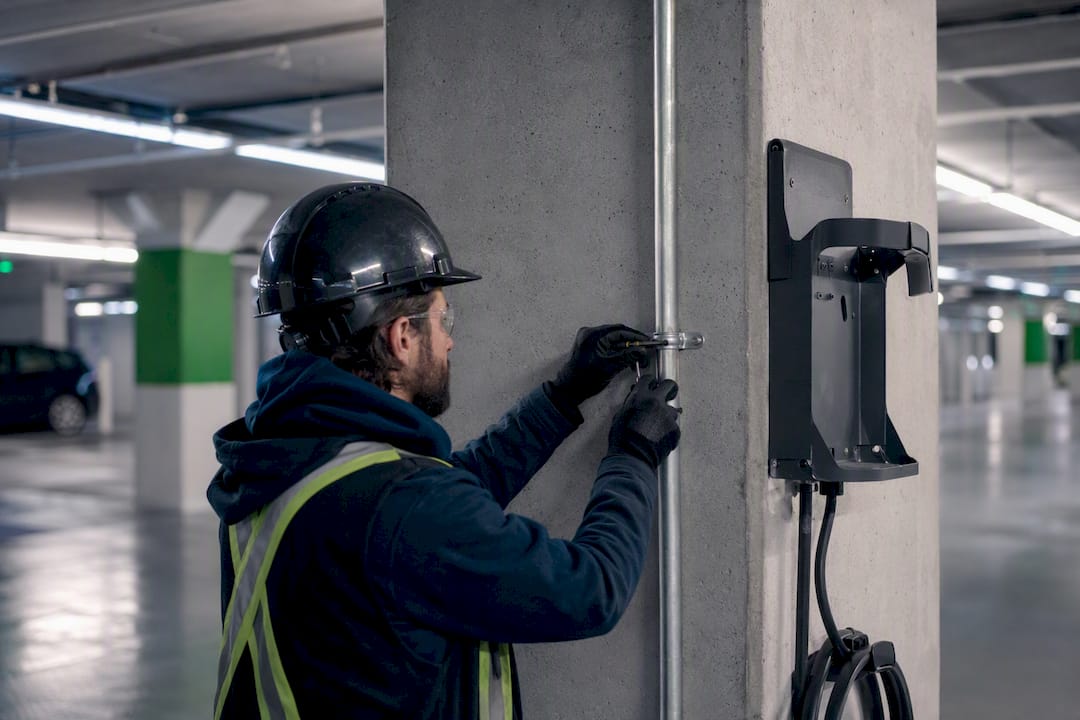
Yes, you can get a private or building-level Level 2 charger installed in Toronto without a driveway, whether you own an assigned parking spot, live in a condo, or park on a shared surface lot. The path runs through a Licensed Electrical Contractor, an ESA permit and Certificate of Acceptance and, for condo units, a formal request under Ontario’s condo regulations. Your first move is booking an ESA-licensed electrician for a site assessment before you talk to your board or buy a charger.
TL;DR:
- Most no-driveway EV charger installations in Toronto require a licensed electrician to produce a detailed load calculation and submit permit paperwork before installation.
- Condo owners have a legal right to request charging stations under Ontario regulations, and boards are obligated to respond within specified timelines if requests are complete.
- A typical no-driveway install can take from one to several weeks, depending on whether board approval is required and the complexity of conduit pathways.
- Load management systems like EVEMS can often avoid costly panel upgrades by dynamically throttling charging power, especially in buildings with limited capacity.
- Engaging a single experienced electrical contractor to handle permits, rebate paperwork, and inspections streamlines the process and reduces delays.
Table of Contents
- Charging options when you don’t have a driveway
- What the condo act says about your right to charge
- How much panel capacity do you actually need?
- What does it cost, and who pulls the permit?
- Working with your condo board on an EV charger request
- Rebates that offset the cost in Ontario
- How to vet an ESA-licensed electrician for your project
- What the installation timeline looks like without a driveway
- If your condo board says no
- Keeping your charger running in a shared or condo setup
- Author perspective: the case for one licensed installer handling everything
- How EV Install Pro handles no-driveway installs across the GTA
- Sources
Charging options when you don’t have a driveway
Not having a driveway rules out the simplest install, a hardwired charger on an exterior wall next to your car. It doesn’t rule out charging altogether. Toronto’s condo and multi-unit housing stock has forced electricians to get creative, and most properties fall into one of five categories.
- Assigned or exclusive-use parking spot installs: if you own or lease a numbered spot, an electrician can run conduit from a panel or sub-panel to that stall, even underground in a parking garage, though distance and fire-separation walls affect cost.
- Building or common-element installs: the condo board contracts one electrician to wire multiple spots at once, often the most cost-effective route per unit when three or more owners request chargers together.
- Garage conversion: some semi-detached and townhouse owners without a driveway have a detached garage or carport with an existing feed that a licensed electrician can extend.
- Sub-metering: owner-paid sub-meters track your charger’s electricity use separately from condo common charges, avoiding disputes over who pays for what.
- EVEMS in place of a panel upgrade: an electric vehicle energy management system monitors total building or panel load and throttles your charger before it trips a breaker, which is often the only realistic option in older buildings where the main service has no spare capacity.
Buildings with underground parking add one more wrinkle: conduit runs often have to snake around fire walls and electrical rooms, so an electrician typically maps the route before submitting anything to the board.
What the condo act says about your right to charge
Ontario Regulation 48/01 under the Condominium Act gives condo owners a defined path to request EV charging, and it has applied since May 1, 2018. Boards can’t simply say no to a reasonable request. They have to follow the regulation’s steps, which require you to submit specified documentation, and they must respond within set timelines.
That documentation typically includes a description of the proposed installation, load calculations, and confirmation that a Licensed Electrical Contractor will handle the work. The Condo Authority of Ontario’s guidance walks boards and owners through this process, and it’s worth reading before you submit anything, because incomplete applications are the single biggest reason requests stall.
Bill 135 and related provincial updates have reinforced this framework rather than replaced it, keeping the emphasis on a structured owner request rather than case-by-case board discretion. In practice, boards that receive a complete technical package from a licensed electrician move noticeably faster than boards left to guess at scope, cost, and liability on their own.
If your building already has an EV charging policy or a reserved allocation of panel capacity, your application moves even faster. If it doesn’t, expect your request to become the template the board uses for the next owner who asks. Getting your paperwork approved on the first pass saves weeks.
How much panel capacity do you actually need?
Every no-driveway install starts with a load calculation, an electrician’s assessment of how much spare capacity your panel or the building’s service has before adding a 240-volt EV circuit. Most Toronto homes still run 100-amp service, and older ones sometimes carry even less. A Level 2 charger pulling 40 or 50 amps can leave little headroom once you account for HVAC, water heating, and kitchen loads.
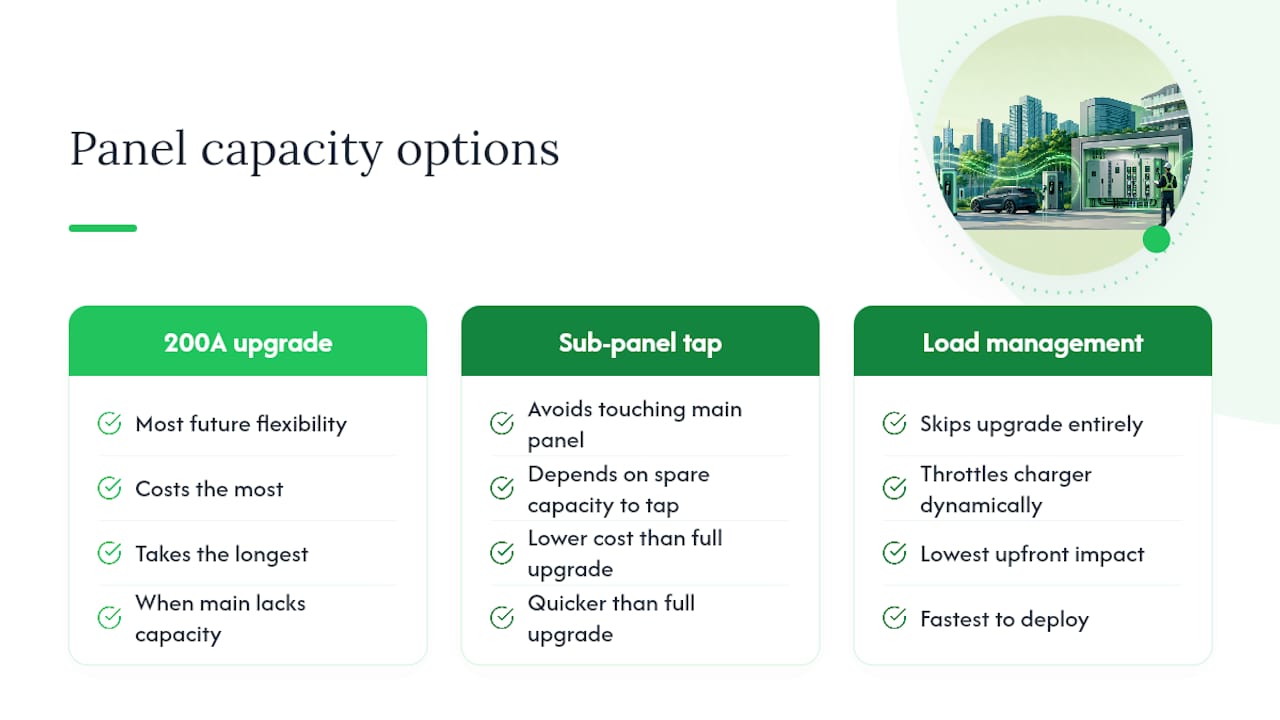
Three responses to a tight panel are common. A full panel upgrade to 200-amp service gives you the most future flexibility but costs the most and takes the longest, since Toronto Hydro coordination is often required for the service-side work. A dedicated sub-panel near the parking spot avoids touching the main panel entirely if there’s spare capacity to tap. Load management, using an EVEMS like the DCC-12, skips the upgrade altogether by throttling the charger dynamically, typically holding total draw under about 80% of the main breaker’s rated capacity.
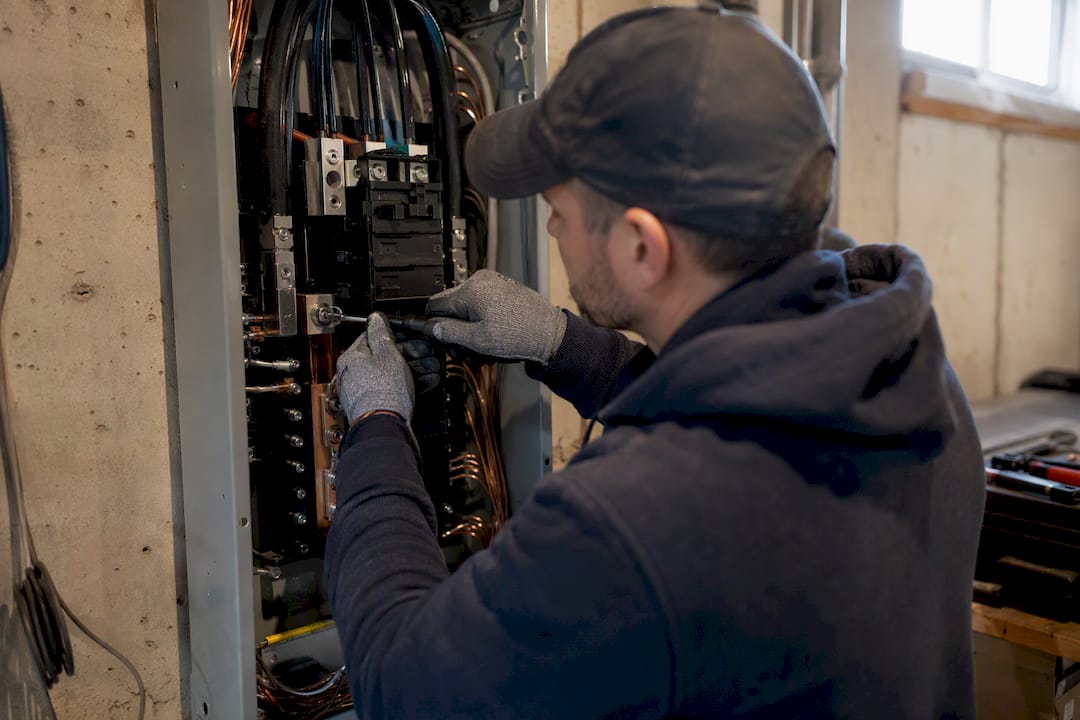
Wiring choice matters too. A common approach uses AWG 6 copper for 40-amp circuits or AWG 4 for 50-amp runs, terminating either in a NEMA 14-50 outlet or hardwired directly to the charger. NEMA 14-50 outlets give you flexibility to swap chargers later; hardwired connections are often required or preferred for outdoor, shared, or underground parking installs because they’re more resistant to weather and tampering.
What does it cost, and who pulls the permit?
Toronto and GTA installs fall into fairly predictable cost tiers. Entry-level jobs, a straightforward NEMA 14-50 outlet or hardwired connection on an existing panel with spare capacity, start at a few thousand dollars. Full bundles that include a 200-amp panel upgrade, permit fees, and Toronto Hydro coordination cost several thousand dollars more, according to cost estimates from a GTA installer. Condo and shared-building installs vary more, since conduit distance, fire-separation work, and EVEMS hardware all shift the number.
Timelines depend on scope. A single-family assessment-to-install can sometimes happen within the same week once permits clear. Condo projects run longer, typically several weeks, because the board approval process happens before any electrician touches a wire.
One rule applies everywhere in Ontario: only a Licensed Electrical Contractor holding an ECRA/ESA licence can pull the permit and file the paperwork with the Electrical Safety Authority. That means a permit, and the Certificate of Acceptance issued after inspection, has to come from your contractor, not from you. If a quote doesn’t mention who’s filing that permit, ask before you sign anything, and see our breakdown of the full installation timeline for what happens at each stage.
Working with your condo board on an EV charger request
Boards respond faster to complete applications than to vague ones. Before you submit anything, get a licensed electrician to produce a written assessment covering the proposed route, the load calculation, and the equipment specification, whether that’s a hardwired charger or an EVEMS unit.
A strong application to your board typically includes:
- A site plan showing the conduit route from the panel or electrical room to your parking spot.
- A load calculation confirming the building’s service can support the addition, or a note that EVEMS will manage the load instead.
- Proof the installer is an ESA-licensed contractor who will file the permit and secure the Certificate of Acceptance.
- A proposed metering and billing arrangement, whether sub-metered to you or absorbed into common-element costs under a fee agreement.
- A maintenance and liability clause specifying who’s responsible for the equipment after installation.
Pro Tip: Submit your electrician’s technical package alongside your written request, not after the board asks for it. Applications missing load calculations are the most common reason boards ask owners to resubmit, adding weeks to the process.
Once approved, get the agreement in writing, including who owns the equipment if you sell your unit. A full condo installation guide is worth reviewing if your building has never processed an EV request before.
Rebates that offset the cost in Ontario
Ontario doesn’t currently run a blanket rebate for every home or condo Level 2 charger install, so incentives tend to come from vehicle-purchase programs, utility pilot projects, and manufacturer bundles rather than a single provincial cheque. That’s why checking eligibility before you commit to a specific charger or contractor matters more than it might seem.
Many new EV purchases come bundled with installation credits or rebates worth up to $5,000 through manufacturer or dealer programs, and some municipal or utility pilots occasionally add further incentives for load-managed or off-peak charging setups. Because these programs shift year to year and depend on your specific vehicle and municipality, it’s worth having whoever handles your installation also handle the rebate paperwork, since eligibility rules and deadlines are easy to miss if you’re filing solo.
Condo and building-level projects sometimes qualify for different incentive streams than single-family installs, particularly where a board is installing shared infrastructure for multiple owners rather than one private circuit. If you’re in York Region specifically, rebate programs there sometimes differ slightly from the rest of the GTA, so confirm the current terms for your municipality rather than assuming they match your neighbour’s.
How to vet an ESA-licensed electrician for your project
Not every electrician who advertises EV installs has actually handled a no-driveway or condo project. Ask three questions before you sign a quote.
First, ask for their ECRA/ESA licence number and confirm it’s active. Every legitimate Licensed Electrical Contractor in Ontario has one, and a contractor who hesitates to share it is a red flag. Second, ask who files the ESA permit and how they handle the Certificate of Acceptance after inspection, since ESA’s own guidance confirms this is the contractor’s legal responsibility, not yours. Third, ask whether they’ve completed condo board approvals before, because the documentation requirements under O. Reg. 48/01 trip up electricians who mostly do single-family work.
Watch for quotes that skip the load calculation entirely, or that promise a same-day install for a condo project without mentioning board approval timelines. Both suggest the contractor hasn’t done this specific type of job before.
A partner electrical contractor’s project page outside Ontario shows a similar vetting pattern applies broadly across the trade: licensing, permit responsibility, and site-specific load assessment come first, regardless of jurisdiction. For your assessment, book a contractor who specializes in Level 2 installations in the GTA specifically, since local permit and Toronto Hydro coordination experience shortens your timeline.
What the installation timeline looks like without a driveway
The process runs longer for no-driveway installs than for a standard driveway job, mainly because of the approval steps that happen before any wiring starts.
- Site assessment (day 1 to 3): a licensed electrician inspects your panel, parking spot, and proposed conduit route, then produces a load calculation.
- Condo application or homeowner permit prep (week 1 to 2 for single-family, week 2 to 6 for condo): single-family owners move straight to permit filing; condo owners submit the technical package to their board under O. Reg. 48/01.
- Board decision (condo only, timelines set by regulation): the board approves, requests changes, or in rare cases denies the request with reasons.
- ESA permit filing: your contractor files the notification of work with the Electrical Safety Authority before any physical work begins.
- Installation day: wiring, conduit, termination, and charger mounting, often completed within a few hours for straightforward jobs.
- ESA inspection and Certificate of Acceptance: the final sign-off confirming the work meets code.
Single-family and assigned-spot projects can sometimes compress into a single week once permits are filed. Condo projects almost always take longer because of board timelines, not electrical complexity.
If your condo board says no
A board can’t refuse a reasonable EV charging request outright under Ontario Regulation 48/01. It can ask for revisions, request additional engineering detail, or propose reasonable conditions like sub-metering or insurance requirements, but an outright denial with no stated reason is not how the process is supposed to work.
If your board denies or indefinitely delays your request, your first step is asking for the denial in writing with specific reasons tied to the regulation. Many disputes resolve at this stage once the board sees a complete technical package addressing whatever concern they raised, whether that’s load capacity, liability, or precedent for future requests.
If a written response doesn’t resolve things, Ontario condo owners can pursue the matter through the Condominium Authority Tribunal, which handles a range of condo governance disputes, including some EV-related disagreements. Legal counsel familiar with condo law is worth consulting before filing, since the tribunal process has its own procedural requirements. Keep every piece of correspondence, every version of your technical package, and every board meeting minute that references your request. That paper trail is what makes a dispute resolvable quickly rather than dragging on for months.
Keeping your charger running in a shared or condo setup
A Level 2 charger installed in a shared parking structure faces different wear conditions than one on a private driveway. Underground garages expose cabling to more moisture and temperature swings than an exterior home install, and shared electrical infrastructure means a fault somewhere else in the building can occasionally trip your circuit.

Most maintenance issues fall into three categories. Nuisance tripping usually points to a load management system reacting to building-wide demand spikes, which is normal behaviour for an EVEMS unit rather than a fault. A charger that won’t initiate a session sometimes traces back to a loose connection at the termination point rather than the charger itself, particularly in installs that used a NEMA 14-50 outlet exposed to garage humidity. And billing discrepancies in sub-metered units are almost always a metering configuration issue rather than an actual usage problem.
For any of these, contact the electrician who performed your original installation before assuming the charger itself has failed. Because they filed your ESA permit, they have your load calculation and wiring diagram on record, which speeds up diagnosis considerably compared to bringing in a different contractor cold.
Author perspective: the case for one licensed installer handling everything
Splitting permits, rebate paperwork, and inspections across multiple people is where most no-driveway projects lose weeks. An installer who files the ESA permit, manages the Certificate of Acceptance, and handles rebate applications under one roof removes the coordination gaps that cause condo boards to bounce applications back.
My view: EVEMS deserves more attention than it gets. Homeowners default to assuming a panel upgrade is inevitable, when a load management system like the DCC-12 often solves the same problem for less money and less disruption. An installer who presents both options honestly, rather than upselling the bigger job, is the one worth hiring.
— Hafiz
How EV Install Pro handles no-driveway installs across the GTA
Evchargerinstallationtoronto is the practical alternative to piecing together your own permit filings, rebate applications, and condo board paperwork separately. Every install is handled by ESA-licensed electricians, pricing starts from $800, and same-week booking is available for straightforward jobs, so you’re not waiting a month just to get an assessment on the calendar.
A free site assessment covers your panel capacity, proposed conduit route, and whether a full upgrade or an EVEMS solution fits your building better. Have your unit’s electrical panel location, a photo of your parking spot or garage, and (for condo owners) your board’s contact information ready, and the quote turns around fast. Evchargerinstallationtoronto also manages permits and inspections at no extra charge and handles rebate applications worth up to $5,000 on qualifying new EV purchases, so nothing falls between the cracks between your electrician and your paperwork. Run your numbers through the cost calculator to get a free estimate and book your assessment.
Sources
- Government of Ontario — Charging electric vehicles
- Condo Authority of Ontario — Best practices guide: installing electric vehicle chargers
Recommended
Get Your Free Installation Quote
Free assessment · ESA permit included · Same-week availability across the GTA