Tiered vs. TOU in Ontario: which plan actually saves you money
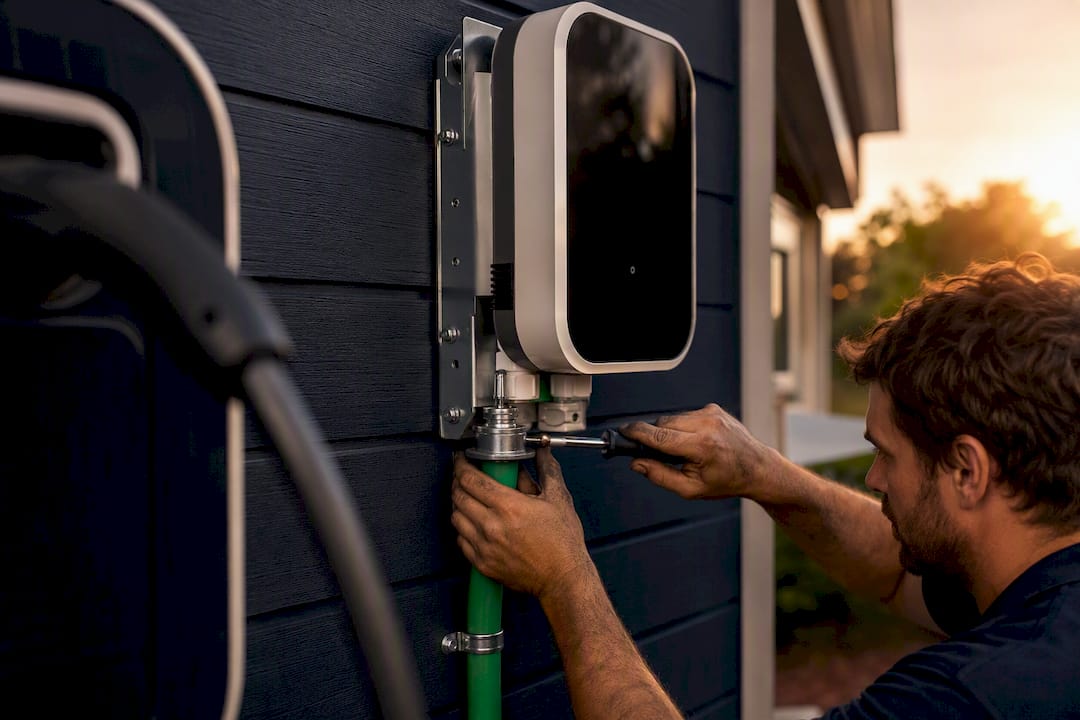
There is no single winner between Tiered and Time-of-Use pricing in Ontario. Pick TOU if you can shift heavy usage, like laundry or dishwashing, into off-peak hours. Pick Tiered if your household draws steady, moderate power throughout the day. Pick Ultra-Low Overnight (ULO) if you charge an EV overnight and want the cheapest possible window for it.
- TOU rewards flexible scheduling; Tiered rewards consistency.
- ULO is built for overnight EV charging, but it trades a higher daytime peak rate for that cheap window.
- No plan changes your delivery, regulatory, or tax charges — only the usage portion of your bill moves.
The bottom line: switching plans is reversible and free to do, so the real work is comparing your own usage pattern against each rate structure, not guessing.
Key Takeaways
The most reliable way to lower your Ontario electricity bill is to match your plan to your actual usage timing, not to chase whichever rate sounds cheapest.
| Point | Details |
|---|---|
| No universal winner | TOU, Tiered, and ULO each suit different usage patterns; your kWh volume and timing decide which is cheapest. |
| Only usage charges move | Delivery, regulatory, and tax charges stay identical no matter which plan you choose. |
| Use a calculator first | Compare your actual bill against OEB or utility calculators before switching plans. |
| Switching is free and reversible | Contact your LDC, submit an election form, and revert later if the new plan underperforms. |
| EV charging favours ULO | Reliable overnight charging usually makes ULO’s discounted window the cheapest option available. |
Table of Contents
- Tiered vs TOU Ontario: how each plan actually works
- Who tends to save under each Ontario electricity plan
- How to calculate whether Tiered or TOU saves you more
- How to switch between Tiered, TOU, and ULO in Ontario
- Why ULO often makes sense once you install a home EV charger
- What Ontario’s plan comparison misses
- Sources
Tiered vs TOU Ontario: how each plan actually works
Time-of-Use pricing splits your day into on-peak, mid-peak, and off-peak periods, with the windows shifting by season. From May 1 to October 31, on-peak hours cluster around late afternoon and early evening when air conditioning drives demand. From November 1 to April 30, the on-peak windows shift to cover morning and evening heating loads. Off-peak, generally overnight and on weekends, is always the cheapest TOU rate.
Tiered pricing works differently. You pay one flat rate for electricity up to a monthly threshold, then a higher rate for anything beyond it. Residential Tier 1 thresholds are seasonal: 1,000 kWh in winter and 600 kWh in summer, while small business customers get a flat 750 kWh threshold all year.
ULO adds a third option: a very low rate from 11 p.m. to 7 a.m., paired with a higher on-peak charge during the day.
- TOU charges different rates depending on the hour and season.
- Tiered charges a flat rate until you cross a monthly kWh threshold.
- ULO isolates one deeply discounted overnight block in exchange for steeper daytime pricing.
Whichever plan you choose, your delivery charges, Global Adjustment, and taxes stay exactly the same. Only the usage line changes, and prices and thresholds update every year on November 1, so it’s worth rechecking your plan choice around that date.
Who tends to save under each Ontario electricity plan
TOU tends to favour households that can move heavy-draw tasks, like running the dryer, dishwasher, or pool pump, into off-peak hours. Night-shift workers and anyone with a flexible schedule often see genuine savings here. It’s also worth knowing that most residential customers already use close to two-thirds of their electricity during off-peak hours without even trying, which is part of why TOU is the default plan for most of the province.

Tiered pricing suits households with steady, moderate consumption spread across the day, particularly homes that run appliances during working hours and can’t easily shift that load. If your usage is concentrated in daytime peak windows and you can’t move it, Tiered often beats TOU outright.
ULO is built for one specific pattern: substantial overnight electricity use, most commonly EV charging.
- Shift-friendly households: TOU usually wins if you can batch laundry, dishwashing, and EV charging into off-peak windows.
- Steady daytime users: Tiered often wins for retail shops, home offices, and families home during the day.
- Overnight EV chargers: ULO tends to win when charging happens reliably between 11 p.m. and 7 a.m.
Pro Tip: If you’re not sure which category you fall into, check your bill for the past three months before switching anything. A single unusual month, like a heat wave or holiday guests, can skew your read on which plan actually fits your normal pattern.
How to calculate whether Tiered or TOU saves you more
Your electricity bill already has the answer buried in it. Here’s how to pull it out.
- Find your “Electricity” line. Depending on your current plan, this shows either total monthly kWh (Tiered) or an hourly breakdown by on-peak, mid-peak, and off-peak (TOU).
- Run your numbers through a calculator. The Ontario government and your Local Distribution Company both publish bill calculators that let you enter your usage and compare what you’d pay under TOU, Tiered, and ULO side by side.
- Compare the full bill, not just the usage line. Because delivery and regulatory charges don’t change, a plan that looks dramatically cheaper on the usage line alone may only shave a modest amount off your total.
Here’s a rough scenario: a household using around 800 kWh a month, with 200 of that coming from an EV charged overnight, will usually see ULO undercut both TOU and Tiered on that EV portion specifically, while the rest of the household load determines whether Tiered or TOU wins on the remainder. There’s no universal answer here. It genuinely depends on your kWh volume and when you use it, which is exactly why the calculator step matters more than any rule of thumb.
How to switch between Tiered, TOU, and ULO in Ontario
Switching is simpler than most homeowners expect, and it costs nothing.
- Check eligibility first. You need a smart meter, and you must be billed under the Regulated Price Plan; older meters may not support TOU billing at all.
- Contact your Local Distribution Company (LDC). Hydro One, Toronto Hydro, or your regional utility handles the switch directly.
- Submit an election form. This is a short administrative step, and there’s no fee attached to switching plans.
- You can switch back. If your new plan doesn’t perform the way you expected after a billing cycle or two, you can revert.
- Condo and retailer exceptions apply. Some condo units and customers on contracts with energy retailers face different rules, so confirm with your LDC before assuming you’re eligible.
Why ULO often makes sense once you install a home EV charger
Once you’re charging an EV at home, your electricity pattern changes enough that it’s worth re-running the calculation. A typical Level 2 charger draws steadily for several hours, and if that charging happens overnight, ULO’s discounted window is usually the cheapest place for that load to land.
There’s a catch worth flagging: adding regular overnight charging can push your total monthly kWh higher, which matters if you’re on Tiered and creeping toward the Tier 2 threshold. It’s also the point where many homeowners realize their existing panel can’t comfortably support both the new charger and everything else in the house.
- Confirm your charger’s amperage draw before assuming your current panel handles it.
- A panel upgrade is sometimes avoidable with smart load management instead of a full service increase.
- ESA-licensed electricians handle permits and inspections as part of installation, not as an add-on cost.
Pro Tip: Before booking an installation, check your current bill’s hourly breakdown if you’re already on TOU. It tells you exactly how much overnight capacity you’re using now, which makes sizing the charger and predicting your ULO savings far more accurate.
If you’re weighing a charger installation alongside a plan switch, Evchargerinstallationtoronto’s team can walk through rebate eligibility worth up to $5,000 and confirm whether your existing panel supports overnight charging without an upgrade. Same-week booking and transparent pricing starting from $800 make it straightforward to get a real number before you commit to anything. Use the installation cost calculator to see where you land.
What Ontario’s plan comparison misses
Most guidance on Tiered versus TOU treats it as a math problem, and technically it is. But the more useful question is a behavioural one: are you willing to change when you use electricity, or would that require restructuring your household routine in a way you know won’t stick? A theoretically cheaper TOU rate is worthless if you can’t actually move your laundry and dishwasher to 11 p.m.
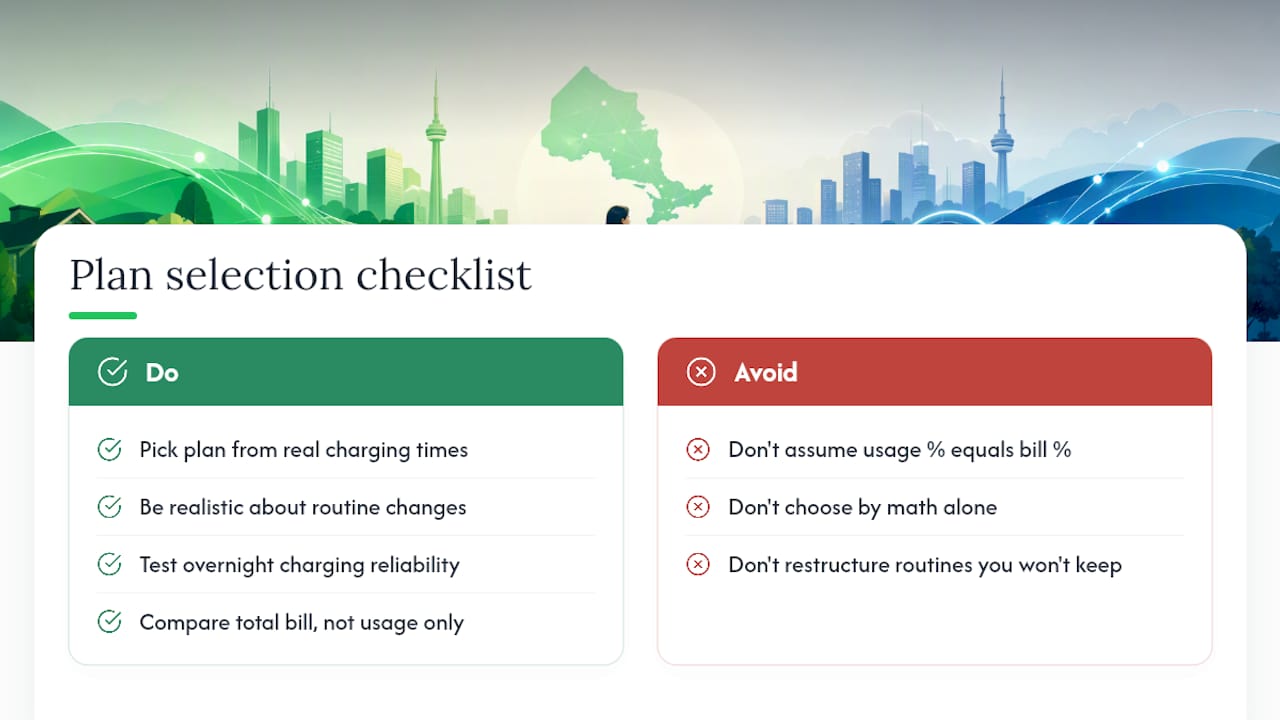
The most overlooked point in this whole comparison is how much delivery and regulatory charges dilute the savings people expect. Switch plans expecting your total bill to drop by the same percentage as your usage rate, and you’ll be disappointed. The usage line moves; the rest of the bill doesn’t.
For EV owners specifically, I’d argue the conversation is backwards. Most people pick a pricing plan first and figure out charging habits later. It works better in reverse: figure out when your charger will realistically run, then let that decision drive the plan. If overnight charging is genuinely reliable in your household, ULO is close to a formality, not a gamble. If your charging times are erratic, TOU probably serves you better than committing to ULO’s steeper daytime rate.
— Hafiz
Sources
Start with the Ontario Energy Board’s plan comparison guidance and its rate thresholds page, then use the provincial electricity price plans page to find your utility’s calculator. For EV-specific cost planning, see our EV charging cost guide for the GTA.
- Choosing your electricity price plan | Ontario Energy Board
- Electricity price plans | Government of Ontario
Recommended
- EV charging cost in Ontario: GTA homeowner’s guide | EV Install Pro Toronto
- EV Charger and Energy Rebates Ontario 2026 | EV Install Pro Toronto | EV Install Pro Toronto
- EV load management for Toronto homes: skip the upgrade | EV Install Pro Toronto
- EVEMS vs Panel Upgrade Toronto: Which Do You Actually Need for EV Charging? (2025) | EV Install Pro Toronto
Get Your Free Installation Quote
Free assessment · ESA permit included · Same-week availability across the GTA