6 Mounting Rules to Make Your EV Charger Winter Ready in Ontario
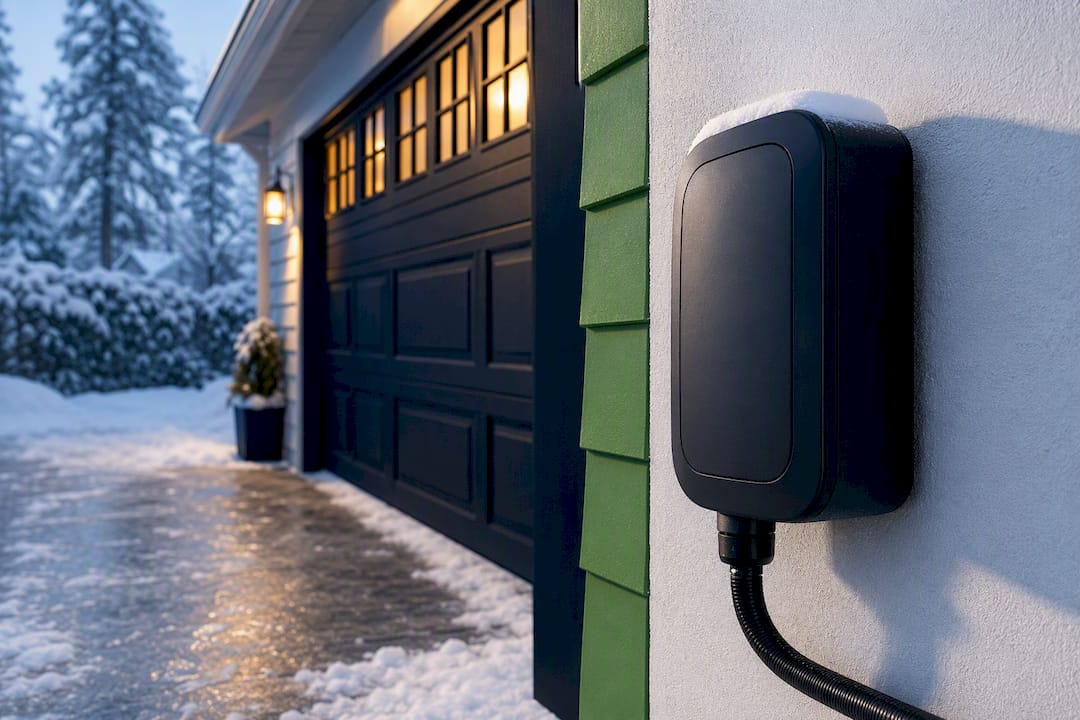
A winter proof EV charger is rated to operate reliably below freezing, sealed against snow and moisture with a NEMA 4X or IP66 enclosure, and fitted with a cold-flex cable that stays pliable in deep cold. If you’re installing one now, choose a cold-rated, hardwired unit where your panel allows it, and keep your car plugged in overnight so the battery can precondition before you drive. The rest comes down to placement and upkeep, which we’ll get into below.
TL;DR:
- Choose a cold-rated, hardwired EV charger with NEMA 4X or IP66 enclosure and cables made of flexible materials like silicone or TPU for winter durability.
- Mount outdoor chargers under an eave or at least 24 inches above snow accumulation, and build in features like drip loops and sealed conduit fittings to prevent water intrusion.
- Regularly inspect and maintain the charger’s seal, cable, and connection points to identify ice buildup or stiffness early and warm connectors gently if frozen.
- Verify charger specifications such as minimum operating temperature, enclosure rating, and cable material; avoid units with only NEMA 3R rating or standard PVC cables.
- Hardwiring is preferable to receptacles in cold climates, and qualified ESA-licensed electricians should handle installations, including permits, load management, and winter-specific features.
Table of Contents
- How cold weather affects EV charging and what actually fails
- Key specs to check when evaluating a winter-ready EV charger
- Where you mount the charger matters as much as the specs
- Daily winter maintenance and fast troubleshooting
- Installation choices and how to pick an installer for a winter-ready setup
- Smart features or rugged simplicity: what actually holds up in the cold
- Getting your winter-proof install done right the first time
- Where to verify specs and standards
- Sources
How cold weather affects EV charging and what actually fails
Cold hits two different systems, and it helps to know which one is causing your problem. Your car’s battery management system slows charge acceptance as temperatures drop. That’s a vehicle limitation, not a charger fault, and no amount of amperage upgrades fixes it. Battery charging speed drops in cold weather, and preconditioning while plugged in restores much of that lost speed and protects range.
The charger itself has its own failure points separate from your battery’s behaviour:
- LCD screens fog, frost, or stop responding below freezing.
- Relays can stick when moisture freezes inside the housing.
- Ground-fault protection sometimes trips falsely from condensation, not an actual fault.
- Cable jackets stiffen, making the plug harder to seat fully and more likely to trigger a poor-connection fault.
Pro Tip: If your charger throws a fault only on the coldest mornings and clears itself by afternoon, suspect condensation inside the enclosure, not a wiring problem.
Knowing the difference matters when you’re troubleshooting at 6 a.m. in your driveway. A slow charge is usually your car being cautious with a cold battery. A charger that won’t start a session at all, or trips repeatedly, points to the equipment or its enclosure.
Key specs to check when evaluating a winter-ready EV charger
Datasheets tell you more than marketing pages do. Four numbers separate genuinely winter-ready hardware from units that merely survive a mild fall, according to cold-weather charger reviews: minimum operating temperature, enclosure rating, cable jacket material, and connector design.
- Minimum operating temperature: covers the electronics, not the cord. A unit rated to operate at negative 30 degrees Celsius can still ship with a cable that turns rigid at negative 15.
- Enclosure rating: NEMA 4 or 4X and IP66 protect against driven snow, ice, and hose-directed water. NEMA 3R only guards against falling rain and light snow, which isn’t enough for an exposed Ontario driveway.
- Cable jacket: TPE, silicone, and TPU compounds hold flexibility in the cold far better than standard PVC.
- Screened components: touchscreens are a known weak point in extreme cold, since capacitive displays can stop responding or become unreadable when frosted.
| Enclosure rating | Protects against | Typical use case |
|---|---|---|
| NEMA 3R | Falling rain, light snow | Sheltered indoor garage |
| NEMA 4 | Driven rain, hose-directed water, ice | Covered outdoor mount |
| NEMA 4X | Same as NEMA 4, plus corrosion resistance | Exposed outdoor mount, coastal or salt-heavy areas |
Ask any installer for the ENERGY STAR certified EVSE listing before you buy. Certification confirms the efficiency and testing claims on the box actually hold up.
Where you mount the charger matters as much as the specs
A great charger in the wrong spot still fails in January. Site design fixes more winter problems than swapping to a higher-amperage unit ever will, based on installer field guidance on ice protection.
- Mount indoors if you can. A garage wall, even unheated, keeps the unit out of direct snow and wind.
- If it has to go outdoors, get it under an eave or carport and mount it at least 24 inches above expected snow accumulation.
- Build in a drip loop on the supply cable so water runs away from the enclosure instead of tracking into it.
- Seal conduit entries with proper fittings rather than tape or gap fillers that degrade in freeze-thaw cycles.
- Use a connector holster that breathes rather than trapping condensation against the plug.
- Keep the mounting path clear for snow removal. A charger boxed in by a snowbank is a service call waiting to happen.
Pro Tip: Avoid mounting facing the prevailing wind direction on your property. A charger that takes direct wind-driven snow every storm accumulates ice on the connector faster than one tucked against a side wall.
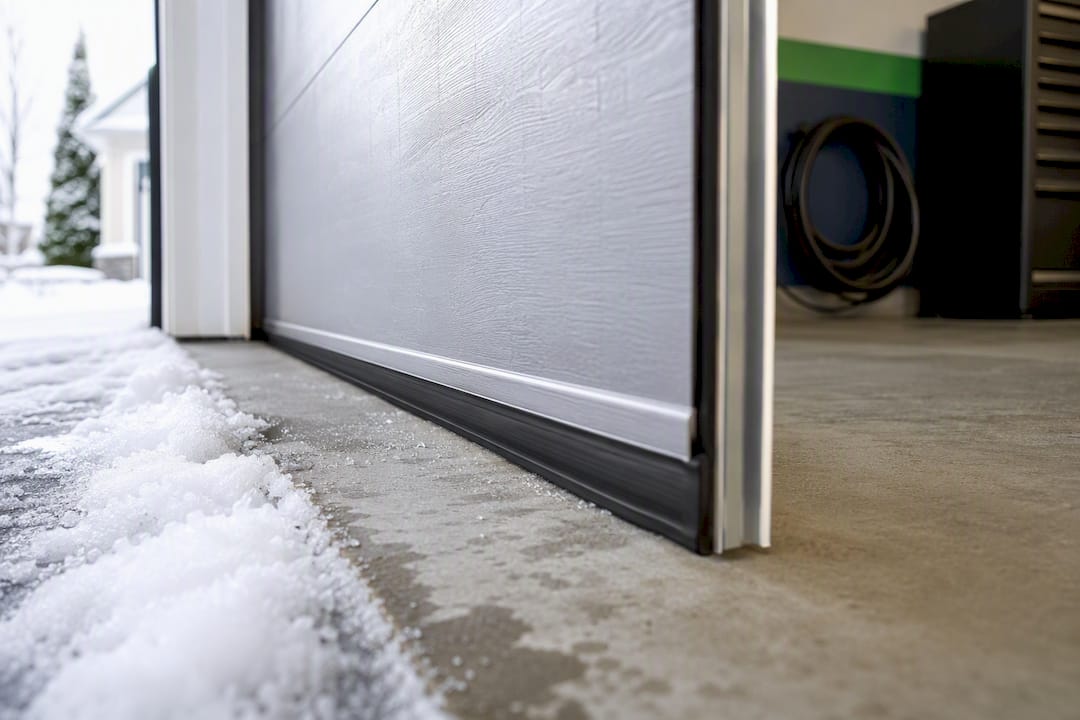
If your garage itself needs weatherproofing before the charger goes in, a garage door winterizing guide covers the sealing steps that keep the whole space warmer and drier.
Daily winter maintenance and fast troubleshooting
Winter-proofing isn’t a one-time install decision. It’s a light monthly habit.
- Check the enclosure seal and cable strain relief for cracking once a month.
- Run a GFCI test button press to confirm the safety circuit still trips correctly.
- Inspect the cable jacket for stiffness or surface cracks near the connector.
A frozen connector is common and rarely serious. Warm the plug gently with a hair dryer on low heat or an automotive de-icer spray, never boiling water, and never pry it loose with a tool. If it won’t release after a few minutes of gentle warming, stop and call an electrician rather than forcing it.
Battery charge acceptance improves substantially with preconditioning, so leaving the car plugged in and using scheduled departure or preconditioning settings overnight is worth more than any hardware upgrade. If faults happen only with one specific vehicle, suspect the car. If faults happen regardless of which car you plug in, suspect the installation or the unit itself.
Installation choices and how to pick an installer for a winter-ready setup
Hardwiring beats a NEMA receptacle in cold climates, plainly. A plug-and-cord setup introduces a connection point that corrodes and loosens with repeated freeze-thaw cycles, and some installers specifically flag receptacle corrosion as a preventable failure point that hardwiring simply removes.
Before you commit to an installer, confirm a few things:
- They hold current ESA licensing and can show proof on request, not just claim it.
- Your panel has the capacity for the added circuit, or they can quote a panel upgrade if it doesn’t.
- They’ll build in a drip loop, sealed conduit fittings, and mount the unit above expected snow line as standard practice, not an upsell.
- They handle permits and inspections as part of the job, and they can walk you through available rebates.
- They provide a written winter-proofing checklist covering what was done and why.
If your existing panel is close to capacity, ask specifically about load management options before assuming you need a full upgrade. Sometimes a smaller intervention solves the same problem for less.
Smart features or rugged simplicity: what actually holds up in the cold
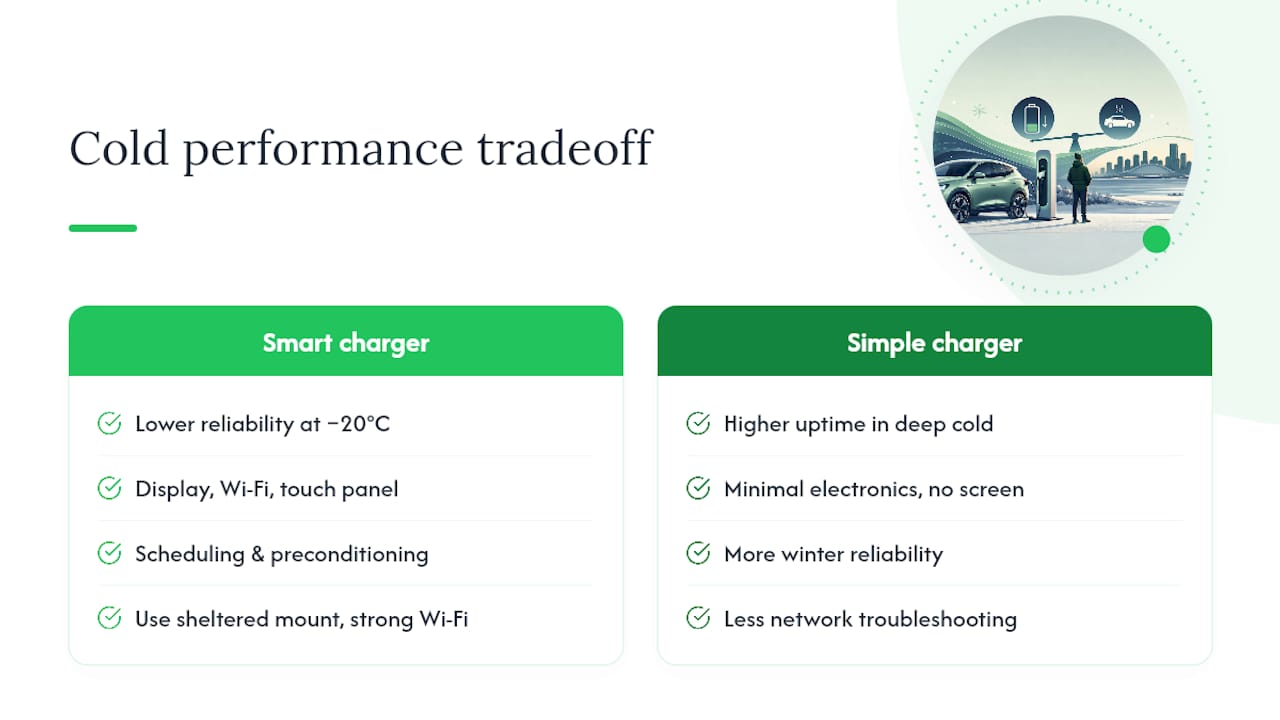
The honest answer is that convenience and reliability pull in opposite directions once temperatures drop hard. Scheduling and preconditioning through an app are genuinely useful, but every added display, Wi-Fi radio, and touch panel is one more thing that can fail at negative 20. In the coldest regions, simpler units with high temperature ratings and no screen tend to deliver more uptime over a full winter than feature-rich smart chargers.
That doesn’t mean skip smart features entirely. If you want them, pair them with a sheltered mount, confirm your home Wi-Fi signal actually reaches the garage or driveway, and ask your installer whether the specific model has a track record of reconnecting cleanly after a power blip. Weigh it against how severe your winters actually get, how much you rely on preconditioning, and whether you’re willing to troubleshoot network hardware in February. If the answer to that last one is no, buy the simpler unit.
— Hafiz
Getting your winter-proof install done right the first time
Evchargerinstallationtoronto is the practical alternative to guessing at specs from a datasheet or hiring an installer who treats winter conditions as an afterthought. Every install comes from ESA-licensed electricians who build in the details this article covers as standard, not as an add-on: hardwiring where your panel supports it, sealed conduit fittings, drip loops, and mounting height chosen to clear expected snow load.
Pricing starts from a competitive rate, with same-week booking and no separate charge for permits, inspections, or rebate paperwork potentially worth substantial savings on a new EV purchase. Most installations finish within a few hours from the same visit that confirms your panel capacity and site layout. If you’re ready to see what a winter-ready setup costs for your home, run the numbers through the installation cost calculator or check current rebate eligibility before you book.
Where to verify specs and standards
Cross-check any charger’s claims directly rather than trusting a sales sheet. ENERGY STAR’s certified EV charger list confirms efficiency and testing standards, while enclosure definitions from NEMA clarify exactly what a 4X rating protects against before you buy.
Sources
- Best EV chargers for cold weather 2026: sub-zero picks
- EV charging in cold weather: what you need to know
Recommended
Get Your Free Installation Quote
Free assessment · ESA permit included · Same-week availability across the GTA