Most Canadian Homes Don’t Need a Meter Upgrade for EV Charging
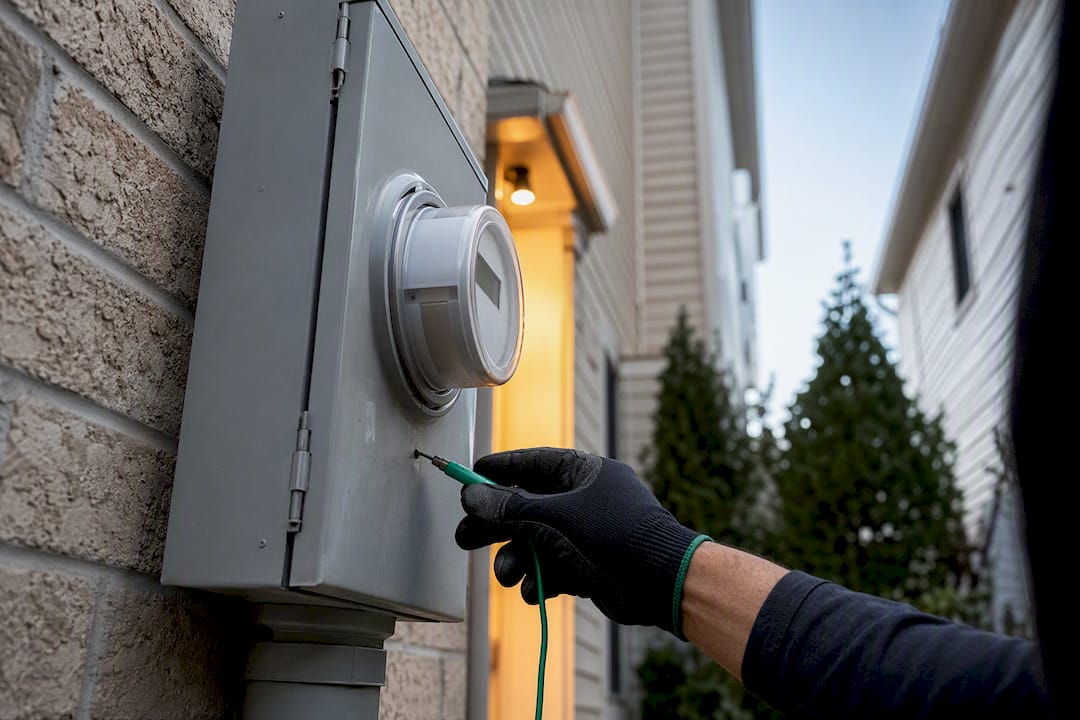
Most Canadian homes do not need a meter or panel upgrade to charge an EV at Level 2. A licensed electrician can usually get you there with a dedicated circuit, a shared 240V outlet, or a load management device. Some homes still need a panel or service upgrade, and only a proper load calculation tells you which category you’re in. The first move is booking an electrician for that assessment and an Electrical Safety Authority (ESA) permit check, not assuming the worst.
TL;DR:
- Most Canadian homes do not require a meter or panel upgrade; a load calculation by a licensed electrician determines the appropriate solution.
- Installing a dedicated 240V circuit or using load management devices and outlet sharing can often support Level 2 charging without major upgrades.
- Cost-effective options like load management devices start around $799, while full panel upgrades in the GTA typically range from several thousand dollars.
- Rebates from utilities, such as BC Hydro and Quebec’s Écorecharge, can significantly reduce the cost of chargers and load management devices, but eligibility requirements vary.
- A full panel or service upgrade becomes unavoidable if existing capacity is exhausted, the panel is full, or planned loads will exceed current service capacity.
Table of Contents
- Meter upgrade for EV charging: your practical options
- How electricians assess capacity for your EV charger
- Costs and timelines for panel upgrades in Canada
- Rebates that change the cost math
- When a panel or service upgrade is unavoidable
- What to ask your electrician before you sign
- What we see across the GTA
- Book an EV charger assessment with Evchargerinstallationtoronto
- Sources
- FAQ
Meter upgrade for EV charging: your practical options
Before anyone talks about a meter upgrade for EV Canada projects, it helps to know there are four realistic paths to Level 2 charging, and a full panel or service upgrade is only one of them. Most homes qualify for something less invasive, and the right choice depends on your existing panel capacity, your daily driving distance, and how many other big loads (a heat pump, a hot tub, a second EV) you’re planning to add.
Dedicated EV circuit. This is the cleanest option when your panel has open capacity and physical breaker space. An electrician runs a new 240V circuit straight from the panel to a Level 2 charger, sized to whatever amperage your available capacity supports, often 30 to 50 amps. It’s straightforward when the math works. It isn’t when your panel is already near its limit, in which case you’re back to load management or an upgrade.
Existing 240V outlet with a Smart Splitter. Many homes already have a 240V dryer outlet, and a device like a Smart Splitter lets the EV charger share that circuit safely, prioritizing the dryer when it’s running and releasing power to the charger the rest of the time. This works well for dryer outlet EV charging setups where garage proximity and outlet placement line up, and it avoids opening the panel entirely.
EVEMS and load management. Energy management systems and smart chargers throttle charging current dynamically, based on what the rest of the house is drawing at that moment, which prevents breaker trips without adding panel capacity. Canadian homeowners can add Level 2 charging without a full panel upgrade more often than they expect, because these devices have changed what used to be an automatic upgrade decision.
Meter socket adapters. An EV MSA sits behind the meter, between the meter base and the panel, and taps power before it reaches your existing service equipment. It’s a genuine way to avoid a main panel upgrade where a device like this is available, but utility approval varies by jurisdiction, so it’s more commonly seen in some markets than others. Ask your electrician whether your local utility currently accepts them before you budget around one.
| Path | Typical delivered current | Overnight range added | Disruption | Typical cost |
|---|---|---|---|---|
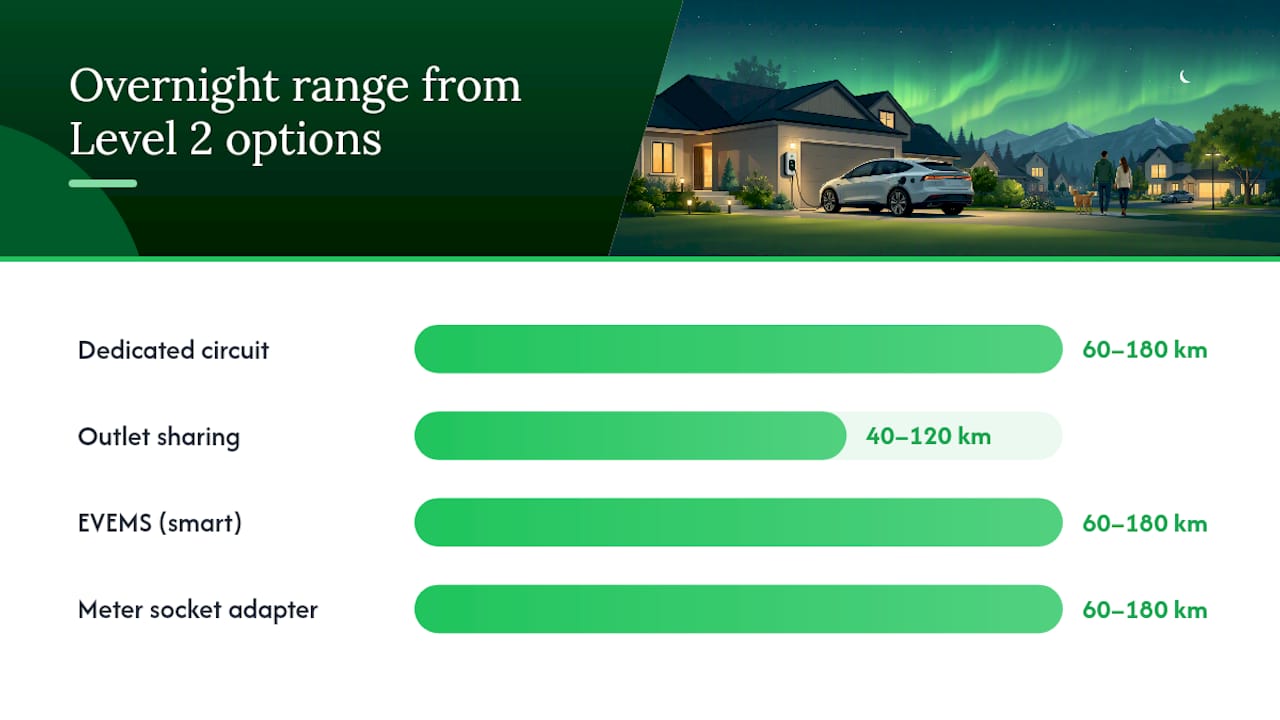
| Dedicated circuit | 30 to 50A | 60 to 180 km | One day, minimal | $1,800 and up |
| Outlet sharing (Smart Splitter) | Shared, up to 240V circuit rating | 40 to 120 km | Half day | Moderate, device plus labour |
| EVEMS / smart charger | Dynamic, throttled | Comparable to dedicated circuit for most drivers | One day | From $799 |
| Meter socket adapter | Varies by device and utility approval | Comparable to dedicated circuit | Half day, utility-dependent | Varies, device plus labour |
Pro Tip: Level 2 charging at almost any of these current levels comfortably covers overnight charging for the average Canadian commute, so chasing the highest amperage isn’t usually worth the extra panel work.
How electricians assess capacity for your EV charger
Everything hinges on a load calculation. This is the arithmetic that adds up every existing circuit in your home, plus its expected usage, and checks whether there’s genuine spare capacity for a charger. It’s the only way to know for sure, and skipping it is how homeowners end up paying for an upgrade they didn’t need, or worse, overloading a panel that didn’t have room.
Electricians increasingly build load calculations from 12 months of your utility’s meter data when it’s available, since that shows real seasonal peaks (winter heating, summer air conditioning) rather than a rough guess. This is one reason the process can take a day or two rather than happening on the spot.
A panel upgrade and a service upgrade are not the same project, and confusing them causes a lot of quoting frustration. A panel upgrade swaps the indoor breaker box for a higher-capacity unit. A service upgrade goes further, replacing the utility-side equipment, including the meter base and the service conductors feeding your home, and that piece requires coordination with your local utility on top of your electrician’s work.
What a compliant quote should always include:
- A written load calculation, not a verbal estimate
- Confirmation of whether panel work, service work, or both are needed
- ESA permit and inspection built into the price, not billed separately later
Fast fact: an empty breaker slot in your panel proves nothing on its own. Physical space and electrical capacity are two different questions, and only the load calculation answers the second one.
Costs and timelines for panel upgrades in Canada
Cost depends heavily on which path you need, and the gap between the cheapest and most expensive options is large enough to matter for your budget planning.
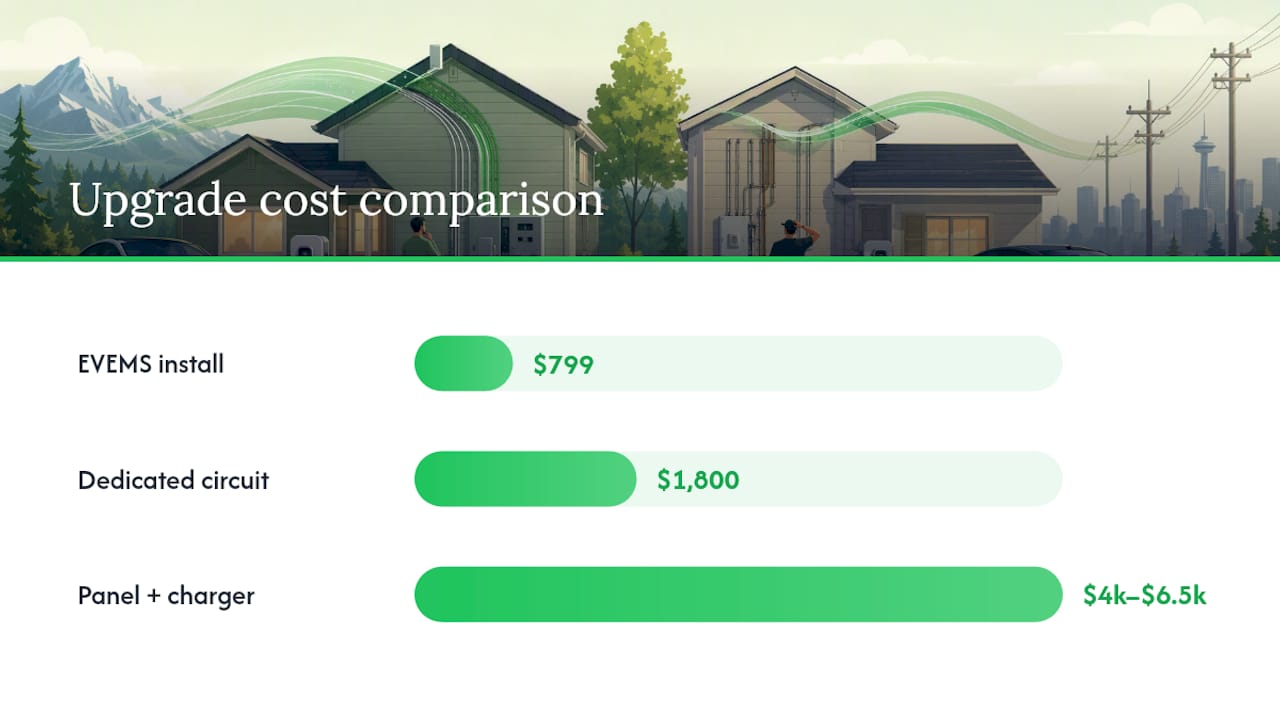
- Dedicated circuit installation: starts around $1,800 for straightforward runs where panel capacity already exists.
- EVEMS or load management device install: starts from $799, often the lowest-cost route to Level 2 when a full circuit or panel swap isn’t strictly necessary.
- Meter socket adapter: cost varies by device and by whether your utility has an approved product list, and availability differs by region.
- 100A to 200A panel or service upgrade: in the GTA, this commonly runs several thousand dollars once permits, meter base work, and possible service coordination are factored in, and a combined panel-plus-charger project in Toronto often lands in the $4,000 to $6,500 range.
Surprise costs tend to come from the same handful of places: an aging meter base that needs replacing, a service drop that has to be re-run, ESA permit fees that weren’t itemized upfront, or drywall repair after panel relocation. Ask for line-item pricing before work starts so none of these show up as a change order mid-project.
Timelines split sharply by scope. A dedicated circuit or EVEMS install is typically a single-day job. A panel or service upgrade, because it involves ESA inspection and sometimes utility scheduling, can take two to six weeks from quote to final sign-off, depending on how busy your local utility’s service department is that month.
Rebates that change the cost math
Rebate programs can tip the decision firmly toward the lower-cost paths, which is exactly what several utilities intend. BC Hydro offers a rebate for home chargers worth up to 50% of the equipment cost to a maximum of $350, plus a separate $200 rebate specifically for EV power management devices for eligible single-family homes. That second rebate exists because utilities would rather subsidize a load management device than have every EV owner request a service upgrade.
Quebec’s Écorecharge program has its own rules, and one is changing soon: from April 1, 2026, eligibility shifts to require a connected charging station rather than any Level 2 unit, so homeowners planning to apply need a smart charger, not just any model off the shelf.
At the federal level, the iZEV incentive applies to the vehicle purchase itself, not to chargers or installation, so don’t expect it to offset panel work.
Before buying any device:
- Confirm your model appears on your utility’s approved device list
- Check the rebate’s stacking rules against any provincial program in your area
- Apply before purchase where the program requires pre-approval, since some rebates won’t backdate
When a panel or service upgrade is unavoidable
Certain situations remove the alternatives entirely, and pretending otherwise just wastes money on a workaround that won’t pass inspection.
- No usable 240V outlet exists, and the cable run to reach one is impractically long or obstructed by finished walls, masonry, or unsafe routing.
- Your panel is physically full, with no room for a new breaker, or the existing wiring is outdated, damaged, or non-compliant with current code.
- You’re planning near-term electrification beyond the EV itself, such as a heat pump, a second EV, or a hot tub, and the load calculation shows combined demand will exceed your current service.
- The load calculation itself fails, showing your existing service can’t supply the continuous capacity the charger needs, even with load management in place.
If any of these apply, a panel or service upgrade isn’t a sales pitch. It’s the only compliant route left.
What to ask your electrician before you sign
Get these five things in writing before work starts:
- A documented load calculation, and ask directly whether it used 12 months of meter data
- Confirmation that the ESA permit and inspection are included in the quoted price, along with any utility coordination
- Line-item pricing covering panel work, meter base, service drop, labour, permit fees, and drywall repair separately
- Proof the charger or device carries CSA or ENERGY STAR certification, and whether the electrician handles rebate paperwork
- A red flag if the quote skips the load calculation entirely, or bundles ESA fees into a vague lump sum
Pro Tip: A paid load calculation typically costs far less than a panel upgrade and often saves you from paying for one you didn’t need.
What we see across the GTA
Most GTA homes we assess don’t need a full panel upgrade. A properly sized EVEMS install or an outlet-sharing setup handles daily charging safely and passes inspection without touching the main panel. Licensed electricians handle permit and rebate paperwork on every job, with transparent pricing starting at $1,800. When a load calculation genuinely fails, accept the upgrade recommendation. Don’t work around a real capacity limit.
— Hafiz
Book an EV charger assessment with Evchargerinstallationtoronto
A professional EV charger installation service provides an alternative to guessing your way through panel decisions: licensed electricians run the load calculation first, then recommend the least expensive compliant path, whether that’s a dedicated circuit, an EVEMS install, or a full upgrade when the numbers say you actually need one.
Our services cover Level 2 home charger installation, electrical panel upgrades, EVEMS and DCC-12 installs, and combined panel upgrade plus charger installation projects across the Greater Toronto Area. Every quote includes ESA permit handling and inspection scheduling at no extra charge, plus support applying for rebates worth up to $5,000 on eligible new EV purchases. Most installations are booked the same week and completed within a few hours once the electrician is on site. If you’re not sure which path fits your home, request a quote through our main booking page and we’ll start with the load calculation, not a sales pitch.
Sources
- Home EV charger options — BC Hydro
- Do you need a panel upgrade for home EV charging in Canada? — NeoCharge
- 200 amp panel upgrade for EV charger Toronto — RenoHouse
- ConnectDER EV meter socket adapter product datasheet
FAQ
Are EV sales declining in Canada?
Sales trends shift by month and by province, so check current federal and provincial registration data rather than relying on a single headline. What hasn’t changed is the number of existing EV owners who still need a home charging solution regardless of new sales figures.
Is it cheaper to charge my EV at home or at a public charging station?
Home charging is almost always cheaper per kilometre than public Level 2 or DC fast charging, since you’re paying residential electricity rates instead of a premium public-network rate. This is a major reason most owners prioritize a compliant home setup over relying on public stations.
What EV rebates are available in Ontario in 2026?
Ontario doesn’t currently run a provincial rebate specifically for chargers, so homeowners there should check municipal or utility programs directly and confirm eligibility before purchasing equipment, since programs and amounts change.
Can a regular electrician install an EV charger?
An electrician needs to be ESA-licensed to legally install a Level 2 charger and pull the required permit in Ontario. Evchargerinstallationtoronto’s team is ESA-licensed and handles that permit and inspection process on every installation.
Do I need a meter upgrade for EV charging in Canada?
Often no. Most homes can add Level 2 charging through a dedicated circuit, outlet sharing, or a load management device, and only a licensed electrician’s load calculation confirms whether your specific home needs a panel or service upgrade instead.
Recommended
Get Your Free Installation Quote
Free assessment · ESA permit included · Same-week availability across the GTA